Languages
Saturday, September 26, 2026



News and Views from the Global South
CHILE: Cutting Classes at the School of the Americas
Chilean activists are going to scream blue murder to get socialist President Michelle Bachelet's administration to stop sending military personnel to the School of the Americas in the United States, notorious for teaching torture techniques, among other specialist courses.ENVIRONMENT-CHILE: Recycling – An Idea Whose Time Has Come
Schools, city governments and companies in Chile have started to recycle their solid waste, but experts say they need help from the government to replicate these initiatives all over the country.LATIN AMERICA: Economists Discuss Alternatives to Free-Market Model
Some 90 left-leaning Latin American economists are meeting in the Chilean capital to discuss ways to build "a society with neither exploited nor exploiters" and construct bridges between academia and social movements.ENVIRONMENT-CHILE: Hope for the Swans
The highest global authority on wetlands will visit Chile in November to evaluate the problems afflicting the southern nature sanctuary Carlos Anwandter, where the water was contaminated by runoff from a pulp mill, killing hundreds of black-necked swans two years ago.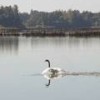
A Ray of Hope for the Swans
Activists applaud the start of an international evaluation phase of a swan sanctuary in southern Chile that was contaminated by pulp mill runoff. They say it is a victory for civil society in its efforts to protect Chile's wetlands.LATIN AMERICA: Leading the Developing World in Preschool Education
Latin America is the developing region that has made the most progress in early childhood education, although improvement has been uneven, says the new global monitoring report on Education for All (EFA) 2007.CHILE: Race to Freeze Pinochet’s Alleged Fortune in Gold
Former Chilean dictator Augusto Pinochet (1973-1990) has 160 million dollars worth of gold deposited in his name in a Hong Kong bank, according to information that the government of President Michelle Bachelet has passed on to the courts. Now, every minute counts to prevent the alleged fortune in gold from being hidden once again.MUSIC-CHILE: Mapuche Hip-Hop
They don't like to be referred to as indigenous people, but use their art to fight for the self-determination of their people. They do not all speak the Mapuche language fluently, but are keen on preserving the culture of that ethnic group. These five young Chileans of Mapuche descent are making it on the local hip-hop scene.ENVIRONMENT-CHILE: Keep Chiloe Free of Transgenics, Say Activists
Environmentalists are demanding that Chilean authorities declare the southern archipelago of Chiloé - 1,190 km south of Santiago - a transgenic-free zone, and recognise it as a birthplace of the potato (Solanum tuberosum), alongside Bolivia and Peru.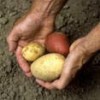
Keep Chiloé Free of Transgenics, Say Activists
The Chilean island is a birthplace of the potato, and ecologists say there are about 200 varieties that must be protected from genetic contamination from transgenic varieties of the tuber.CHILE: Pinochet Stripped of Immunity – Again
The Santiago Court of Appeals decided Thursday to lift former Chilean dictator Augusto Pinochet's immunity from prosecution in the case involving the kidnapping of Eugenio Berríos, a chemist whose body turned up on a beach in Uruguay in 1995.CHILE: Exposing the Salmon Industry
More than 30 environmental and consumer organisations in six countries that produce farmed salmon, including Chile, have launched a global week of action to raise awareness on abusive practices by the salmon industry.LATIN AMERICA: Cozinha Brasil Goes Regional
A successful Brazilian programme aimed at fighting hunger and reducing waste of food will be expanded throughout Latin America, by means of an agreement with the United Nations Food and Agriculture Organisation (FAO).LATIN AMERICA: Family Farms – Durable but Fragile
Family farms are not disappearing in Latin America, but they are becoming more vulnerable, requiring government policies to ensure their economic and social inclusion, experts and farmers said at a seminar organised by the United Nations Food and Agriculture Organisation (FAO) in the Chilean capital.CHILE: State of the Environment Report Confirms Activists’ Warnings
In spite of efforts by the public and private sectors, Chile is still losing its wealth of natural resources, according to experts commissioned by the government to produce a report on the state of the country's environment. Environmental organisations point out that this conclusion confirms the warnings they have been voicing for years.CHILE: Disturbing Exhibit Combines Technology, Human Rights, Art
The screens of more than 100 old television sets flicker with poems on torture and death that are generated by a sophisticated computer programme.CHILE: Therapeutic Abortion – A Distant but Not Impossible Prospect
Activists fighting for the decriminalisation of therapeutic abortion in Chile have long faced a depressing scenario: zero political will, stiff opposition from the Catholic Church and limited public support. Today, though, they are encouraged by positive signals on contraception from the government of Michelle Bachelet.CHILE: Pension Reform to Combat Systemic Poverty
In 20 years, even the minimum pension benefits will be out of reach for close to half of Chile's retirees. This troublesome forecast has spurred government into action, and potentially spells sweeping changes for the country's once internationally lauded privatised pension system, set up by the former dictatorship in 1981.HEALTH-CHILE: Court Stops Free Distribution of ‘Morning After Pill’
The Santiago appeals court ruled Wednesday against the distribution of emergency contraception, or the morning after pill, to girls in Chile between the ages of 14 and 18 without parental consent.CHILE: Closed Door for Prisoners Galvanises Mapuche Mobilisation
The Mapuche people are once again preparing to mobilise within Chile and abroad to rally support for three imprisoned community members and one activist, following Senate rejection of a long-awaited measure that would have secured their conditional release.HEALTH-CHILE: ‘Morning After Pill’ for Everyone – for Free
The Chilean government decreed that all public health centres must provide birth control, including emergency contraception, to adolescents and women over the age of 14 - a measure that immediately drew the ire of the Catholic Church and the right-wing opposition parties.« Previous Page — Next Page »


The Week with IPS

NEXT STOP - SDGs
Tracking global progress towards a sustainable world
Tracking global progress towards a sustainable world
