Languages
Wednesday, October 14, 2026



News and Views from the Global South
EDUCATION-LATIN AMERICA: Another Lost Decade?
Teachers in Bolivia earn just 100 dollars a month, and 60 percent of adolescents in Argentina drop out of high school. Given such statistics, is it really possible for Latin America to reach the goal of providing quality education for all by 2015?ENVIRONMENT-URUGUAY: Eat Fish, but Skip the Liver
In Uruguay's coastal waters, where the Río de la Plata (River Plate) flows into the Atlantic Ocean, "lead and chrome are the heavy metals with highest concentration in the sediment," Federico Viana, a biologist with the University of the Republic, told IPS.WORLD ENVIRONMENT DAY: Glimmers of Light in the Latin American Darkness
The trial against oil giant ChevronTexaco for environmental damages in Ecuador and an initiative to create a network of protected areas in the Amazon jungle provide glimpses of hope in the grim environmental panorama in Latin America, according to the Latin American Centre for Social Ecology (CLAES).ENVIRONMENT DAY-LATAM: Glimmers of Light in the Darkness
The trial against oil giant ChevronTexaco for environmental damages in Ecuador and an initiative to create a network of protected areas in the Amazon jungle provide glimpses of hope in the grim environmental panorama in Latin America, according to the Latin American Centre for Social Ecology (CLAES).SUSTAINABILITY: Can Planting Trees Be Harmful?
What's wrong with planting trees? ask the promoters of commercial monoculture forestry, an industry that is gaining ground throughout South America. In Uruguay, there are no definitive answers, but all signs indicate that it is a problem of scale.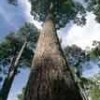
Can Planting Trees Be Harmful?
Environmentalists warn that monoculture of tree plantations threatens the Uruguayan environment. But there are no studies available on the true impacts of commercial forestry, which now covers more than 600,000 hectares, or four percent of productive land in this South American country.HEALTH-URUGUAY: US Lawmakers Meddle in Abortion Law Debate
A letter that six U.S. legislators recently faxed to Uruguay's senators, urging them to vote against a bill that would have legalised abortion in this South American country, amounted to undue pressure and meddling, according to legislators and activists.HEALTH-URUGUAY: Three Votes Away from Legalisation of Abortion
The Uruguayan Senate fell just three votes short of passing a law that would have legalised abortion. According to opinion polls, 63 percent of the population of this South American country is in favour of making abortion legal.HEALTH-LATAM: Pregnant Women Are Not ‘Patients’
Despite the lack of a scientific basis for practices like routine episiotomy, enemas and perineal shaving, they continue to be used in maternity hospitals throughout much of Latin America.SPAIN: Terrorism, Lies and Elections
Within just four days, terrorism radically changed the direction of the general elections that took place Sunday in Spain, and tested the public's tolerance of concealment and manipulation of information in the investigation effort.SPAIN: Terrorism, Lies and Elections
Within just four days, terrorism radically changed the direction of the general elections that took place Sunday in Spain, and tested the public's tolerance of concealment and manipulation of information in the investigation effort.ARGENTINA: Single Woman, Atheist, Heads to Seat on High Court
(Latin America Desk) - "Saying up front who one is or what one thinks is an indication of honesty, which is the first step towards impartiality," says respected criminal judge Carmen Argibay, a candidate for the Argentine Supreme Court of Justice, in response to those who criticise her for being a leftist and a "militant atheist".WORLD SOCIAL FORUM: Latin America’s Poorest Activists Stay Home
Tens of thousands of kilometres separate the southern Brazilian city of Porto Alegre and the Indian metropolis of Mumbai, a road too long and too expensive for thousands of Latin American activists, who will not participate in this year's fourth World Social Forum.COMMUNICATION: Everyone Wants to Govern the Internet
When typing in a web address (like www.ipsnews.net) or sending an e-mail, most people probably don't give much thought to how Internet domain names are assigned.HEALTH: Access to Anti-AIDS Drugs Varies Widely in Latin America
A year ago, 52 Bolivians living with HIV/AIDS complained to the Inter-American Commission on Human Rights that their government refused to provide anti-AIDS drugs free of charge, in violation of the country's international commitments. Only 33 of them are alive today.LATIN AMERICA: The EU’s Ever-Shrinking Foreign Aid
Latin America, the region with the biggest rich-poor gap, is drawing an ever-shrinking portion of foreign aid, and European aid in particular.LATIN AMERICA: Women Scale the Hierarchies of Justice
Women do not yet represent 50 percent of the ranks of Latin America's judicial systems, but many of the trials that are in the media spotlight - those involving major corruption scandals or human rights violations - are in the hands of female judges and prosecutors.ARGENTINA: Trail of Mysterious Deaths
The two consecutive terms of former Argentine president Carlos Menem, who goes to the polls in next Sunday's presidential runoff election, were marked by a trail of mysterious deaths.ENVIRONMENT-LATAM: Southern Cone Wages Battle against POPs
The fight to eliminate persistent organic pollutants (POPs) in the countries of South America's Southern Cone is limited by the weakness of the state and scarcity of funds, say the authorities. But environmentalists argue that what is lacking are effective policies.ENVIRONMENT-LATAM: Southern Cone Wages Battle against POPs
The fight to eliminate persistent organic pollutants (POPs) in the countries of South America's Southern Cone is limited by the weakness of the state and scarcity of funds, say the authorities. But environmentalists argue that what is lacking are effective policies.Southern Cone Launches Battle against POPs
Thousands of tons of pesticides, among other persistent organic pollutants (POPs), continue to be used in the Southern Cone, where few regulations are in place.« Previous Page — Next Page »





The Week with IPS

NEXT STOP - SDGs
Tracking global progress towards a sustainable world
Tracking global progress towards a sustainable world
