Languages
Wednesday, October 14, 2026



News and Views from the Global South

Three Questions, #222MillionDreams; One Issue: Education and the ‘Triple-Nexus’ with UN Resident Coordinator & Humanitarian Coordinator DRC, Bruno Lemarquis
Q1: The Democratic Republic of the Congo (DRC) faces one of the most long-standing, complex protracted crisis on the globe. In such a context, how important is it for aid stakeholders to support the education sector among the multitude of urgent priorities in the country? Why must education be a leading priority?

Drought, Conflict and Forced Displacement Push Ethiopian Children Out of School
 A joint mission to Ethiopia by Education Cannot Wait (ECW), and Norway's International Development Minister has drawn attention to one of the world’s largest education crises that have left 3.6 million children out of school. The number of out-of-school children has spiked from 3.1 million to 3.6 million, according to UNICEF. However, ECW-funded schools provide children with ‘whole-of-child’ interventions, including school feeding, psychosocial support, teacher training, school materials, accelerated learning, gender transformative approaches, and the construction and rehabilitation of school facilities.

The Climate Crisis Disrupts the Education of 40 Million Children Every Year
The United Kingdom Foreign, Commonwealth and Development Office (FCDO) issued a ground-breaking Position Paper today that draws clear linkages between the climate crisis and global education crisis.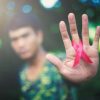
HIV Prevention: New Injection Could Boost the Fight, But Some Hurdles Remain
While the world has focused on the COVID pandemic for nearly three years, less and less attention is being paid to HIV. However, HIV is still a global problem. In 2021, according to the United Nations, 38.4 million people were living with HIV, over 650,000 died from AIDS-related illnesses, and 1.5 million became newly infected.
Rising sea levels force Tuvalu to move to the Metaverse: COP27 speech
What happens to a country without land?
As rising sea levels threaten to submerge our home, we have made a radical plan for the survival of our nation.
Watch Tuvaluan Minister Simon Kofe’s address at COP27 and visit https://www.tuvalu.tv to find out how you can help.

As the World’s Population Hits 8 Billion People, UN Calls for Solidarity in Advancing Sustainable Development for All
The global population is projected to reach 8 billion on 15 November 2022, signalling major improvements in public health that have lowered the risk of dying and increased life expectancy. But the moment is also a clarion call for humanity to look beyond the numbers and meet its shared responsibility to protect people and the planet, starting with the most vulnerable.
Ending Gender-Based Violence in a World of 8 Billion
Whether to have children or not is one of the most life-altering decisions a person can make. But as UNFPA’s 2022 State of World Population report shows, people around the world – especially women and members of marginalized groups – are frequently denied any choice in the matter, with partners, relatives, health care providers and even governments making or strongly influencing these decisions.
Climate crisis in Bangladesh: Stories from the ground
Adit Adhikary lives in Bangladesh’s southern coast, where land is going underwater, salinity is destroying agriculture and drinking water is scarce. Will conversations at COP27 reflect the needs of his community? Source: BRAC

Disappearing land in Bangladesh
Where do people go when their homes are washed away? In the 12 months since COP26, half of Lokkhi Mondol’s house has gone underwater.

Ground zero of the climate crisis
As COP27 ramps up, come with BRAC’s ED Asif Saleh to the frontline of the climate crisis in southern Bangladesh - where homes are now going underwater every day. We need climate action that gets to the ground, now. Source: BRAC

Education Cannot Wait Interviews Theirworld President Justin van Fleet
Justin van Fleet, Ph.D, is President of Theirworld and Executive Director of the Global Business Coalition for Education. Justin previously served as the Director of the International Commission on Financing Global Education Opportunity and Chief of Staff to the United Nations Special Envoy for Global Education and prior to that as a Fellow at the Brookings Institution’s Center for Universal Education.
Droughts Don’t Need To Result in Famine: Ethiopia and Somalia Show What Makes the Difference
The Horn of Africa is facing its worst drought in 40 years. Scientists suspect that a multi-year La Niña cycle has been amplified by climate change to prolong dry and hot conditions.
Education Cannot Wait and UNICEF, with Partners, Call for Substantial Increase in Funding for Crisis-Affected Children in the Democratic Republic of the Congo
The Director of Education Cannot Wait (ECW), Yasmine Sherif, and the UNICEF Representative, Grant Leaity, called on donors worldwide to provide US$45 million in urgent, additional funding to support ECW’s Multi-Year Resilience Programme in the Democratic Republic of Congo (DRC), a country facing one of the world’s most overlooked crises.
Elephants ivory trafficking East Africa
Social media usage has allowed smugglers of wildlife products to expand their network’s reach using Rwanda as a transit route, an investigation by IPS correspondent Aimable Twahirwa shows. Twahirwa reached out to wildlife traffickers using the medium during his investigation of how traders use one of the busiest border crossings, known as “Petite Barrière,” to hide the contraband among other goods.

WORLD FOOD DAY 2022
In 2022, an ongoing pandemic, global conflicts, climate change, rising prices and international tensions…
…are affecting global food security.

Education Cannot Wait Interviews Sigrid van Aken, CEO Novamedia/Postcode Lottery Group
Sigrid van Aken is the CEO of Novamedia/Postcode Lottery Group, a private company with a social purpose, that brings together business and ideals. It sets up and operates Postcode Lotteries worldwide to raise funds for charity. With a lucky winning postcode (zipcode), neighbours win together. At the same time, thanks to these player communities, vital funding is raised for charities and good causes (yearly €825 million), making the Postcode Lottery Group the 3rd largest private charity donor in the world after the Bill & Melinda Gates Foundation and the Wellcome Trust.

Some Coronaviruses Kill, While Others Cause a Common Cold. We Are Getting Closer to Knowing Why
It’s hard to imagine a time when “coronavirus” wasn’t a household word. But for a long time, this family of viruses had merited very little attention. Believed to be ubiquitous among animals and avian species, the first coronavirus to infect and cause disease in humans was only isolated and identified in the 1960s.
The LEGO Foundation Announces US$25 Million in New, Additional Funding to Education Cannot Wait at Global Citizen Festival, Bringing Total Contributions to US$65 Million
Taking the stage at this weekend’s Global Citizen Festival in New York’s Central Park, the LEGO Foundation CEO Anne-Birgitte Albrectsen announced a substantial new US$25 million contribution to Education Cannot Wait (ECW), the United Nations global fund for education in emergencies and protracted crises.
Answering the Challenges Posed by Antimicrobial Resistance
Staphylococcus aureus is the source of a skin infection that can turn deadly if drug resistant. Estimates regarding the most common resistant variation, methicillin-resistant Staphylococcus aureus (MRSA), exceed 100,000 deaths globally in 2019.
Education Cannot Wait Interviews Martin Griffiths, Under-Secretary-General for Humanitarian Affairs and Emergency Relief Coordinator
United Nations Secretary General António Guterres appointed Martin Griffiths of the United Kingdom as Under-Secretary-General for Humanitarian Affairs and Emergency Relief Coordinator in May 2021.

Indian Workers Defend Their Steel with Their Lives
The long and distant epoch of pre-history, dated to the time before the start of the Common Era, is conventionally divided into three periods: the Stone Age, the Bronze Age, and the Iron Age. Subsequently, in the era of written history, we generally have not relied upon specific metals or minerals to define our periods. Too many metals and minerals, harnessed by new production techniques and new labour patterns, have contributed to our immense capacity to generate large surpluses. There is the Age of Industry but not, for instance, the Age of Steel, the core metal of our period.« Previous Page — Next Page »





The Week with IPS

NEXT STOP - SDGs
Tracking global progress towards a sustainable world
Tracking global progress towards a sustainable world
