Languages
Thursday, October 22, 2026



News and Views from the Global South
BRAZIL: Rural Women Protest Use of Toxic Agrochemicals
Thousands of women farmers in Brazil demonstrated this week against the use of toxic weedkillers and pesticides on crops and in favour of agricultural techniques that protect their families' health.BRAZIL: Locals Protest ‘Metal Rain’ Pollution from Steelworks
A protestor held out a handful of metal dust, part of the "silvery rain" falling that day in Santa Cruz, a low-income neighbourhood on the west side of this Brazilian city, as proof of the environmental nightmare affecting the area ever since a German steel plant opened there.
POLITICS-BRAZIL: Continuity, With a Woman’s Face
In the countdown to her inauguration on Jan. 1, Brazilian President-elect Dilma Rousseff has completed her cabinet, which points to a government of continuity whose most novel aspect will be a greater female presence.
BRAZIL: Building a “Reforestation Economy” in the Mata Atlantica
In one of the most environmentally damaged areas of Brazil's Mata Atlântica forest, work is under way to reforest a watershed that supplies Rio de Janeiro, while also establishing a "reforestation market" that stimulates local job creation and local consumption.HUMAN RIGHTS-BRAZIL: Police Occupation Hurts Improved Relations with Favelas
Reports of human rights abuses committed during the police and military occupation of several favelas in this Brazilian city are jeopardising local residents’ newfound support for the security forces and posing challenges within the police.BRAZIL: Family Farming Matters in South-South Cooperation
Cooperation between countries of the developing South took another step forward with the recent signing of international agreements in Brazil aimed at stimulating public policies to support small farmers.
Brazil’s President-Elect Brings Gender to Government
In a move seen as a sign that gender will be important in her government, Brazil's president-elect Dilma Rousseff is preparing a Cabinet that is one-third women.BRAZIL: Substantive Issues Missing from Election Campaign
In Brazil, 136 million voters will head to the polls in Sunday's presidential runoff election, after a campaign heavy on recriminations and moralistic attacks and weak on substantive issues.
BRAZIL: Workers’ Party Support Base Redoubles Efforts for Victory
Every vote counts for the two candidates competing for the presidency of Brazil in next Sunday's runoff, and the governing Workers' Party (PT) is galvanising its electoral base into active campaigning, after the complacency instilled by eight years in power.
Brazilian Communities Find Ways to Live in Semiarid Environment
No longer is the image of women trudging through fields carrying heavy water vessels on their heads just a "quaint" scene of Brazil's semiarid northeast, for outsiders.
BRAZIL: Abortion, a Bargaining Chip in Campaign for Runoff
The issue of abortion has turned into a weapon that threatens to take away votes from the candidates in the campaign for the second round of presidential elections in Brazil, with conservative religious groups using it as a bargaining chip in exchange for their support.BRAZIL: Inequality Declines in Rio as Rich Get Poorer
The huge gap between the poorest and richest neighbourhoods of Brazil's most famous city shrank between 1996 and 2008. But the news is not as good as it sounds, because the decline in inequality was due to lower incomes in the richer zones, rather than to an increase in wealth in the "favelas" or shantytowns.LATIN AMERICA: Wanted: Non-Punitive Approach to Drug Policy
Experts from 13 Latin American countries called for a shift in counter-drug policies from a punitive to a public health-based approach for users, in order to reduce drug-related violence, on the argument that the current "war on drugs" has been lost in the region.BRAZIL: Rio de Janeiro Centralises Data to Identify Missing People
An average of 100 people go missing and between 40 and 50 unidentified bodies are found every month in this Brazilian city -- mysteries that could be cleared up simply with the sharing of information across agencies, a task that judicial and forensic experts have begun to successfully implement.BRAZIL: Young Indigenous Hero Teaches History in Video Game
Computer game technology can have an impact on the way we view the world. In a new video game developed in Brazil, a young indigenous boy named Jeró helps break down the stereotypes of the worldwide video game industry while teaching about the history of colonialism.Bricks in Brazil – Eco-Friendly, Low-Cost and Cool
Clay or earthen bricks could help to alleviate the housing shortage in Brazil because of the lower cost of brick buildings, while an innovative process for producing what are known as "ecological bricks" can avoid the environmental harm arising from more usual building materials.
BRAZIL: Football Paves the Way to Masculinity Without Violence
It’s Friday night, and in a "favela" (shanty town) in this Brazilian city, a group of men relax with a beer after a hard week, while a song can be heard above the rowdy chatter.
More Than 200 Ways of Becoming a Mother
"You can only have one mother," as the saying goes, but in Brazil there are 215 ways of becoming a mother, one for each of the ethnic groups in this South American country. Promoting maternal health while respecting cultural traditions is a major health challenge.Controversy Dogs Brazil’s Racial Equality Law
The Statute of Racial Equality, soon to be signed into law in Brazil, is at the centre of a controversy between those who consider it a historical achievement, like the abolition of slavery in 1888, and those who see it as failing to satisfy the demands of the black movement.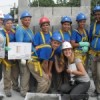
Brick by Brick, Women Builders Make Their Way in Brazil
It looks like any other construction site: wheelbarrows full of bricks, boards and steel bars trundling back and forth to a soundtrack of hammering, sawing and drilling. But there is a difference: some of the construction workers underneath the hard hats are women.BRAZIL: Forestry Law Reforms Augur More Disasters
While the Brazilian authorities tally the death toll and the economic losses caused by recent torrential rains in the northeast, activists warn that a legislative bill to modify the Forestry Code will only worsen the effects of extreme weather, which is increasingly frequent in the context of climate change.« Previous Page — Next Page »





The Week with IPS

NEXT STOP - SDGs
Tracking global progress towards a sustainable world
Tracking global progress towards a sustainable world
