Languages
Monday, October 19, 2026



News and Views from the Global South
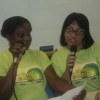
BRAZIL: Women in Favelas Broadcast Peace
Local women's voices have begun to be heard over a community radio station now broadcasting in Complexo do Alemao, a clump of favelas or shantytowns on the north side of this Brazilian city that were ruled until recently by armed drug gangs.BRAZIL: The ‘Happiest’ Emerging Nation
The reputation of Brazilians as cheerful, happy-go-lucky people is starting to be reflected in the cold reality of statistics. A study has put numbers to that state of well-being by quantifying the significant reduction in social inequality in the last few years, an area in which South America's giant has outdone other emerging nations.
BRAZIL: Women Gain More Ground in the Presidential Palace
By appointing women this month to two key ministries, Brazilian President Dilma Rousseff has nearly met her goal of having 30 percent of women in her cabinet, and is putting women in predominant roles at the Planalto Palace, the seat of government.BRAZIL: Rousseff Wants Those Who Have More to Pay More
The Brazilian government of Dilma Rousseff is attempting to push through long-delayed reforms of the tax system, which is one of the most onerous and unequal in the world, with a tax burden as heavy as that of many rich countries, but accompanied by deficient public services.
BRAZIL: Haiti Is Here
In the powerful verses of the song "Haiti", Brazilian musicians Caetano Veloso and Gilberto Gil described similarities between two countries at different ends of the development spectrum in Latin America, summed up by the words "Haiti is here".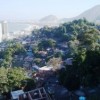
BRAZIL: From War on Drugs to Community Policing in Rio
Four decades after Washington declared its "war on drugs" and began to spread the doctrine south of the U.S. border, the government of the Brazilian state of Rio de Janeiro decided to shift away from that approach towards a strategy focused on community policing.BRAZIL: Activists Call for Stronger Action against Violence in Amazon
Organisations of small farmers and human rights groups are disappointed with the measures announced by the Brazilian government to address the problem of violence in the Amazon jungle region, after four environmental activists were murdered in less than a week.BRAZIL: Major Microlaboratory Against Poverty
Microcredit in Brazil still has huge potential for expansion, even though microloans have already grown much more than traditional credit in the last eight years.
A Dark Day for Brazil’s Amazon Jungle
The same day that the lower house of the Brazilian Congress approved a reform of the forestry code that would make it easier to clear land in the Amazon jungle for agriculture, a husband and wife team of activists who spent years fighting illegal deforestation in the rainforest were murdered.
BRAZIL: Despite Historic Victory, Gay Rights Struggle Far from Over
Although gay rights organisations in Brazil are celebrating a historic triumph, legal recognition of civil unions by the Supreme Court, they say the struggle is far from over.
BRAZIL: Accusations Mount against Pulp and Paper Giant
Brazilian and international environmental organisations and peasant farmer movements are taking aim at the forestry industry once again, this time accusing transnational corporation Stora Enso of illegally profiting from the production of wood pulp in the state of Bahia.
Accusations Mount Against Pulp and Paper Giant
Civil society protests and legal actions continue to fire controversy over the impacts of the wood pulp industry in the Brazilian state of Bahia.
BRAZIL: Handing in Guns Stashed at Home
An estimated 16 million firearms are in circulation in Brazil, 80 percent of them in civilian hands. Most of the guns are unregistered and illegally owned, and the government and civil society are planning a fresh campaign to reduce the number of guns and curb the thousands of shooting deaths in the country.BRAZIL: From Development Aid Recipient to Donor
Although Brazil's international development funds are still small compared to those of the industrialised world, the South American giant's foreign aid has grown considerably in the last eight years, and the country has gone from beneficiary of development assistance to donor.
WORLD HEALTH DAY-BRAZIL: First Map of Clusters of Antibiotic Resistance
Scientists in Brazil have created the first map of clusters of antibiotic resistance in Brazil, linking the phenomenon to abuse of the drug and opening doors to guide public policies for antibiotic prescription and sales.
Brazil Beefs Up Nuclear Emergency Plans
The Brazilian government is tightening safety procedures at its two nuclear power stations. Although this South American country is not prone to earthquakes or tsunamis, it is not exempt from natural disasters like landslides and flooding that could jeopardise evacuation plans if a radiation leak occurred.
LATIN AMERICA: Growing Opposition to Military Intervention in Libya
Latin America is still divided over the military intervention in Libya. But the nations that were initially opposed to it are gradually hardening their stance as the objective of the Western powers taking part in the air strikes authorised by the U.N. Security Council to protect civilians becomes less and less clear.
BRAZIL-US: Obama Promises “Equal Partnership”
The United States says its relations with Latin America must be "an equal partnership" - a new vision or, at least, a new discourse that will have a chance to take more concrete shape during U.S. President Barack Obama's visit to Brazil this weekend.Businesses in Brazil Rediscover “Route to the Indies”
Companies from Brazil and India -- whose bilateral trade flow rose nearly threefold in the last three years -- are starting to diversify and complement their business dealings in order to strengthen the two emerging powers' economic presence in the world, in a kind of new two-way "route to the Indies".Brazil Opposed to Military Options in Libya Crisis
Brazil, firmly opposed to a militarisation of the crisis in Libya and in favour of negotiated solutions without foreign intervention, is heading to a Mar. 7-8 ministerial meeting with India and South Africa.
WOMEN’S DAY: Female Scientists Abound in Brazil – But Not at Senior Levels
There are nearly as many female as male scientists in Brazil. But in academia or in private laboratories, women face subtle barriers to career advancement and equal salaries.« Previous Page — Next Page »





The Week with IPS

NEXT STOP - SDGs
Tracking global progress towards a sustainable world
Tracking global progress towards a sustainable world
