Languages
Wednesday, October 7, 2026



News and Views from the Global South
BOLIVIA: Unprecedented Gender Parity in Cabinet
Evo Morales began his second term as president of Bolivia by swearing in a cabinet made up of an equal number of women and men - unprecedented in this South American nation with a strong patriarchal tradition.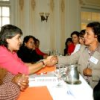
BOLIVIA: More Women in Parliament, With Their Own Agenda
An unprecedented 28 percent of seats in Bolivia's new parliament will soon be occupied by women. Female lawmakers have already launched a battle for women to serve in half the posts in the executive, legislative and judicial branches of government.Q&A: Bolivian Women’s Right to Land Thwarted by Patriarchal Traditions
Bolivian legislation on land ownership is highly favourable to women, but a lack of awareness makes it difficult to enforce these laws and ensure that women are able to obtain - and maintain - control of the land they farm.BOLIVIA: Evo Morales, the Best Ally of the Middle Class
Just five years ago, an alliance between an indigenous leader and Bolivia's small but influential middle class seemed virtually impossible.BOLIVIA: Native People Take First Steps Towards Self-Government
Indigenous people, who make up more than 60 percent of the population in Bolivia, South America's poorest country, are taking their first steps towards self-government under their own cultural traditions that date back to pre-colonial times.
Q&A: Bolivian Women a Force Behind Power, But Still Powerless
While poor, native women in Bolivia have gained access to power, they are still largely marginalised from any real decision-making, despite their instrumental role in the 2005 election of leftist President Evo Morales, the country's first-ever indigenous president, and his re-election on Sunday.BOLIVIA: Morales Calls for Unity after Landslide Victory
Bolivian President Evo Morales called on the opposition to join his "democratic revolution based on votes" to continue building a multi-ethnic or "pluri-national" state, after winning reelection with more than 63 percent of the vote Sunday.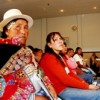
BOLIVIA: Women Clamour for Right to Land
Despite major advances in land distribution in Bolivia, single, widowed and undocumented women in this South American country have little chance of owning rural land due to the patriarchal traditions and customary practices of indigenous peoples, in violation of international instruments and conventions protecting women’s rights.BOLIVIA: The Credibility of Campaign Promises
If two candidates offer funds for the poor, but one of them is known for living up to his promises, who will the citizens vote for? That would seem to broadly describe the choice Bolivian voters are facing in the Dec. 6 general elections.CLIMATE CHANGE-BOLIVIA: Climbing a ‘Dead’ Glacier
The rapid disappearance of glaciers and the subsequent exhaustion of water sources are pushing indigenous communities in the Bolivian highlands even further into poverty, Bolivian experts told IPS, adding that an increase in awareness about climate change is desperately needed.
BOLIVIA: Politics, a Risky Business for Women
Taking an active part in politics in Bolivia can be a hazardous undertaking. Hundreds of reports of violence against women participating in politics attest to the risk. And while attacks go unpunished, a bill designed to protect the rights of women occupying public office has spent almost a decade in Congress waiting to be approved.
BOLIVIA: Amazon Nuts at Exploitative Prices
Bolivia is the world's leading exporter of the shelled Brazil nut, a nutritious food source that grows abundantly in the country's Amazon rainforest region. But in this tropical paradise, many of the nut-gatherers live in hellish conditions.
Amazon Nuts at Exploitative Prices
The low pay for harvesting Brazil nuts in the Amazon has allowed Bolivia to become the world's leading exporter of this forest-grown food.BOLIVIA: A Race with a Foregone Conclusion
President Evo Morales and Vice President Álvaro García are set to handily win the Dec. 6 elections in Bolivia, against a fragmented opposition.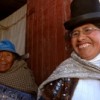
BOLIVIA: Too Many Obligations, Too Few Rights for Aymara Women
Teenage Aymara girls only mature as women in the eyes of their community when they are able to demonstrate great industriousness and knowledge of traditional tasks. But by virtue of that same condition they are denied rights, justice and access to community leadership positions.
Q&A: “Massive Transfer of Power to the Poor” Needed In Crisis
Innovative solutions at a time of crisis, extending services and technology to the poor and building democracy around the initiatives of ordinary citizens are the prescription to combat poverty that Roberto Haudry, head of IFAD for the Andean subregion, would suggest to Latin American governments.SOUTH AMERICA: Calls for Justice for Peru’s Native Peoples
Social organisations in South America are backing the struggle against opening up Peru’s Amazon jungle to mining and oil companies, which resulted in clashes in which at least nine indigenous people and 25 police officers died.HEALTH-BOLIVIA: Subsidy to Cut Maternal-Child Mortality
A new Bolivian government programme will provide special payments to pregnant women and mothers with children up to the age of two, with the aim of cutting the country’s maternal and infant mortality rates.
MIGRATION-BOLIVIA: Women’s Remittances Come at High Cost
The income earned by Bolivian women migrants in Spain, which enables them to support the families they left behind and build a nest egg, comes at a high price: low wages, long hours, no benefits and few or no days off.POLITICS-BOLIVIA: Unraveling the Conspiracy
The dismantling of a commando made up mainly of men described by the Bolivian government as foreign mercenaries could lead authorities to the people who organised around a dozen different attacks carried out since 2006 in the city of Santa Cruz.HEALTH-BOLIVIA: Dengue Epidemic Overwhelms System
Dengue fever has claimed 24 lives so far this year in Bolivia, in what experts are calling the worst epidemic in the country’s history. The mosquito-borne disease has spread fast due to high summer temperatures combined with rainfall, a weak public health system and poor collection of garbage.« Previous Page — Next Page »





The Week with IPS

NEXT STOP - SDGs
Tracking global progress towards a sustainable world
Tracking global progress towards a sustainable world
