Languages
Monday, September 28, 2026



News and Views from the Global South
AFGHANISTAN: Child Rapist Police Return Behind U.S., UK Troops
The strategy of the major U.S. and British military offensive in Afghanistan's Helmand province aimed at wresting it from the Taliban is based on bringing back Afghan army and police to maintain permanent control of the population, so the foreign forces can move on to another insurgent stronghold.POLITICS: Behind Detainee Release, a U.S.-Iraqi Conflict on Iran
The release Friday of five Iranians held by the U.S. military in Iraq for two and a half years highlights the long-simmering conflict between the U.S. and Iraqi views of Iranian policy in Iraq and of the role of its Islamic Revolutionary Guard Corps (IRGC) there.POLITICS: U.S. Uses False Taliban Aid Charge to Pressure Iran
The Barack Obama administration has given new prominence to a Bush administration charge that Iran is providing military training and assistance to the Taliban in Afghanistan, for which no evidence has ever been produced, and which has been discredited by data obtained by IPS from the Pentagon itself.EXCLUSIVE-PART 5: Freeh Became "Defence Lawyer" for Saudis on Khobar*
In early November 1998, Louis Freeh sent an FBI team off to observe Saudi secret police officials interviewing eight Shi’a detainees from behind a one-way mirror at the Riyadh detention centre. He planned to use the Shi’a testimony to show that Iran was behind the bombing.US-AFGHANISTAN: Airstrike Report Belies “Blame Taliban” Line
The version of the official military investigation into the disastrous May 4 airstrike in Farah province made public last week by the Central Command was carefully edited to save the U.S. command in Afghanistan the embarrassment of having to admit that earlier claims blaming the massive civilian deaths on the "Taliban" were fraudulent.EXCLUSIVE-PART 4: FBI Ignored Compelling Evidence of bin Laden Role*
Osama Bin Laden had made no secret of his intention to attack the U.S. military presence in Saudi Arabia. He had been calling for such attacks to drive it from the country since his first fatwa calling for jihad against Western "occupation" of Islamic lands in early 1992.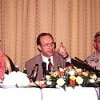
EXCLUSIVE-PART 3: U.S. Officials Leaked a False Story Blaming Iran*
In March 1997, FBI Director Louis Freeh got what he calls in his memoirs "the first truly big break in the case": the arrest in Canada of one of the Saudi Hezbollah members the Saudis accused of being the driver of the getaway car at Khobar Towers.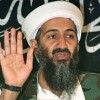
EXCLUSIVE-PART 2: Saudi Account of Khobar Bore Telltale Signs of Fraud*
In the last week of October 1996, the Saudi secret police, the Mabahith, gave David Williams, the FBI's assistant special agent in charge of counter-terrorism issues, what they said were summaries of the confessions obtained from some 40 Shi’a detainees.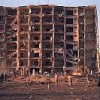
EXCLUSIVE-PART1: Al Qaeda Excluded from the Suspects List*
On Jun. 25, 1996, a massive truck bomb exploded at a building in the Khobar Towers complex in Khobar, Saudi Arabia, which housed U.S. Air Force personnel, killing 19 U.S. airmen and wounding 372.U.S.: McChrystal Looks to Spin Afghan Civilian Deaths Problem
At his confirmation hearings two weeks ago, Gen. Stanley McChrystal said reducing civilian deaths from air strikes in Afghanistan was "strategically decisive" and declared his "willingness to operate in ways that minimise casualties or damage, even when it makes our task more difficult."US-PAKISTAN: CIA Secrecy on Drone Attacks Data Hides Abuses
The U.S. Central Intelligence Agency’s refusal to share with other agencies even the most basic data on the bombing attacks by remote-controlled unmanned predator drones in Pakistan’s northwestern tribal region, combined with recent revelations that CIA operatives have been paying Pakistanis to identify the targets, suggests that managers of the drone attacks programmes have been using the total secrecy surrounding the programme to hide abuses and high civilian casualties.POLITICS-US: Report Ties Dubious Iran Nuclear Docs to Israel
A report on Iran’s nuclear programme issued by the Senate Foreign Relations Committee last month generated news stories publicising an incendiary charge that U.S. intelligence is underestimating Iran’s progress in designing a "nuclear warhead" before the halt in nuclear weapons-related research in 2003.U.S.: McChrystal Choice Suggests Special Ops Strikes to Continue
The choice of Lt. Gen. Stanley McChrystal to become the new U.S. commander in Afghanistan has been hailed by Defence Secretary Robert Gates and national news media as ushering in a new unconventional approach to counterinsurgency.POLITICS-US: Officials Admit Pakistanis Reject U.S. Priorities
The advances of the Taliban insurgents beyond the Federally Administered Tribal Areas (FATA) in recent weeks and the failure of the Pakistani military to counter them have brought a rare moment of truth for top national security officials of the Barack Obama administration.POLITICS: U.S. Lacks Capacity to Win Over Afghans
President Barack Obama and other top officials in his administration have made it clear that there can be no military solution in Afghanistan, and that the non-military efforts to win over the Afghan population will be central to its chances of success.POLITICS: Errant Drone Attacks Spur Militants in Pakistan
The U.S. programme of drone aircraft strikes against higher-ranking officials of al Qaeda and allied militant organisations, which has been touted by proponents as having eliminated nine of the 20 top al Qaeda leaders, is actually weakening Pakistan’s defence against the insurgency of the Islamic militants there by killing large numbers of civilians based on faulty intelligence and discrediting the Pakistani military, according to data from the Pakistani government and interviews with senior analysts.US: Obama Team Debates Stance on Israeli Attack Threat
A recent statement by the chief of the U.S. Central Command (CENTCOM), Gen. David Petraeus, that Israel may decide to attack Iranian nuclear sites has been followed by indications of a debate within the Barack Obama administration on whether Israel's repeated threats to carry out such a strike should be used to gain leverage in future negotiations with Tehran.POLITICS: Al-Maliki Draws U.S. Troops into Crackdown on Sunnis
When U.S. troops and Apache helicopters joined Iraqi forces in putting down an uprising by Sunni "Sons of Iraq" militiamen in central Baghdad last weekend, it was a preview of the kind of combat the U.S. military is likely to see increasingly over the next three years unless a policy decision is made in Washington to avoid it.POLITICS-US: Some Strategists Cast Doubt on Afghan War Rationale
The argument for deeper U.S. military commitment to the Afghan War invoked by President Barack Obama in his first major policy statement on Afghanistan and Pakistan Friday - that al Qaeda must be denied a safe haven in Afghanistan - has not been subjected to public debate in Washington.
POLITICS: Despite Obama’s Vow, Combat Brigades Will Stay in Iraq
Despite President Barack Obama’s statement at Camp LeJeune, North Carolina Feb. 27 that he had "chosen a timeline that will remove our combat brigades over the next 18 months," a number of Brigade Combat Teams (BCTs), which have been the basic U.S. Army combat unit in Iraq for six years, will remain in Iraq after that date under a new non-combat label.US-AFGHANISTAN: McKiernan Gets Control of Disputed Raids
U.S. Special Operations forces in Afghanistan, whose commando raids and airstrikes against suspected Taliban targets have caused large numbers of civilian casualties that have angered Afghans, have quietly been put under the "tactical control" of the commander of U.S. and NATO forces in Afghanistan, Gen. David McKiernan, for the first time.« Previous Page — Next Page »


The Week with IPS

NEXT STOP - SDGs
Tracking global progress towards a sustainable world
Tracking global progress towards a sustainable world
