Languages
Thursday, November 5, 2026



News and Views from the Global South

VENEZUELA: The Cost of the World’s Cheapest Gasoline
The world’s most inexpensive gasoline is sold in Venezuela, through a longstanding subsidy programme that benefits car owners while depriving the oil industry of a large source of funds for reinvesting.VENEZUELA: Human Rights Watch Report Under Fire
A Human Rights Watch report on alleged setbacks in human rights in Venezuela since President Hugo Chávez first took office 10 years ago has been severely questioned by 118 academics from the United States and several other countries.VENEZUELA: “Children Can’t Even Play on Their Front Stoops”
Johana Bracamonte never had a chance to learn to read. She was just five years old the morning her uncle took her to kindergarten and they were both shot by thieves who stole his motorbike, in 23 de Enero, a shantytown on the west side of the Venezuelan capital.RELIGION-VENEZUELA: Santeria Scams?
In a ritual that includes sacrificing goats or fowl, a "babalawo" priest of the Yoruba religion in Venezuela can "mount a saint" (attract blessings from forces of nature) on an initiate willing to pay up to 10,000 dollars, and sometimes even more.VENEZUELA: Reviving the Debate on Presidential Reelection
Venezuelan President Hugo Chávez, who has governed the country since 1999, plans to seek reelection until 2019, or even 2021.RUSSIA-LATIN AMERICA: Economic Manoeuvres Overshadow Naval Ones
Aboard the Russian submarine destroyer Admiral Chabanenko, docked at the port of La Guaira, 20 km north of Caracas, Presidents Dmitry Medvedev of Russia and Hugo Chávez of Venezuela announced the start of joint naval manoeuvres Thursday in the Caribbean.VENEZUELA: Opposition Win Key Districts
The followers of Venezuelan President Hugo Chávez are celebrating a sweet and sour victory, because while they won 17 of the 22 states up for grabs in Sunday’s regional elections, the opposition took the most populous and politically and economically important states.VENEZUELA: Regional Elections Double as National Referendum
In Venezuela, where hardly a year goes by without elections, people will vote Sunday for governors in 22 of the 23 states, and for mayors in 328 of the 335 municipalities. The tough campaign leading up to the ballot has turned the exercise into a new referendum on President Hugo Chávez and his project of "21st century socialism".VENEZUELA: Elections Will Put Chavez to the Test
As if his post were at stake, Venezuela’s left-wing President Hugo Chávez is showing up all over the country at election rallies, caravans, public works inaugurations, nationally televised public events and highly publicised midnight calls to his party’s local offices in remote towns.VENEZUELA-RUSSIA: Business Deals Consolidate Alliance
"Tovariches! Comrades! Today I feel I must say to you: let us work to find gas and oil under these waters!" said Alexander Medvedev, deputy chairman of the Russian firm Gazprom, when drills on the Escorpión Vigilante marine platform finally perforated the Venezuelan sea bed.
VENEZUELA: Budgets Take On a Woman’s Face
As Venezuela increasingly incorporates a gender perspective in its public budgets, issues like the paving of roads and the construction of schools are being joined by new priorities such as teen pregnancy and domestic violence prevention programmes when it comes to spending.VENEZUELA: Simon Bolivar in Orbit
Venesat-1 Simón Bolívar was launched into space Wednesday in China, making Venezuela the fourth Latin American country with its own satellite, along with Argentina, Brazil and Mexico.ENERGY: Harsh Blow for OPEC
In an unexpected reaction, oil prices continued to slide, by up to six percent Friday, despite OPEC’s decision to cut output by 1.5 million barrels a day as of Nov. 1.VENEZUELA: Chavez Lashes Out at Leftist Dissidents
Venezuelan President Hugo Chávez lashed out at the Communist Party (PCV) and other small left-wing groups that have backed him for 10 years, calling them "liars" and "disloyal counterrevolutionaries" for backing candidates in the coming regional and municipal elections who are not from his party.ECONOMY-LATAM: Crisis Means Slower Growth Ahead
The financial crisis shaking the United States will have repercussions in the rest of the world, which means "tough times lie ahead for Latin America," the permanent secretary for the Latin American Economic System (SELA), José Rivera, told IPS.ENERGY-LATIN AMERICA: PDVSA’s Growing Presence
Central America, Cuba, the Dominican Republic and islands in the eastern Caribbean are receiving more and more oil from Venezuela, while major refineries are planned in South America - at Pernambuco in northeastern Brazil, and at El Aromo, on Ecuador's Pacific coast.VENEZUELA: Activists Criticise Expulsion of Human Rights Watch
Human rights organisations criticised the deportation of representatives of the New York-based Human Rights Watch, who presented a report asserting that democracy and tolerance have been undermined during the government of President Hugo Chávez.VENEZUELA: Multi-Tentacled PDVSA, a State Within a State
"I would have liked to be taken on by PDVSA, but I didn't win that lottery," Antonio Jiménez, a 52-year-old father of four and grandfather of three who is a pump attendant at a petrol station on the outskirts of the Venezuelan capital, told IPS.RUSSIA-VENEZUELA: Cold War Coming to the Caribbean?
Two Russian Tupolev TU-160 strategic bombers landed at Venezuela's main Libertador military airbase, 60 kilometres from the capital, "to carry out training flights" in the region, according to the Russian Defense Ministry.SOUTH AFRICA-VENEZUELA: Forging a ‘Strategic Alliance’
Venezuelan President Hugo Chávez and his South African counterpart Thabo Mbeki announced that their countries have a "strategic" relationship, before signing a framework cooperation agreement in Pretoria, which paves the way for future arrangements on technology transfer and concrete deals involving oil and food.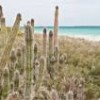
Progress Towards Protecting La Tortuga Island
A legislative modification would help protect the uninhabited Venezuelan island of La Tortuga, which holds rare Caribbean ecosystems.« Previous Page — Next Page »





The Week with IPS

NEXT STOP - SDGs
Tracking global progress towards a sustainable world
Tracking global progress towards a sustainable world
