Languages
Friday, November 6, 2026



News and Views from the Global South
VENEZUELA: Bari People Left Without Land by Oil, Cattle, Coal
For 900 years, Barí indigenous hunters roamed freely throughout a vast region in western Venezuela. "Now they want to sentence us to die by locking us up in this corral, watching the white man get rich by destroying the land that used to be ours," says schoolteacher Conrado Akambio.VENEZUELA: New Windfall Profit Tax on Oil
Venezuela is about to levy a new tax on the income of oil companies profiting from the soaring prices of crude, which have brought them petrodollars in amounts over and above provision for investment, costs and a reasonable profit margin.ENVIRONMENT-VENEZUELA: Farewell, Trawl-Fishing
Trawl-fishing is on its way out in Venezuela, amid demonstrations by artisanal fisherfolk who support the new law as amended by President Hugo Chávez.LATIN AMERICA: Newspaper Owners Take Aim at Venezuela
The midyear meeting of the Inter American Press Association (IAPA), which represents newspaper owners in Latin America, was overshadowed by the antagonistic relationship between the commercial media and the government of Venezuela, where the meeting was held.VENEZUELA: Gov’t Celebrates British Ruling Against Exxon
Venezuela celebrated, as a triumph for countries of the developing South, Tuesday’s ruling in its favour by a British court in a legal dispute with U.S. oil giant Exxon Mobil, which overturned an earlier court order to freeze around 12 billion dollars in Venezuelan assets.OIL: Price Bubble Could Burst in Medium Term
While oil prices recently soared to a record 111 dollars a barrel, fuelled by the weak U.S. dollar, analysts warn that the bubble will not last forever, and may burst in the medium term.COLOMBIA: Crisis Ends With Hugs, Handshakes and Applause
Hugs and handshakes between the presidents of Colombia, Ecuador, Nicaragua and Venezuela put an end to a week-long political and diplomatic crisis that threatened to escalate into a regional conflict.COLOMBIA-VENEZUELA: Why Did Chavez Mobilise Troops?
When Venezuelan President Hugo Chávez ordered the movement of troops to the Colombian border, newspaper offices in Caracas immediately began to be flooded by phone calls from people who talked about a repeat of the "Malvinas syndrome". But there may be many reasons for the leftwing president’s decision, which could be more political than military.COLOMBIA: Ex-Hostages Call for Political Solution to Conflict
The solution to Colombia’s armed conflict must be a political one, and the government should "demilitarise" an area in order to negotiate a humanitarian swap of hostages held by the FARC guerrillas for imprisoned insurgents, the four hostages who were released this week said in the Venezuelan capital.COLOMBIA: Four Hostages Reunited with Families in Venezuela
"I am alive again; I was the living dead," said former congresswoman Gloria Polanco when she was reunited with her children in the Venezuelan capital late Wednesday, her first day of freedom since she was taken hostage by Colombia’s FARC guerrillas in July 2001.VENEZUELA: ‘Exxon Will Never Again Do Business in This Country’
In his Sunday radio and TV programme "Aló Presidente", Venezuelan President Hugo Chávez said "they will never steal from us again, the Exxon Mobil bandits, imperialist white-collar thieves who corrupt and oust governments and who supported the invasion of Iraq."CHALLENGES 2007-2008/LATAM: Transformation Via Constitutional Reforms
As left-leaning forces have been elected to power in several countries in South America’s Andean region, they have undertaken constitutional reforms to incorporate far-reaching economic and social changes.CHALLENGES 2007-2008: Grim Present, Dim Future for Andean Integration
The Andean countries are passing through the gates of the new year with their trade bloc, the Andean Community of Nations (CAN) - the oldest and most structured regional integration agreement in the Americas - fraying at the edges.VENEZUELA: Opportunity for Dialogue
This is a good time, in the wake of the defeat of President Hugo Chávez’s proposed constitutional reform, to hold talks on the promotion of human rights, says the local non-governmental organisation PROVEA.VENEZUELA: Defeat for Chavez
The constitutional reform promoted by Venezuelan President Hugo Chávez was narrowly defeated in Sunday’s referendum, in which the ‘No’ vote took 50.7 percent, against 49.29 percent for the ‘Yes’ vote.VENEZUELA: Chavez Faces Narrow Margin in Referendum
For the first time in the numerous democratic elections held since Venezuelan President Hugo Chávez first took office in 1998, a national vote is taking place in which his pet project, a major constitutional reform, does not have overwhelming support.COLOMBIA-VENEZUELA: Possibly the Bitterest Conflict in a Century
The neighbouring countries of Colombia and Venezuela, whose governments have the most diametrically opposed ideologies in South America, have come within a whisker of breaking off relations after a harsh exchange of accusations between Presidents Álvaro Uribe and Hugo Chávez.
VENEZUELA: Wretchedly Poor on the Banks of Lake Maracaibo
"My father was a fisherman, and so was my grandfather. I fished for as long as I could. We live here because it is very beautiful, but we suffer great hardship," said 72-year-old Antonio Navarro, sitting in his six-by-eight-metre house on stilts in the Venezuelan village of Congo Mirador.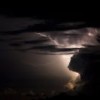
VENEZUELA: Lightning in the Sky Fed by Underground Methane
A red, yellow and orange flash illuminates a slice of the sky and Lake Maracaibo in Venezuela. For a fraction of a second after, lightning of incandescent white move left to right and right to left between small clouds like dark silhouettes.ENERGY: OPEC Looks to the Future, Its Clients to the Present
The Organisation of Petroleum Exporting Countries (OPEC) is not likely to give in to pressure from consumer nations to curb record high oil prices after this weekend’s meeting of OPEC heads of state and government in Riyadh.
Lightning in the Sky Fed by Underground Methane
The lightning of the Catatumbo, in the north of the South American continent, is one of the biggest natural regenerators of the atmospheric ozone that protects life on Earth from the Sun's harmful rays.« Previous Page — Next Page »





The Week with IPS

NEXT STOP - SDGs
Tracking global progress towards a sustainable world
Tracking global progress towards a sustainable world
