Languages
Wednesday, September 23, 2026



News and Views from the Global South
VENEZUELA: Hunger Striker Dies in Land Dispute
Franklin Brito, who held several long hunger strikes since 2004 to defend ownership of his farm, became the first Venezuelan to fast to the death.VENEZUELA: Opposition Hopes to Make a Comeback
The campaign for Venezuela's Sept. 26 legislative elections is officially on, and the opposition, which boycotted the last vote five years ago, is back in the running, hoping to win enough seats to act as a counterweight to President Hugo Chávez.COLOMBIA-VENEZUELA: Bolivar’s Heirs Clash on Bicentennial
The latest political and diplomatic conflict between Colombia and Venezuela has coincided with celebrations of the bicentennial of the two countries' independence, won by their common liberator Simón Bolívar, whose ideals of integration continue to be undermined.VENEZUELA: Chronic Oil Leaks Sully Lake Maracaibo, Livelihoods
Dark oil slicks are spreading from the middle of Venezuela's Lake Maracaibo towards the shores -- the wetlands, mangroves, beaches and docks. Oil is permeating fishing nets, coating the garbage dumped into the water, killing off wildlife and driving away residents and tourists.COLOMBIA-VENEZUELA: Severed Ties, Fresh Ground for New Problems
The break in diplomatic relations between neighbours Colombia and Venezuela, ordered Thursday by the latter's President Hugo Chávez, bodes an escalation of tensions -- the outcome of which largely will be decided by Colombia's president-elect Juan Manuel Santos.VENEZUELA-COLOMBIA: President Uribe Secures Legacy of Dispute for Successor
When out-going Colombian President Álvaro Uribe charged Thursday that leftist guerrilla commanders from his country are in hiding in neighbouring Venezuela, he went a long way towards ensuring that his successor, Juan Manuel Santos, will inherit a volatile diplomatic dispute.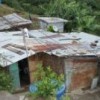
Venezuela Starts Its Own “Zero Hunger” Programme
Standing between two wooden planks that shore up the front of her small makeshift house, 40-year-old Maribel Huerta talks about her family.
LATIN AMERICA: Environment’s Poverty-Fighting Potential Largely Ignored
The environment remains a second-tier matter in Latin America and the Caribbean despite being interwoven with persistent poverty and stalled economic development in the region, according to a new report from the United Nations Environment Programme.LATIN AMERICA: Torturers Lurking Behind Uniforms
"My daughter was brutally tortured, intimate parts of her body were beaten, her head was put in gas-filled bags and electric shocks were applied all over her body," Vidalina Vera, the mother of Wilmary Brizuela, told the Venezuelan Attorney General's Office.Critical Media Hit by Legal Actions in Venezuela
Guillermo Zuloaga, owner of the Globovisión television channel has fled Venezuela to avoid an arrest warrant issued by a court a week after President Hugo Chávez complained that Zuloaga was not being held in prison pending trials for illegal business practices, and for remarks that were deemed "offensive" to the president.FOOD: Something Smells Rotten in Venezuela
Tens of thousands of tonnes of basic foods rotted in the last year in shipping containers belonging to the Venezuelan government. Fully two-thirds of the food consumed by Venezuela's 27 million inhabitants is imported.Venezuelan Prison Death Toll Continues to Rise
Yet another string of violent deaths in Venezuela’s prisons, along with the dire living conditions in many of them, have caught the attention of the Inter-American Commission on Human Rights, which is demanding that the government adopt urgent measures.Opposition Plans Return to Venezuelan Congress
Political sectors opposed to the Venezuelan government of President Hugo Chávez have elected 22 candidates in primaries, and selected another 143 by consensus, to compete in September for the 165 seats in the single-chamber parliament.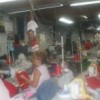
VENEZUELA: Mixed Results for Gender Policies
After years of paltry wages as a piecework seamstress, Elisa Manrique finally has the chance to leave the informal sector and poverty behind. Thanks to a small business loan from the Venezuelan government, she and a group of other women - including some of her daughters and a daughter-in-law - have been able to set up their own sewing cooperative.
VENEZUELA: Yanomami Put Body Painting Down on Paper
Men and women of the Yanomami people paint their bodies, drawing straight, curved, dotted and parallel lines, arcs and circles, triangles, rectangles, grids, spider's webs or rings, all arranged as if on a checkerboard.
VENEZUELA-COLOMBIA: Sparks Fly Over Arrests
The arrest of eight Colombians in Venezuela, allegedly for espionage, further heightened the political and diplomatic tensions that have existed between the governments of the two neighbouring countries over the past year.VENEZUELA: New Frogs Appear; Their Discoverers Disappear
Shortly after it informed the world of the discovery of three new species of frogs, the environmental organisation Fundación Andígena closed its doors in Venezuela this month due to lack of financial support.VENEZUELA: Opposition Leader Arrested for Remarks Denied Bail
Venezuelan opposition leader Oswaldo Álvarez Paz will remain in police custody in the state intelligence service (SEBIN) until his trial, a local judge ruled Wednesday, on the grounds that he was a flight risk.LATIN AMERICA: Women’s Rights Laws – Where’s the Enforcement?
Advanced new legislation and constitutional reforms on women's rights are paving the way for equal opportunities for women in Latin America and the Caribbean. But application and enforcement remain a distant goal.LATIN AMERICA: Subdued Response to Cuban Dissident’s Death
The deafening silence of Latin American governments has fallen like another shovelful of earth on the grave of Cuban dissident Orlando Zapata, a bricklayer who died Feb. 23 after nearly three months on hunger strike in prison on the Caribbean island.
CHILE: A Tidal Wave of Solidarity
Chile has been wrapped in a blanket of international solidarity, while offers of cooperation for the relief of victims and the reconstruction of the country shower down upon it, after the devastating Feb. 27 earthquake and tsunami.« Previous Page — Next Page »


The Week with IPS

NEXT STOP - SDGs
Tracking global progress towards a sustainable world
Tracking global progress towards a sustainable world
