Languages
Sunday, October 4, 2026



News and Views from the Global South
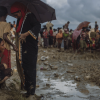
No Food, No Water, No Shelter: Two Days of Muck, Rain and Uncertainty
Last week, the Government of Bangladesh moved near 7,000 Rohingya refugees, who had been stranded in “no man’s land” near the Anjuman Para border crossing point in Cox’s Bazar’s Ukhia District, into more appropriate settlement areas. The Rohingya are fleeing violence, which broke out in Myanmar on 25 August.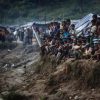
Donors Pledge over $344 Million in Response to Rohingya Refugee Crisis
The international donor community today announced pledges for more than US$344 million to urgently ramp up the delivery of critical humanitarian assistance to Rohingya refugees and host communities in Bangladesh.
UN Migration Chief Ends Visit to Bangladesh as Bleak Picture Emerges of Rohingya Settlements
Yesterday (19/10) over 6,900 Rohingya refugees who were stranded in dire conditions in no-man’s land at Anjuman Para on Bangladesh’s side of the border, were moved by the Bangladesh military to several makeshift settlements in the Ukhia and Teknaf sub-districts of Cox’s Bazar. Some 800,000 Rohingyas are now living in the settlements, 589,000 of whom have arrived since August 25th.
Caught in Conflict without Travel Documents
In early October, three Ethiopian boys in Yemen told IOM, the UN Migration Agency, “we miss our family and can no longer stay here.”UN Principals call for solidarity with Rohingya refugees
After violence broke out in Myanmar’s Rakhine state on 25 August, more than 500,000 Rohingya refugees crossed into neighbouring Bangladesh in less than five weeks. Tens of thousands of refugees have arrived since, fleeing discrimination, violence and persecution, as well as isolation and fear.
Migration: Making the Move from Rural to Urban by Choice
For the first time in history, more people live in cities than rural areas. Every year millions of people leave their homes in the countryside and migrate towards urban centres both within their own countries and across borders. Some of these people move simply to seek new opportunities and improve their lives. Others are forced to flee due to conflict or sudden or slow onset disasters, such as drought, flooding or rising sea levels, which are often exacerbated by climate change and environmental stress.
Humanitarian Needs Spike as Rohingya Arrivals in Cox’s Bazar Top 536,000
An estimated 536,000 people have fled Myanmar and arrived in Cox’s Bazar, southern Bangladesh, over the past 47 days, according to the IOM-hosted Inter Sector Coordination Group (ISCG) of aid agencies. Numbers spiked again this week when some 15,000 Rohingya crossed into Bangladesh between 9-11 October.
Rohingya Children Drown Fleeing Myanmar Violence
Tragedy struck more Rohingya refugees fleeing violence in Myanmar last night. At least 13 people, mostly children, drowned when the fishing boat carrying them to safety in Bangladesh capsized in stormy weather.
Cox’s Bazar Health Facilities Struggle to Cope as New Arrivals Pass 415,000: IOM Scales Up Mobile Teams, Support to Government Clinics
IOM, the UN Migration Agency is working with Government and aid agency partners to rapidly ramp up fixed and mobile health services in Bangladesh’s Cox’s Bazar district to help some 415,000 people who have fled violence in Myanmar’s North Rakhine State over the past three weeks.
Bangladesh PM Visits Overflowing Settlements in Cox’s Bazar, Calls on Government, International Community to Help Most Vulnerable New Arrivals from Myanmar
IOM, the UN Migration Agency, yesterday welcomed a visit by Bangladesh Prime Minister Sheikh Hasina to assess the unfolding humanitarian crisis in Cox’s Bazar. An estimated 370,000 people have fled to the district from neighbouring Myanmar to escape violence since August 25th.
New Arrivals in Bangladesh from Myanmar Reach 313,000: IOM Seeks USD 26.1 Million to Address Lifesaving Needs
IOM, the UN Migration Agency, has appealed for USD 26.1 million to meet the immediate needs of some 313,000 newly-arrived Undocumented Myanmar Nationals (UMNs) now sheltering in seven sites in Bangladesh’s Cox’s Bazar district.
270,000 Flee Myanmar in Two Weeks: UN Migration Agency in Bangladesh Scales Up Emergency Response
IOM, the UN Migration Agency, today (8/9) confirmed that 270,000 people have fled violence in Myanmar to seek safety in Bangladesh since 25 August.
UN Migration Agency Launches New Missing Migrants Website
IOM, the UN Migration Agency has launched its new Missing Migrants Project website: https://missingmigrants.iom.int/. The Missing Migrants Project tracks migrants, including refugees and asylum-seekers, who have died or gone missing while migrating to an international destination.
The Difference Between Trafficking in Persons and Smuggling of Migrants
Trafficking in persons (TiP) and smuggling of migrants (SoM) directly affect ACP (African, Caribbean and the Pacific Group of States) countries and their European Union counterparts.
UN Migration Agency Statement on International Day of the Disappeared
Nearly, 23,000 migrant fatalities worldwide have been recorded by IOM, the UN Migration Agency’s Missing Migrants Project since 2014. Overall, 60,000 deaths on migration routes have been recorded in the last twenty years. However, not all deaths and disappearances are reported and/or recorded. In many regions of the world, migrants’ bodies are never found, and many more may never be identified.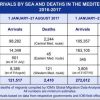
No Migrant Deaths at Sea in Last 20 Days as Mediterranean Arrivals Reach 121,517 for 2017
Since 9 August, IOM, the UN Migration Agency, has not received any reports of migrant deaths in the Mediterranean. The total count for Mediterranean Sea fatalities has remained at 2,410 for 20 days. Just 19 deaths have been recorded in the region so far in all of August by IOM, a sharp drop from the 689 recorded in August 2015 and 62 last year.
I Will Never Forget Her Face
On a hot, flat, stony plateau outside Kismaayo, Somalia, hundreds of people pack into a settlement for displaced people. Bashir Mukhtar stands at a water point, helping weary women lift jerry cans of water. Over the last five years, he has witnessed a wave of humanitarian crises, affecting many communities in south Somalia’s Jubbaland. Mukhtar could have easily opted for another profession but decided that humanitarian work in one of the harshest environments was his calling.
Over 38,000 Migrants Assisted with Voluntary Return by UN Migration Agency in First Half of 2017
Some 19,088 migrants have returned home voluntarily with assistance from IOM, the UN Migration Agency, from 1 April to 30 June 2017, according to the IOM AVRR quarterly bulletin published today (18/08). These migrants have returned from 81 host and transit countries to 136 countries and territories of origin.
The Perils of Irregular Migration: From Migrant to Migrants
Migrants are increasingly becoming communication agents, revealing their own stories, fears, hopes and dreams. The testimonies below are part of the Aware Migrants information campaign, implemented by IOM, the UN Migration Agency and funded by the Italian Ministry of Interior with the aim of helping potential migrants in making informed decisions by warning them about the real dangers of the journey along the main routes from East and West Africa across the desert and the Mediterranean.« Previous Page


The Week with IPS

NEXT STOP - SDGs
Tracking global progress towards a sustainable world
Tracking global progress towards a sustainable world
