Tuesday, October 6, 2026



News and Views from the Global South
No Food, No Water, No Shelter: Two Days of Muck, Rain and Uncertainty
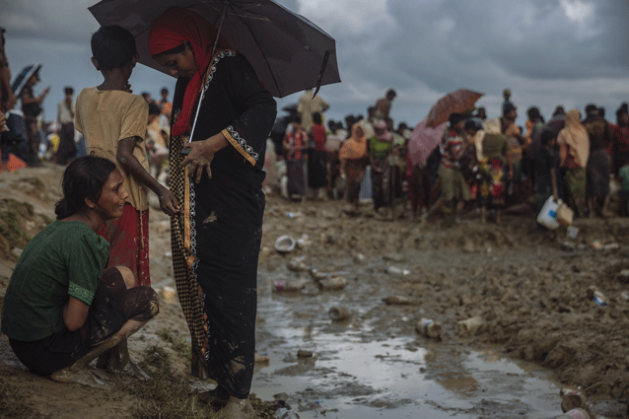
Nearly 7,000 Rohingya refugees were stranded on a strip of land between Myanmar and Bangladesh for two days last week.
Credit: Muse Mohammed/UN Migration Agency (IOM) 2017
- Last week, the Government of Bangladesh moved near 7,000 Rohingya refugees, who had been stranded in “no man’s land” near the Anjuman Para border crossing point in Cox’s Bazar’s Ukhia District, into more appropriate settlement areas. The Rohingya are fleeing violence, which broke out in Myanmar on 25 August.
Credit: Muse Mohammed/UN Migration Agency (IOM) 2017
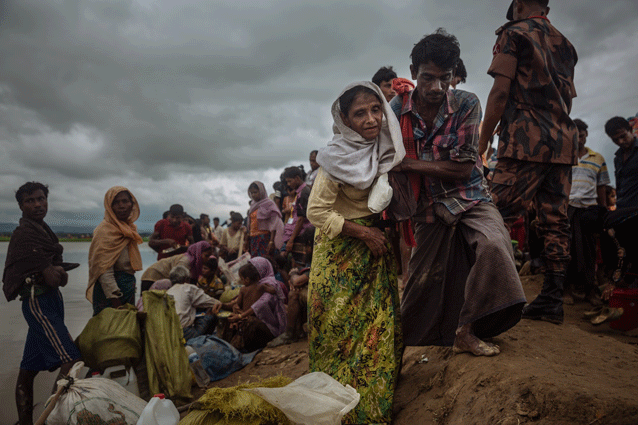
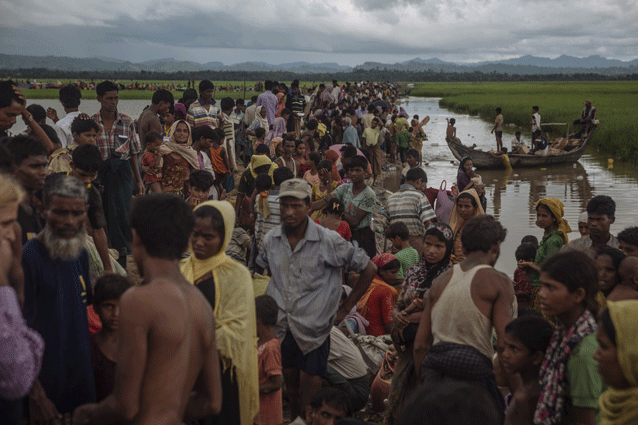
For 72 hours, the stranded Rohingyas had been lining up on the banks of paddy fields in Anjuman Para, which is in Bangladesh’s territory. There were lines as far as the eye could see.
They had been surviving for two days with the bare minimum, sleeping out in the open, on the sides of mud-swollen mounds and creeks that split the rice patties. The refugees had walked for days to reach Bangladesh.
Credit: Muse Mohammed/UN Migration Agency (IOM) 2017
Thousands of people – some sick, some pregnant, some elderly, some with disabilities — waited under the sun using what little they had to protect themselves from the heat and rising humidity.
They sat for hours, the distant buzz of their voices floating across the paddy field, as they waited to cross deeper into Bangladesh. They have little food to eat or water to drink.
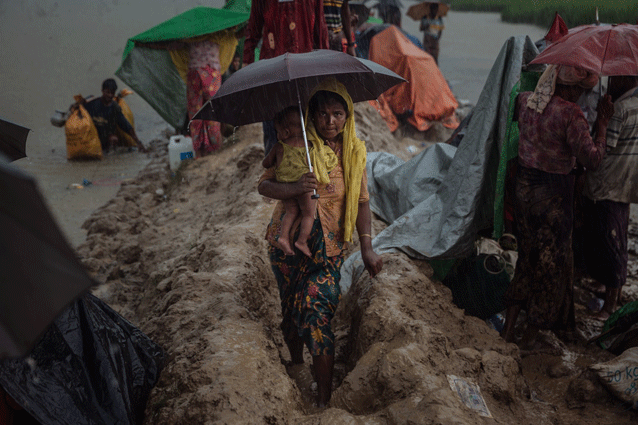
Then came a sudden downpour of rain — a frequent occurrence during the monsoon season.
Credit: Muse Mohammed/UN Migration Agency (IOM) 2017
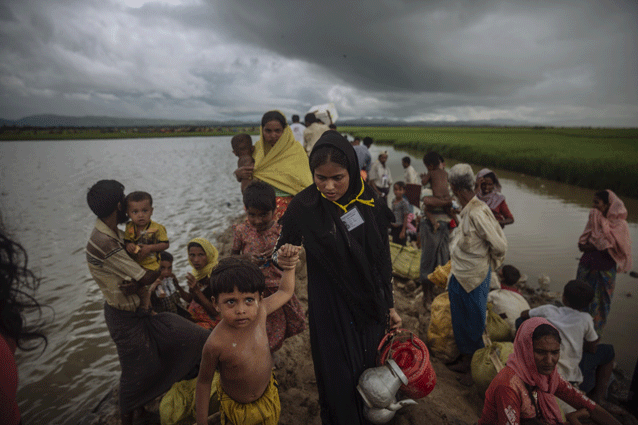
Then, some of the crowd began to move, as men, women and children jumped into the river trudging their way across its banks.
Weighed down with their meagre possessions, men began to paddle with sacks hanging from shoulder poles, while women carrying children slogged across the rising waters.
Children hung onto the hands of their parents for dear life, slowly climbing the muddy river banks to seek shelter. They cried, as their parents stared across the short distance with haunted eyes.
Credit: Muse Mohammed/UN Migration Agency (IOM) 2017
Due to lack of space on the banks, some spoke of sleeping sitting up.
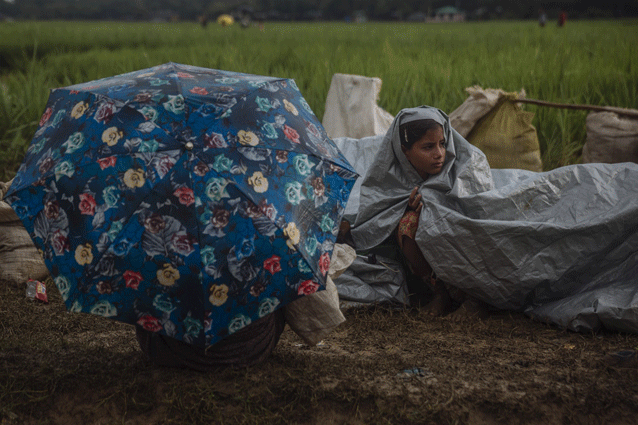
While they waited for it to be their turn to cross, the stranded Rohingya hid under flimsy plastic sheets with children huddled by their side, others with nothing to use for cover just sat in the open, enduring the pelting rain.
The new arrivals still terrified and starving, described scenes of horrific violence before escaping their villages in Myanmar.
Credit: Muse Mohammed/UN Migration Agency (IOM) 2017
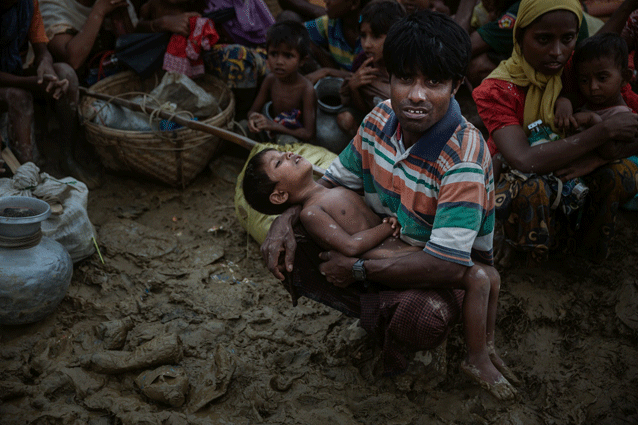
“We stay here during the night. We pass our nights sitting up. We haven’t had anything to eat in two days,” one man told IOM, the UN Migration Agency.
“They were burning our houses and cutting us into pieces and chasing us from our homes. It took us ten days to get here,” another woman said.
“I don’t have any shelter to hide under, so when the rain comes I get wet,” she added.
Credit: Muse Mohammed/UN Migration Agency (IOM) 2017
The stranded refugees were eventually all moved into the Ukhia and Teknaf sub-districts of Cox’s Bazar by the Bangladesh military. They are now in settlements where, IOM, the UN Migration Agency, and its partners are providing lifesaving assistance to them.
This story was posted by the UN Migration Agency’s team in Cox’s Bazar, Bangladesh.
 Print
|
Print
|