Languages
Monday, October 12, 2026



News and Views from the Global South
Cuban Women Face Challenges of Self-Employment
Beatriz Lemes took her time deciding, and finally agreed “apprehensively” to take the job of heading a state-run company that is making the transition to financial autonomy, a system that is spreading throughout Cuba and is testing women’s capacities, among other things.Ecobreves – HONDURAS: Communities Reject Open-Pit Mining Project
Residents of some 15 municipalities in El Triunfo, in southern Honduras, have rejected an open-pit mining project proposed by a Canadian company.Ecobreves – BRAZIL: Pollution Poses Health Risks to Transport Workers
Workers whose jobs place them in direct contact with air pollution face a higher possibility of health problems involving the eyes and lungs, as well as a higher risk of cancer.Ecobreves – CHILE: Incidental Capture of Sharks Denounced
A new scientific study reveals high rates of incidental capture of sharks along the coasts of Chile, as a result of swordfish fishing.Ecobreves – VENEZUELA: Environment Affected by Refinery Fire
The air, water, flora and fauna on the peninsula of Paraguaná, in northwestern Venezuela, will be affected by the smoke produced by more than 200,000 barrels of fuel that burned for three days after a gas explosion at the Amuay refinery, one of the largest on the planet.
Ruling Against Thermoelectric Plant Sparks Debate
By 2020, copper mining in Chile will require almost double the electricity consumed in 2011, say the authorities.
Women Take up Care of Tohoku Elders
Yumiko Yonekura, who survived last year’s massive earthquake and tsunami that devastated Tohoku in northeast Japan, has just launched ‘Hot Care Kesenuma’, a welfare company that provides special care for feeble elders in the affected region.Taiwanese Officials Get Away With Murder, Legally
Human rights activists warn that Taiwan government prosecutors have sent a message that torture is permissible by refusing to indict a former defence minister and eight other former military officers behind the wrongful execution of a young Air Force private by torturing him into confessing rape and murder.Burkina Faso’s VIPs – Very Important People Championing Ventilated Improved Pit Latrines
For far too many households in Burkina Faso, going to the toilet means heading for the bush. The Burkinabè government has launched a new campaign to change this, calling on prominent personalities as both sponsors and champions.
Kashmir’s Roads Turn Militant
The violence that killed thousands in Kashmir during the turbulent 1990s has eased; now killer roads are taking their toll.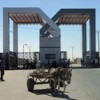
Knocking on an Uncertain Gateway to the World
“I waited from 10 am till 5 pm for my wife to cross from Egypt. She was among many hundreds who were coming into Gaza. Some waited since 6 am, some since the day before.”Irregular Migrants Face the Boot in Greece
A crackdown on irregular migration has entered its fourth week in Greece. The government is shutting the Greek-Turkish northeastern border across river Evros, and removing massive numbers of undocumented migrants from big urban centres into makeshift detention camps.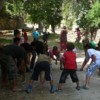
Palestinian and Israeli Kids Play a Serious Game
On a sunny summer afternoon, kids start arriving with their parents at a park near Ein Rafa, a Palestinian village in the south of Jerusalem. The Arabic speaking kids stay in one cluster at first, and the Hebrew speaking kids chat among themselves. Soon a ball appears, and before long all the kids intermingle in a fast-paced game of Chinese football.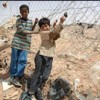
Palestinians Find Refuge Across the Atlantic
Issam Ali Hassan spent more than four years in an isolated desert camp in Jordan before he was taken in by Brazil. The son of Palestinians had been living as a refugee in Baghdad when he had to escape after the United States invaded Iraq in 2003.Filling the Granaries in Burkina Faso
The seeds were sown, and the harvest is beginning to come in. Burkina Faso farmers are reaping the benefits of their government’s programme to develop and popularise improved varieties of maize.
Study Damns Mekong Dams
Impoverished Laos is unlikely to cancel a Thai project to build a mega dam across the Mekong River at Xayaburi, despite warnings from the International Union for Conservation of Nature (IUCN) that it could devastate the region’s rich biodiversity.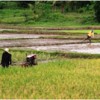
Philippines Floods Prompt Climate Action
This year’s floods, one of the worst in Philippine history, destroyed a staggering 57 million dollars worth of crops, pushing this climate vulnerable country to implement disaster risk reduction measures.U.S. Foreign Weapons Sales Triple, Setting Record
U.S. weapons sales around the world have massively expanded over the past year, setting several records. Agreements for foreign arms sales in 2011 totalled around 66.3 billion dollars – three times higher than the previous year and constituting an “extraordinary increase”, according to the Congressional Research Service.Ecobreves – ARGENTINA : Immediate Ban on Endosulfan Demanded
An environmental organization in Argentina is calling for an immediate ban on the import, manufacture and sale of endosulfan, a highly toxic insecticide that the country plans to eliminate in July 2013.Ecobreves – HONDURAS: Weather Disturbances Foster Dengue
Health authorities in Honduras have attributed the upsurge in dengue to weather variations, such as unusually high daytime temperatures and heavy rain at night, in addition to the accumulation of garbage in different neighborhoods.Ecobreves – BRAZIL: Environmental Awareness Growing
The percentage of Brazilians who believe that the country has no environmental problems fell from 47 percent in 1992 to 11 percent in 2012.« Previous Page — Next Page »





The Week with IPS

NEXT STOP - SDGs
Tracking global progress towards a sustainable world
Tracking global progress towards a sustainable world
