Languages
Tuesday, November 10, 2026



News and Views from the Global South
RIGHTS: Obama Urged to Fully Comply with Anti-Torture Treaty
The fifteenth anniversary of the U.S. ratification of the United Nations Convention Against Torture passed last week with little fanfare and virtually no press attention from the mainstream media here.
PAKISTAN: Students Want Schools to Remain Open Amid Attacks
Tiny Spogmay, a Grade 1 student in one of the biggest schools in the violence-wracked North West Frontier Province (NWFP), is deeply disturbed by the government’s decision to shut down educational institutions all over the country in the wake of renewed terrorist attacks, forcing her to stay home.Ecobreves – HONDURAS: 'Green' Garbage Cans Get Government Attention
Honduran tourism and environmental officials are promoting an eco-garbage can project to foment a culture of recycling and garbage classification among residents in the capital, home to 1.7 million people.Ecobreves – MEXICO: Proven Eroding of Aquifers
Mexico's watersheds have deteriorated in recent years, threatening environmental health across vast areas, warn non-governmental groups.Ecobreves – BRAZIL: One Tire Sold, Another Collected
Starting this month a new environmental policy requires Brazilian industries and importers to collect and appropriately dispose of as many "unusable" automobile tires as they sell new.CHINA: Cultural Counteroffensive at Int’l Book Fair: Hit or Miss?
This year’s Frankfurt Book Fair may have been more of an embarrassment than prestige for its guest of honour – China – but the country’s cultural mandarins still believe that the future of cultural ideas belongs to the Middle Kingdom and that the global financial crisis will play a role in helping them achieve that.ENERGY: World Bank Looks for the Cleaner Way
With new energy and environment strategies in the pipeline, the World Bank and its critics are going head to head on issues of fossil fuel funding and clean energy. The Bank will now call in outside experts to ensure that its coal power financing is justifiable, but critics would prefer it to go for truly clean energy.RIGHTS: ‘Too Innocent to Try, too Guilty to Fly’
Getting blacklisted as belonging to a terrorist organisation is a punitive sanction, even though governments may say it is only an administrative measure, according to the American Civil Liberties Union (ACLU) and the European Centre for Constitutional and Human Rights (ECCHR).CAMBODIA: Climate Fight an Uphill Battle, But All’s Not Lost
As one of the world’s poorest nations, Cambodia is by definition one of those least able to protect itself from the effects of climate change. As an agrarian society, it is one of those most susceptible to climate change.RIGHTS: Arms Treaty Could Be Powerful Tool to Protect Children
The impact of global weapons trafficking on children and their recruitment as fighters should be on the agenda of talks for an international Arms Trade Treaty, say United Nations experts and non-governmental organisations.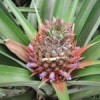
AGRICULTURE-COTE D’IVOIRE: Small-scale Pineapple Growers Want More Support
Karim Diabaté, looks questioningly at his vast 20 hectare pineapple plantation in Bonoua in south-eastern Côte d'Ivoire. "I'm asking myself if if I'll get the money I need for in time for the inputs I need and keep my plants going."
INDIA: Single Women Break Their Silence, Challenge Societal Norms
It has been more than eight years since the January 2001 earthquake struck the Indian state of Gujarat, but Hansa Rathore still cannot quite shake off memories of that not too distant past — all because it left her a widow.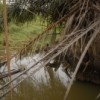
WATER-MOZAMBIQUE: Remote Villages Out of Sight, Out of Mind?
"This is where we get our water from," says a villager on the footpath leading out of Mcondece. Branches and other debris float on the surface of the sluggish, murky brown creek.KENYA: AIDS Prevention Amongst Drug Users a Challenge
The United Nation Office on Drug and Crime (UNODC) claims that Kenya has more drug users than any other East African country. UNODC estimates there are 100,000 cocaine users, 200,000 using opiates like heroin and four million who smoke cannabis.RIGHTS-CHINA: Children Among “Missing” Xinjiang Detainees
"It was late in the evening, and we were just getting ready for bed. Three men in black police uniforms and another four in military camouflage came to our house. They said my sons have been involved in attacks against Chinese... they twisted their arms and led them away," said Kamalutdin K.PHILIPPINES: Storm-weary Farmers Suffer Huge Losses
Café by the Ruins, a popular rustic restaurant situated in Baguio City, the Philippines' famed mountain city resort, usually caters to tourists and residents who enjoy sipping their cups of brewed coffee while appreciating the artworks displayed on the café’s stone walls.
FILM: The Man Is Steel, the Tank Is Only Iron
"War is not made by heroes or Hollywood studs," says director Samuel Maoz. "War is mostly made by young and inexperienced guys. Children that are sent to go after and kill the ones they used to play with. That's what this really is about."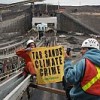
CANADA: Govt Threatens Tar Sands Activists with Anti-Terror Laws
The provincial government in Alberta, Canada is threatening to unleash its counterterrorism plan if activists continue using civil disobedience to protest the tar sands, Canada's fastest source of greenhouse gas emissions.EAST TIMOR: Seasonal Changes Cause for Alarm
If you order a beer, sit back and relax at one of the expat bars dotted along the coastal Pantai Kelapa road in this capital, you cannot help but notice the view: the stony beach, the swimming children and the grounded fishing boats. But that view is morphing — a visible sign of how climate change could be affecting East Timor.ASIA: For Mekong, Climate Change Is a Dev’t Issue – Experts
Far from looking at climate change as a distant theoretical issue for scientists and environmentalists to dissect, countries that share the Mekong River would do well to realise that it is first and foremost a development issue that threatens to affect food, environment and everyday lives.Ecobreves – HONDURAS: El Niño Predicted to Affect 10 Departments
The active cycle of the climate phenomenon known as El Niño will have greatest impact next year and will affect 10 of the 18 departments of Honduras, warned authorities, who predict extreme droughts.« Previous Page — Next Page »





The Week with IPS

NEXT STOP - SDGs
Tracking global progress towards a sustainable world
Tracking global progress towards a sustainable world
