Languages
Saturday, November 21, 2026



News and Views from the Global South

HAITI: A Land Crumbling Beneath Their Feet
Dardy Saint-Jean gazes at the rock-strewn river coursing through his village and shakes his head in disgust.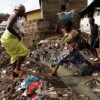
SIERRA LEONE: Caught Between Leaving the Kitchen and Putting Food on the Table
When Iyesha Josiah told people last year that after the August 2007 general elections, she would stand before them as a new member of parliament for Sierra Leone, they thought she was joking.TRADE-SENEGAL: Africa ''Will Not Be the Winner'' of the EPAs
''I do not know if a winner will emerge from the signing of the economic partnership agreement under the current conditions but I know for sure that Africa cannot be the winner,'' says Amadou Ba, who heads the international negotiations division at Senegal’s ministry of commerce.IRAQ: Mass Graves Dug to Deal With Death Toll
The largest morgue in Diyala province is overflowing daily. Officials told IPS they have had to dig mass graves to dispose of bodies.LABOUR-MALAYSIA: Forget Investors, Fix Minimum Wages – Unions
Malaysia's umbrella trade union body is pressing ahead with its campaign for a minimum wage despite the government's stand that such a benchmark would put off foreign investors seeking a low-cost environment.TURKEY: Winner May Not Rule
Turkey's Islamic-rooted governing party will soon put its record to test in a parliamentary election dominated by the role of religion in public life and possible military incursion into the Iraqi quagmire. It may win, but not govern.DEVELOPMENT: Too Many Donors Spoil the Aid
An excessive number of aid donors is hampering efforts to make development assistance more effective, a new study has found.CULTURE-ZIMBABWE: ''It Is Unlawful to Speak the Truth''
"If I am going to change anything in my script it will be punctuation marks. I am not changing anything else,’’ said Cont Mhlanga, a prominent Zimbabwean playwright and founder of Bulawayo-based Amakhosi Theatre Production House. He was responding to the banning of his play entitled ‘‘The Good President’’.PHILIPPINES: Anti-Terror Law Enforced Amid Protests
As the country’s new and controversial anti-terrorism law took effect this week there were calls by politicians, church leaders, other concerned groups and a United Nations special rapporteur for a deferment.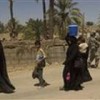
IRAQ: Partition Fears Begin to Rise
Many Iraqis are now beginning to see the rising sectarian violence as part of a larger plan to partition the country.RIGHTS: Violations Expected to Last Beyond Putin
Human rights campaigners in Russia and Finland fear that denial of rights will continue beyond the term of President Vladimir Putin, who is expected to step down in March next year.IRAQ: Al-Qaeda Escapes U.S. Assault
Air strikes have destroyed civilian homes rather than al-Qaeda targets under the U.S. military operation in Baquba, residents say.DEVELOPMENT: New EU Contract Could Fail MDGs
Anti-poverty campaigners are concerned that a new European Union proposal for improving development aid may not result in sufficient extra money for health and education in poor countries.Ecobreves – CHILE: Garbage Collectors, Unite!
On Jul. 11 in Chile, the National Movement of Garbage Collectors was born. With more than 200 members, the celebrated by marching under the slogan "Organized collectors will never be stepped on".Ecobreves – VENEZUELA: Mysterious Oil Spill
An oil spill of unknown origin and quantity has since Jun. 29 affected nine beaches along about 50 kilometers of the northeastern Venezuelan peninsula of Paria, near Trinidad and Tobago.Ecobreves – HONDURAS: Financing for Indigenous Farming
From August and for the next five years, the Honduran government will grant loans totaling 15 million dollars to 45,000 indigenous families in the western part of the country in an effort to promote sustainable development projects.Ecobreves – CUBA: Preparing Mangroves for Climate Change
Experts and residents of Cuba's Ciénaga de Zapata, one of the largest marshes in the Caribbean islands, are preparing for the impacts of climate change on the area's mangroves, coastal vegetation that provides a home to a great array of animal life.Ecobreves – BRAZIL: Sao Paulo Organic Oranges for the World
Of every 10 glasses of organic orange juice consumed in Europe and the United States, 8.5 are produced from fruit grown in groves in the north of Brazil's Sao Paulo state that are members of Grupo Montecitrus.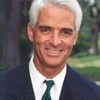
Q&A: "Climate Change Will Be Important for Years to Come"
This week, Florida's Republican governor announced that he would set a target of cutting the state's greenhouse gas emissions to 20 percent of 1990 levels by 2050, boost energy efficiency standards in new construction and require utilities to produce 20 percent of their electricity from renewable sources.
ISRAEL-LEBANON: Groups Call for Action on "War Crimes"
Allegations of unpunished war crimes and a general lack of accountability still plague Israeli-Lebanese relations one year after the Israel-Hezbollah war erupted, Amnesty International and Human Rights Watch charged in separate statements Thursday.TRADE: Following Oil Boom, Biofuel Eyed In Africa
While oil profits have flooded into countries such as Angola and Nigeria in recent decades, some African observers see new potential for the continent in the form of increasingly in-demand biofuels.« Previous Page — Next Page »


The Week with IPS

NEXT STOP - SDGs
Tracking global progress towards a sustainable world
Tracking global progress towards a sustainable world
