Languages
Sunday, November 22, 2026



News and Views from the Global South

Q&A: "I Was Just So Relieved the Zombie Didn't Keep a Blog"
This week marked the second annual Lulu Blooker Prize, which recognises the emerging genre of books based on weblogs. With 110 entries from 15 countries, the winners included the account of a U.S. machine-gunner in Iraq, a whimsical fiction book about the doorbells of Florence, and a memoir recounting a mother's struggle with lung cancer.DEVELOPMENT-KENYA: Media Civil to Civil Society?
They fight for the rights of AIDS patients, lobby for fairer trade regulations, highlight environmental ills - and address a host of other pressing issues in Kenya. But, some of them feel these initiatives are being given short shrift by the media.Ecobreves – VENEZUELA: New Release of Crocodiles and Turtles
With the arrival of the first rains this month in Venezuela, 343 Orinoco crocodiles (Crocodylus intermedius) and some 5,000 young giant South American river turtles (Podocnemis expansa), raised in captivity since they hatched a year ago, were released in rivers and marshes.Ecobreves – CUBA: A Drill Against Hurricanes
Practice in evacuation of people and property, and clean-up of rooftops and drainage systems were some of the activities of the Meteoro 2007 operation, a drill carried out May 19-20 aimed at reducing the damages caused by hurricanes in Cuba.Ecobreves – CHILE: Chimney Controversy in the Capital
The Intendant of the Metropolitan Region of Santiago, Adriana Delpiano, criticized the use of wood-burning stoves in the Chilean capital, which on Saturday, May 12, recorded its worst level of air pollution since 1999.Ecobreves – BRAZIL: Dams Can Make Use of Methane
The hydroelectric dams in the Brazilian Amazon could generate 30 to 50 percent more energy by making use of the methane gas found in the waters, says a study by the National Institute of Space Research.LATIN AMERICA: Second Chance for Indigenous People After ‘Lost Decade’
Tensions between indigenous people, governments and transnational corporations will grow in the second International Decade of the World's Indigenous People, which began in 2005, say experts.BOLIVIA: Faster Internet Connections – For the Few
A varied crowd of academics, civil servants, and university and high school students gathered in the hall of the vice-presidential building to celebrate Internet Day. The main event was the launching of Internet II, a project to incorporate Bolivia into the cutting-edge Latin American Cooperation of Advanced Networks (CLARA).MIDEAST: Hara-Kiri, Palestinian Style
It was an anguished entreaty from a veteran politician watching his own people tear themselves apart, but helpless to do anything about it.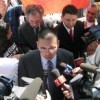
POLITICS-US: Latino Soldiers Who Refused Iraq Speak Out
A U.S. Army medic who refused to load his gun in Iraq and then escaped through a base window in Germany rather than be deployed a second time returned home to Los Angeles this week after serving six months in a U.S. military prison.DEATH PENALTY-GUATEMALA: Inmates in Limbo
Twenty-one inmates have spent years on death row in Guatemala because of a legal vacuum that has brought a de facto halt to executions but has done away with the president's right to pardon prisoners or commute their sentences.Q&A: "It Was Thuggery. State Thuggery"
There has been widespread anger at the police beating earlier this month of Law Society of Zimbabwe President Beatrice Mtetwa and three other lawyers: Terence Fitzpatrick, Colin Kuhini and Chris Mhike.Q&A: "It Was Thuggery. State Thuggery"
There has been widespread anger at the police beating earlier this month of Law Society of Zimbabwe President Beatrice Mtetwa and three other lawyers: Terence Fitzpatrick, Colin Kuhini and Chris Mhike.Q&A: “It Was Thuggery. State Thuggery”
There has been widespread anger at the police beating earlier this month of Law Society of Zimbabwe President Beatrice Mtetwa and three other lawyers: Terence Fitzpatrick, Colin Kuhini and Chris Mhike.INDIA: Dalit Woman Stages a Political Revolution
The Hindi word 'Dalit' has entered the international lexicon in recent years as an evocative reminder of the unique cruelty and injustice of India's caste system.LATIN AMERICA: For a Day Against Homophobia
"We don't want more or less rights than anyone else; we want exactly the same rights," says Mexican transsexual Sofía Valero, one of millions of Latin Americans who suffer discrimination and are at risk of gay bashings and murder because of their sexual orientation.MERCOSUR: GIVING SMALL FARMERS A VOICE IN POLICY DIALOGUE
What does MERCOSUR, the world's fourth largest trading block, have to do with the plight of poor rural people small farmers, landless workers, herders, fisherfolk and indigenous peoples? A lot, writes Lennart Båge, President of the International Fund for Agricultural Development (IFAD). Economic development and advances in technology are creating an ever-richer world for many. But millions of poor people in developing countries are at risk of being left behind and further marginalized. Poor rural people remain poor because they lack the basic assets to overcome poverty, such as access to markets and to the information and political power they need to advocate on their own behalf and take advantage of opportunities. Agriculture is one of the leading economic sectors in most MERCOSUR countries. It provides income and employment for millions of farmers and livestock herders. However, many of the poorest and most vulnerable people are not benefiting from global market opportunities.LATIN AMERICA: For a Day Against Homophobia
"We don't want more or less rights than anyone else; we want exactly the same rights," says Mexican transsexual Sofía Valero, one of millions of Latin Americans who suffer discrimination and are at risk of gay bashings and murder because of their sexual orientation.MIDDLE EAST: Iran Cosies up to UAE, Against US
It was billed as a meeting to intensify cooperation in the trade and energy sectors between two neighbouring countries suspicious of each other. But it also had to do with the United States.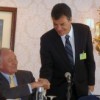
CLIMATE CHANGE: Cities Get Serious About CO2 Emissions
Leaders of the world's largest and most innovative cities met in New York this week with international business leaders, environmental experts and representatives of major urban utilities to discuss ways to cut carbon emissions through cleaner transport and more energy-efficient infrastructure.CHINA: As Role Model for African Development
China is playing a rare host to this year's annual meeting of the African Development Bank (AfDB), hoping to assert its mode of growth as role model for the impoverished African continent and benefit from its rich resources and economic potential.« Previous Page — Next Page »


The Week with IPS

NEXT STOP - SDGs
Tracking global progress towards a sustainable world
Tracking global progress towards a sustainable world
