Languages
Sunday, November 8, 2026



News and Views from the Global South
A Candle in the Darkness – Amnesty Turns 50
Thousands of people worldwide raised glasses in a toast to freedom over the weekend to celebrate Amnesty International's 50th anniversary.CHINA: HIV Patients Find Treatment but Face Discrimination
Despite notable successes in the battle against HIV and AIDS in China, discrimination against infected people remains rife here and critics continue to question the Chinese government over allocation of treatment funds.Ecobreves – BRAZIL: Plant Fibers Make Concrete More Resistant
Concrete blocks can be made more resistant with the addition of fibers from the sisal plant (Agave sisalana), commonly used to make rope and twine, according to research results from the São Carlos School of Engineering at the University of São Paulo.Ecobreves – MEXICO: Japanese Turtles to be Tested for Traces of Radiation
Mexican scientists fear that loggerhead sea turtles (Caretta caretta) crossing the Pacific Ocean between the coasts of Asia and the Americas could be suffering the effects of the Japanese nuclear disaster.Ecobreves – LATIN AMERICA: Concerted Efforts Needed to Protect Whales
Close to 20 Latin American organizations devoted to the conservation of whales are urging Venezuela to resume full membership in the International Whaling Commission (IWC).Peacemakers Swim Against the Tide
Although politicians seem to have put the peace process on ice, there are many different groups in Israel and the Palestinian territories that still believe in reconciliation. They call on the world not to believe in stereotypes. "The minute you choose sides, you become part of the conflict."G8: ‘Arab Spring Could Lead to African Drought’
Stressing that there is only so much money to go around, development experts worry that the aid package the Group of Eight (G8) has announced for North Africa may mean fewer funds for the rest of the continent.
PAKISTAN: Women Lose Livelihood Centres to Militants
Housewife Shahida Jabeen was devastated when she heard the news that she could no longer take sewing and embroidery classes at the local training centre in her hometown in South Waziristan in north-west Pakistan.New Iran Sanctions Could Push Petrol Prices Even Higher
U.S. lawmakers have introduced a new package of unilateral sanctions targeting Iran that would challenge U.S. President Obama's discretionary authority to enforce such sanctions and would impose comprehensive restrictions on foreign entities that ship, refine or provide any other related services to Iran's energy sector.Mideast Uprisings Underlie Falling Peace Index
The world has witnessed a decline in global peace over the last year, according to the 2011 Global Peace Index, or GPI, released by the Institute for Economics and Peace Wednesday.MIDEAST: Israel’s Cornered ‘Slaves’ Speak Out
A new Israeli law that would bind migrant workers in nursing or care-giving professions to their employers is raising alarm amidst human rights groups and legal experts, who say that the law infringes upon the workers’ right to dignity and freedom.Tajikistan’s New Generation of Guerrillas
While most of the world is closely watching the Middle East, monitoring the human rights situations in Bahrain, Syria, Libya and Israel, the International Crisis Group (ICG) is keeping its eye on neighbouring Central Asia.
Violence Threatening South Sudan Independence
Escalating violence in Abyei, the largest of several towns in the disputed borders between North and South Sudan, has displaced thousands of people and, according to U.S. officials, is threatening the viability of both the 2005 Comprehensive Peace Agreement (CPA) and the soon-to-be independence of Southern Sudan, set for Jul. 9, as the potential for civil war between the two sides grows.
Netanyahu Conditions Denounced as “War” by Palestinians
Israeli Prime Minister Benjamin Netanyahu laid out what he called his vision for peace with the Palestinians Tuesday, but listed a set of conditions the Palestinians immediately called "a declaration of war".
SOUTH AFRICA : Women Candidates Struggle in Local Government Elections
Political parties should be forced, through changes in legislation, to bring more women into government.
The results of the South African local government elections results have been declared and, while turnout is the highest since democratic elections started in 1994, women are falling way short of 50% representation in local government.
 The results of the South African local government elections results have been declared and, while turnout is the highest since democratic elections started in 1994, women are falling way short of 50% representation in local government.
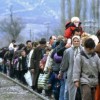
Global Refugee Problem Bigger Than Ever
This year marks the 60th anniversary of the landmark 1951 U.N. Convention on the Status of Refugees defining their rights and states' legal obligations to protect them.MIDEAST: Obama Peace Vision Sparks New Disputes
"The borders of Israel and Palestine should be based on the 1967 lines with mutually agreed swaps, so that secure and recognised borders are established for both states." The seemingly neutral and quasi-consensual principle laid out by U.S. President Barack Obama in his May 19 policy address on the current state of affairs in the Middle East and North Africa (MENA) region was all the more harmless that it was buried in the last quarter of his speech.Ecobreves – HONDURAS: San Pedro Sula Wants to Sell Carbon Bonds
The local government of San Pedro Sula, 250 kilometers from the Honduran capital, plans to sell carbon credits to finance the preservation of El Merendón mountain, considered the “green lung” of the city.Ecobreves – VENEZUELA: Argentine Birds Spend the Summer on the Orinoco
During April, May and June, half a million brown-chested martins (Progne tapera fusca) flock from southern Argentina to the city of Guayana on the banks of the lower Orinoco River in northeastern Venezuela, where they set up their “headquarters” in 18 ceiba trees in the downtown square known as Plaza de las Ciencias.Ecobreves – CUBA: Exotic Weed Used to Produce Charcoal for Export
The exotic plant known in Cuba as marabu (Dichrostachys cinerea), formerly considered a pesky weed, is now being used to produce charcoal, and there are plans to increase production to 40,000 tons for export to Europe this year, official sources told Tierramérica.« Previous Page — Next Page »





The Week with IPS

NEXT STOP - SDGs
Tracking global progress towards a sustainable world
Tracking global progress towards a sustainable world
