Languages
Saturday, November 28, 2026



News and Views from the Global South
INDONESIA: Sulawesi Bombs Cloaking Corruption?
Tension remains high in Central and West Sulawesi, where greedy politicians and rogue Islamic groups - rather than a revival of sectarian violence or international terrorism - look to be behind the latest attacks directed against Christian targets in Tentena and Mamasa.RIGHTS: Pakistan Awaits Child Camel Jockeys
This week Pakistan will begin rehabilitating a unique group of children - boys as young as four or five who were used as jockeys in the age-old Bedouin sport of camel racing.Ecobreves – COLOMBIA : More Land for Peasant Farmers
Colombian Agriculture Minister Andrés Arias announced on June 5, during the Peasant Day celebrations, that this year some 40,000 hectares of land -- worth some seven million dollars -- will be handed over to rural workers.Ecobreves – ARGENTINA: Successful Campaign Against Mining
A campaign led by a coalition of Argentine non-governmental organizations led the governor of the southern province of Río Negro, Miguel Saíz, to announce on June 4 a decree banning the use of cyanide and mercury in gold mining.Ecobreves – PERU:: Oil Company Sanctioned
Sixteen oil wells belonging to the Argentine transnational Pluspetrol, in the northeastern Peruvian department of Loreto, have been shut down as a sanction for contaminating some 100 hectares of forests and wetlands in the Huanganayacu gorge.Ecobreves – HONDURAS: Ecologists Stop Construction on Reserve
A group of Honduran ecologists has convinced the government to revoke an environmental permit to build houses in the mountains of La Tigra national park, an important area for water and forest resources surrounding the capital.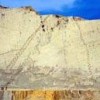
Following the Dinosaur Tracks
A cement quarry in southern Bolivia reveals secrets of 294 species of animals that disappeared 65 million years ago.
Sweet Experiment with Organic Sugar
Paraguay is the leading exporter of sugar produced without agrochemicals, a business that is forecast to move 26 million dollars in 2005.SOUTH ASIA: U.S. Interests on Tap in Pipeline Projects
South Asia has decided to enter the Big League of nations struggling to secure oil (and gas) supplies that are not (yet) under the sole superpower's control.DEVELOPMENT: Business As Usual Means 28 Million Dead Children
If development in Africa continues in a business as usual manner, sub-Saharan Africa will reach the UN Millennium Development Goal of reducing child mortality not by 2015 as targeted but a century later, a study says.POLITICS-ZIMBABWE: Opposition Leaders Press Ahead With More Mass Protests
Another eventful week in Zimbabwe; a two-day stay-at-home strike achieved very limited success that was blamed on poor leadership and mobilisation.POLITICS: Kashmiri Leaders Call for Three-Way Talks
They do not have a visible system, have never been elected by their people, and can boast of no opinion polls conducted to establish their credentials. And yet nine separatist Kashmiri leaders were accorded a warm welcome on their first ever public visit to Pakistan, which began Jun. 2.ENVIRONMENT-LATIN AMERICA: A Model That Isn’t Working
The formulas followed in Latin America and the Caribbean to fight environmental damages are not bringing the hoped-for results, and the region is unlikely to meet the commitment of guaranteeing environmental sustainability by 2015 or 2020, one of the eight Millennium Development Goals (MDGs).POLITICS: Civil Society Champion, or Partisan Operative?
In countries across the globe, independent organisations are struggling to build civil society. Depending on who is defining the goals of civil society, it can be alluring or unappealing; both transparent and ambiguous.POLITICS: Nuclear Warrior Replaces Bolton as Arms Control Chief
The top U.S. government official in charge of arms control advocates the offensive use of nuclear weapons and has deep roots in the militarist political camp.ECONOMY: Kenya Unveils Investor-Friendly Budget
The organisers of Kenya's strike, which paralysed the East African country for six days, called off their industrial action just before this week's budget day.POLITICS: White House Seeks Softer, Gentler Liaison to Arab World
If enthusiastic White House and Congressional support could solve Washington's public diplomacy problems, Dina Habib Powell would be well on her way to becoming a national heroine.TRADE: European Group Backs Chinese Textiles
As European Union commissioner for trade Peter Mandelson started talks in China Friday to defuse a growing row over textiles, some European textiles companies are accusing the bloc of protectionism.HEALTH: Polio Returns to Yemen
New concern has arisen following a rise in the number of polio cases.AFRICA: If Music Be the Food of Development, Play On
Forget religious fads, fast cars or the latest summer accessory. For many international celebrities the ultimate fashion must-have has become the 'Make Poverty History' wristband.CHINA: Neighbours Lukewarm to U.S. Criticism
Chinese officials have vehemently refuted U.S. Defence Secretary Donald Rumsfeld's charges that the nation's military build-up threatens regional stability but are clearly worried that ongoing disputes with international partners over policies ranging from exchange rates to textile exports could add weight to a new "China threat" theory.« Previous Page — Next Page »


The Week with IPS

NEXT STOP - SDGs
Tracking global progress towards a sustainable world
