Languages
Sunday, November 29, 2026



News and Views from the Global South
/ARTS WEEKLY/ARGENTINA: Flea Markets are Income for Some, Treasures for Others
As the aftermath of the late 2001 economic meltdown in Argentina has forced a growing number of people to part with valuable antiques and family heirlooms as a way of raising much needed cash, flea markets have mushroomed around the capital, providing a source of unbelievable bargains for treasure-hunting visitors./ARTS WEEKLY/CULTURE-INDIA: Repository of Knowledge in Perilous State
Dubbed as one of the most ancient libraries in India - the 400-year-old Sarasvati Mahal Library in this south Indian town in Tamil Nadu state is badly in need of patronage.MIDEAST: ‘Pre-Negotiations’ Bring Some Promise
Palestinian leader Mahmoud Abbas and Israeli Prime Minister Ariel Sharon go into Tuesday's summit in Egypt with a strong common interest - to portray their long-awaited meeting as a success - but with very different agendas.POLITICS-US: A Meeting of Minds and Policy
There is little doubt that George W. Bush and Natan Sharansky, a Soviet émigré who is a top political official in Israel, share a similar perspective about international affairs, especially in the Middle East.IRAQ: Arabs Fear Kirkuk Purge
"When someone has the power, he will take everything," says retired soldier Mohammed Hassan Mohammed in a Shia mosque in the Northern Iraqi city of Kirkuk.MIDEAST: ‘Pre-Negotiations’ Bring Some Promise
Palestinian leader Mahmoud Abbas and Israeli Prime Minister Ariel Sharon go into Tuesday's summit in Egypt with a strong common interest - to portray their long-awaited meeting as a success - but with very different agendas.EDUCATION: Italian ‘Godparents’ Sponsor Children in Paraguay
Cristian Núñez, a young Paraguayan who has been "sponsored" by an Italian family since he was five years old, is about to see his dream come true: he will start studying at the university in Asunción, the capital of that South American country, this month, with the aim of becoming an electrical engineer.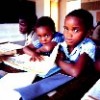
EDUCATION-ZIMBABWE: A Dubious Report Card for Grade Zero
Hats a size too large for most of the small heads, formal school uniforms equally incongruous, they march on regardless - the vanguard in an effort to bring pre-schoolers into Zimbabwe's education system.PAKISTAN: Women Feel Shortchanged As Local Elections Near
Recent moves by the military-controlled government in Pakistan to reduce the number of reserved seats for marginalised communities in local government institutions has angered women, who are threatening street protests of what they call ''squeezing of their political space''.IRAQ: ‘More a Census Than an Election’
Kurds are declaring victory after elections in Iraq's northern oil-rich city, Kirkuk, but other groups in the multi-ethnic city are not ready to concede; some allege massive voter fraud.IRAQ: ‘More a Census Than an Election’
Kurds are declaring victory after elections in Iraq's northern oil-rich city, Kirkuk, but other groups in the multi-ethnic city are not ready to concede. Some allege massive voter fraud..Ecobreves – COLOMBIA: Promoting Commercial Forestry
The forest industry is responsible for 38,000 direct jobs in Colombia, and if the area planted for commercial ends would expand from 150,000 to 3.0 million hectares in the next five years, the number of jobs would be 760,000, according to ''Outlook for investment in the Colombian forest industry''.Ecobreves – ARGENTINA: Entrepreneurs Dissuaded from Buying Preserve
Protests by residents and by environmental groups against the sale and logging of 25,000 hectares in Argentina's General Pizarro nature preserve, in the northern province of Salta, led businessman Manuel Santos Uribellarrea to withdraw from the project, Greenpeace representatives told Tierramérica.Ecobreves – PERU: Carrot and Stick for Polluters
The reform of Peru's Environmental Code will include economic incentives for compliance with environmental regulations, lawmaker Fabiola Morales told Tierramérica.Ecobreves – GUATEMALA: No to Unregulated Fishing
Family fishing operations in Guatemala's Izabal Lake, the largest in the country, covering a thousand square kilometers, have denounced a rise in illegal fishing by smugglers, whose activities they say could push several species to extinction.Ecobreves – HONDURAS: Pine Beetle Emergency
The Honduran government is working hard to prevent the spread of the southern pine beetle (Dendroctonus frontalis) plague in the northeastern department of Olancho, Roberto Cabrera, of the state-run forest development agency COHDEFOR, told Tierramérica.
Alarm Sounded on Panama-Colombia Electrical Project
Environmentalists fear that a project to connect the Colombian and Panamanian electrical systems will hurt Central America's largest protected area. The route of the power lines will be determined in six months.THAILAND: Thaksin’s Second Term Sweep-In, In The Name of Stability
There was no doubt in the minds of many that went to vote in Thailand's election on Sunday that Thaskin Shinawatra and his party, Thai Rak Thai (TRT), would emerge the winners. What was unexpected, however, was TRT's sweep of two-thirds of the 500 seats in Parliament.RIGHTS-KENYA: Ruling Party Hijacks the People’s Constitution
Kenya’s civil society groups are protesting over a law that gives parliament sweeping powers to alter the country’s draft constitution, without involving the people.RIGHTS: Nepal Plunged Into the Dark Ages, Cry Dissidents
Overseas Nepalis, even supporters of the monarchy, have criticised King Gyanendra - as the political turmoil in the Himalayan nation enters its fifth day since the monarch imposed strong media censorship after dismissing the government of Prime Minister Sher Bahadur Deuba and declaring a state of emergency in the country.POLITICS-SUDAN: Aid Workers in Darfur Try to Manage the Unpredictable
In New York this week, members of the United Nations Security Council busied themselves with a debate about whether genocide is taking place in the western Sudanese region of Darfur.« Previous Page — Next Page »


The Week with IPS

NEXT STOP - SDGs
Tracking global progress towards a sustainable world
