Languages
Sunday, November 29, 2026



News and Views from the Global South
PARAGUAY: Tragic Fire Denudes Layers of Negligence
An explosive mix of negligence, corruption, lack of enforcement of safety regulations in construction, an alleged order by the store owners to lock the doors, and a severely under-funded corps of fire-fighters led to the death of more than 300 people in a supermarket in the Paraguayan capital.DEVELOPMENT: Making a Big Noise Against Free Trade Agreements
Exactly 8,186 of the 10,000 activists who took part in the first Social Forum of the Americas in the Ecuadorian capital signed a petition to ''make a Big Noise because another America is possible.''POLITICS-SUDAN: Officials ‘Split’ Over U.N. Sanction Threat
Sudan has 'accepted' a United Nations resolution to rein in pro-government militias, known as Janjaweed, in the western region of Darfur, within 30 days, a surprising move that seems to reflect a split in the Islamic regime.RIGHTS-SOMALIA: Calls Made To Rein In Warlords
Somalia?s warlords, who have caused so much suffering during their country?s 20-year conflict, will be brought to book if human rights groups have their way.SOUTH KOREA: Dilemma of Defectors Upsetting Delicate Diplomacy
Adapting to life in the capitalist South is a challenge for thousands of North Korean refugees, but their difficulties may pale next to Seoul's task of balancing delicate regional diplomacy.SOUTH KOREA: Dilemma of Defectors Upsetting Delicate Diplomacy
''False expectations - that's how I put my life in South Korea, now,'' says North Korean defector Lee Min-Sun (not her real name), who works in a restaurant in the capital.TRADE: Agreement Still a Long Way Off
While top trade officials are commending themselves on breathing new life into the stalled Doha Round of trade talks over the weekend, interest groups say the negotiations have a long way to go before a satisfactory deal is reached.BANGLADESH: Floods Ease But ‘Real Disaster’ Still Looming
Although water levels in some of Bangladesh's overflowing rivers started dropping several days ago after sweeping away homes, crops, roads, bridges and schools, relief agencies warn the flood situation in most of the country's affected districts is still alarming with many Bangladeshis in dire need of emergency aid.POLITICS-LIBERIA: Policing the Police
Since the start of a United Nations disarmament programme in Liberia in December 2003, much attention has been paid to the painfully difficult process of reintegrating the country’s rebel troops into society./REPEATING/HEALTH-NAMIBIA: Regional Efforts Needed To Defeat AIDS
Namibia's health officials are grappling with the magnitude of the HIV/AIDS pandemic in the Caprivi Strip, which borders three of the world's worst affected countries - Zambia, Zimbabwe and Botswana./REPEATING/POLITICS-SUDAN: Officials ‘Split’ Over UN Sanction Threat
Sudan has 'accepted' a UN resolution to rein in pro-government militias, known as Janjaweed, in the western region of Darfur, within 30 days, a surprising move that seems to reflect a split in the Islamic regime.Ecobreves – GUATEMALA: Seeds of Literacy
A program for literacy and to promote new productive activities like reforestation are under way in communities of the northern Guatemalan department of Alta Verapaz, with financial backing from the European Union.Ecobreves – MEXICO: Paying to Care for Forests and Monarchs
Mexican peasant farmers who live in the areas where the monarch butterfly (Danaus plexippus) spends its winters will receive funds to take care of their forests.Ecobreves – COLOMBIA: Reforesting 3,000 Hectares
The Colombian Fund for Agricultural Financing, FINAGRO, will cover the costs this year for planting lumber species of trees over 3,000 hectares in the northern departments of Cesar and Magdalena.Ecobreves – PERU: Andean Glaciers Melting
The shrinking of the glaciers in the Peruvian Andes is a cause of concern for the head of the United Nations Environment Program (UNEP), Klaus Topfer, who is supporting an initiative to measure the surface of the glaciers every five years.Ecobreves – ARGENTINA: A Bill to Save the Caldén Tree
- Non-governmental groups in Argentina are leading the discussion on a legislative bill on forests that would help preserve the 'caldén' (Prosopis caldenia), an endangered tree.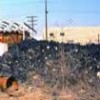
Cleaning Up Lead Contamination Along Mexican-U.S. Border
The inter-governmental program Border 2012 has begun to clean up toxic industrial waste that for a decade have been a presence in the lives of 10,000 people near the Mexican border city of Tijuana.PARAGUAY: Tragic Fire Denudes Layers of Negligence
An explosive mix of negligence, corruption, lack of enforcement of safety regulations in construction, an alleged order by the store owners to lock the doors, and a severely under-funded corps of fire-fighters led to the death of more than 300 people in a supermarket in the Paraguayan capital.TRANSPORT-COSTA RICA: Controversy Over Strike and Air Safety
Costa Rica's airports are operating normally, according to government officials, even though more than 100 air traffic controllers have been on strike since Jun. 26.AMERICAS SOCIAL FORUM: Weak Grassroots Presence; Heavy on the NGOs
Although activists agreed that the overall balance of the first Social Forum of the Americas, which ended Friday in the Ecuadorian capital, was positive, some told IPS there was a weak presence of grassroots movements and trade unions.TRADE-CENTRAL AMERICA: Integration Bogged Down Up to Its Axles
Integration is one of the most pressing challenges facing the seven nations of Central America, but the governments in the region merely declare their good intentions while showing a clear lack of political will to pull the process out of the current stagnation, say experts.« Previous Page — Next Page »


The Week with IPS

NEXT STOP - SDGs
Tracking global progress towards a sustainable world
