Languages
Sunday, November 8, 2026



News and Views from the Global South
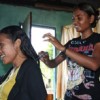
TIMOR-LESTE: Snipping Away at Youth Unemployment
In a small city where most of the 22,000 inhabitants rely on subsistence farming to put food on the table, one young woman has gone against the grain with a business venture that embodies the changing times in Timor-Leste, South-east Asia's newest and poorest nation.
Trials on new tuberculosis drugs that could halve the treatment time for the disease by 75% is starting in South Africa.
 Trials on new tuberculosis drugs that could halve the treatment time for the disease by 75% is starting in South Africa. Tinus de Jager reports …
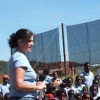
Water Out of Thin Air for South African School
It takes a moment to understand what the six-metre high net has been set up to capture: water. The Tshiavha Primary School's water supply is pulled out of the fog that rises over this mountainous part of South Africa's Limpopo Province.MIDEAST: In Jerusalem, East Is Nobody’s
The Palestinian Prime Minister ventured into Israeli-occupied East Jerusalem bypassing Israeli security authorities who tried to stop him. The city's Israeli mayor, who also wanted to venture into the eastern of part of 'his' city, was unable to because of objections from those same Israeli authorities.Math Doesn’t Add Up to Keep School Doors Open
As donors meet this week to allocate funds for global education, advocates warn that diminished support has forced many poor countries to consider closing schools and sacking teachers.New Staple Crop Varieties Take Aim at Malnutrition
When the Green Revolution took root in the 1960s and 1970s, plant biologists' main concern was increasing the yield of the staple crops on which people in poor countries depended. This, it stood to reason, would increase the amount of food available to the world's poor – and decrease hunger.POLITICS-BURMA: Few Surprises in First Poll in 20 Years
"People were busy watching Al-Jazeera and DVB (Democratic Voice of Burma) TV, but not about the vote," a Buddhist monk here remarked at the end of election day on Nov. 7, the first general poll to be held in this military-ruled country in 20 years.BURKINA FASO: Cost Major Obstacle to Reducing Maternal Mortality
Elizabeth Kaboré says she has paid for each of her visits to the clinic, despite a government promise that prenatal check-ups in health centres would be free.
DEATH PENALTY: Sudan Still Sentencing Minors to Death
Four minors are among nine people who have been sentenced to death for a carjacking in Khour Baskawit in South Darfur. The case has raised fresh concerns over protection for children's rights in Sudan.IMF Criticised for “Fancy Footwork” over Real Reforms
In what the International Monetary Fund is calling a historic moment, the institution approved long-awaited reforms Friday that would shift some decision-making weight to emerging economies. Some NGOs, however, do not see the reform as nearly that momentous.
If South Africa wins the bid to host the world’s most powerful telescope, it will prove that the state can be on the forefront of technology and science.
If South Africa wins the bid to host the world’s most powerful telescope, it will prove that the state can be on the forefront of technology and science. Zukiswa Zimela reports from Johannesburg.
AFRICA: Malaria Vaccine To Protect the Most Vulnerable
As nearly 25 years of development of a malaria vaccine come to fruition, health authorities across Africa will need to come to grips with how to effectively introduce it.Ecobreves – Census of Environmentalists
Venezuela has 131 civil society groups dedicated to environmental issues in a country of 28 million people, with half of its 916,445 square kilometers under some degree of environmental protection, according to the Directory of Environmental Non-Governmental Organizations, published by the Tierra Viva Foundation.Ecobreves – HONDURAS: Eco-Stoves Arrive in the Capital
"Eco-stoves," an improved version that reduces the consumption of firewood, are finding their way to Tegucigalpa's largest low-income neighborhoods -- in a bid to halt deforestation.Ecobreves – BRAZIL: Unbeatable in Can Recycling
Brazil recycled 98.2 percent of the aluminum cans used last year, according to a study by the Brazilian Aluminum Association (ABAL).INDONESIA: Minority Religions Pray For End to Discrimination
Clutching bibles and song leaflets, members of a Protestant church flocked into a one-storey building here, situated next to a new shopping mall on one of the busiest streets in this municipality in Indonesia’s West Java province.
SYRIA: Iraqi Kids Struggle on Dangerous Edges
Leila, 17, presses her hijab-clad head against the front door and strains to hear outside. "There's nothing," she says cautiously, turning towards her mother Rawda, the head of the household, in their quiet basement apartment. Along the brocade couch sit her two sisters, Mona, 19, Nadja, 15, and 10-year-old brother Khaled.*
Concern over growing numbers of pregnant pupils dropping out of school has rekindled the debate over the link between intergenerational sex and HIV infection among youth in Southern Africa.
Concern over growing numbers of pregnant pupils dropping out of school has rekindled the debate over the link between intergenerational sex and HIV infection among youth in Southern Africa. Marshall Patsanza reports from Johannesburg.

Tinus de Jager asks Peter Pike of the South African department of water affairs why it took Orasecom ten years to start their quality survey on the Orange-Senqu river basin
Tinus de Jager asks Peter Pike of the South African department of water affairs why it took Orasecom ten years to start their quality survey on the Orange-Senqu river basin

Despite concerns about the quality of the water in South Africa affecting fresh produce and a supermarket taking products off its shelves, some experts say there is no reason to worry.
Despite concerns about the quality of the water in South Africa affecting fresh produce and a supermarket taking products off its shelves, some experts say there is no reason to worry. Marshall Patsanza reports.

POLITICS-BURMA: To Vote or Not to Vote
Near markets, bus stops and busy areas in this city, groups of young people are busy handling out leaflets with a photograph of Nobel laureate Aung San Suu Kyi and her message saying "people have a right not to vote if they don’t want to".« Previous Page — Next Page »





The Week with IPS

NEXT STOP - SDGs
Tracking global progress towards a sustainable world
Tracking global progress towards a sustainable world
