Languages
Monday, November 9, 2026



News and Views from the Global South

IBSA Editors Forum, Brasilia
 As the leaders of the IBSA and BRIC groupings met in Brasilia on April 15, IPS hosted an official meeting of leading media editors from Brazil, India and South Africa. IPS Director General Mario Lubetkin and the chair of the IPS core donors group, Carlos Roberto Tiburcio de Oliveira, presented the recommendations from the meeting to President Lula, Prime Minister Singh, President Zuma, their Ministers and delegations, in a segment broadcast live on Brazilian national television. Read more: ips.org/institutional/ibsa-editors-forum-brasilia/
RIGHTS: Zambia Pushes Anti-Counterfeit Bill Despite Health Danger
Zambia is pushing forward with formulating an anti-counterfeit draft law which will include medicines, despite the controversy that has surrounded similar laws in East Africa and despite having existing legislation which has been used to successfully prosecute counterfeiters of medicines.
BURMA: Two Years after Nargis, Life Is Far from Normal
Kyaw Moe is just in his 30s, but he is already on his second shot at life – just like the rest of the residents of Thakan Ngu, a tiny Burmese village in this township of Bogalay.2010 – International Year of Biodiversity Loss?
In 2002, world leaders committed to reduce the rate of global biodiversity loss by 2010, but the date has come and gone for these commitments to be fulfilled.Native Delegates Challenge Development Orthodoxy
While aboriginal peoples represent approximately five percent of the world's population, they are 10 percent of the world's poor, according to a new World Bank report on "Indigenous Peoples, Poverty and Development".If Only Just a Billion Were Hungry
The bad news is that 1.02 billion people are going hungry in today's world of plentiful supplies. The even worse news is that this figure only tells part of the global food insecurity story.When Israel is 64
"Mine forever more, Will you still need me, Will you still feed me, When I'm sixty- four." Israelis weren't explicitly intoning the Beatles when they gathered around their Bar-B-Q get-togethers or followed the live broadcasts of official state ceremonies.CHINA: Stigma Stays Despite Lifting of Ban on People with HIV
China’s lifting of its longstanding ban on foreign visitors with HIV removes a restriction that many Chinese doctors and activists find discriminatory, but erasing the stigma attached with the virus remains one of the biggest challenges ahead in facing the disease.
Protesters Call Dam Project a “Disaster” for Brazil’s Native Communities
A modest protest gathered outside the Permanent Mission of Brazil in New York on Wednesday to oppose the controversial Belo Monte dam project in Brazil.
MIGRATION-US: “You’re a Criminal Just Because You’re Brown-Skinned”
Critics of Arizona's new immigration law, which requires police to question people they suspect to be undocumented immigrants, say "reasonable suspicion" boils down to having brown skin and looking Latino.U.S.: Protests Mount Against Immigrant Crackdown
Three civil rights organisations are suing the U.S. government to obtain records related to a little-known programme known as "Secure Communities" that further involves local and state police in federal immigration enforcement.FIJI: Gov’t Not Backing Down on Controversial Draft Media Law
Fiji’s draft media decree continues to be criticised from within and outside this tiny Pacific nation, but the government is showing no signs of backing down or softening any of its provisions.
Sudan Election Results – Another Step Along Uncertain Road
A convoy of Omar al-Bashir supporters, hooting and chanting party slogans as it drove through Khartoum, drew only disinterested stares en route to a celebration at party headquarters on Apr. 26Fears of Military Takeover in Madagascar
The deadline the Malagasy Armed Forces gave transitional authorities to find a solution to the political crisis that has paralysed Madagascar for over a year will expire at the end of April.U.S. to Face Litany of Complaints at UN Human Rights Council
Human rights groups are telling the United Nations that the United States is failing to hold corporations, including private government contractors, accountable for human rights abuses ranging from human trafficking to murder.Goldstone Escapes Solomonic Trial
He is among the most respected international jurists. But in Israel today, and in much of the Jewish world, he is among the most reviled.EU-India Deal Could Kill a Health Lifeline
Life-saving medicines could become too costly for the world's poor after a new trade agreement between the European Union and India comes into effect, public health activists have warned.
RIGHTS-PAKISTAN: Children Undeterred by Attacks, Want Education
"I don’t feel any fear. My parents do. They instruct me almost every day to stay away from crowded places," said Afaq Ali, a Grade 1 student in this capital city of the militancy-wracked Khyber Pakhtunkhwa province in Pakistan.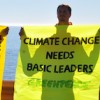
CLIMATE CHANGE: No Deal in Sight, Say Leading Economies of the South
Environment ministers from Brazil, South Africa, India and China are sceptical that a legally-binding agreement on climate change will be reached in Cancun, Mexico in December.Congress Moves to Curb Unlimited Corporate Campaign Money
This week will see the introduction of legislation in both houses of the U.S. Congress designed to blunt the impacts of a recent Supreme Court decision that held that corporations are people and thus have the right to spend unlimited amounts of money on political campaigns for or against any candidate.Arizona Could Pay High Price for Anti-Immigrant Law
U.S. immigration experts, law enforcement officials and religious leaders are hitting back at the draconian legislation signed into law in Arizona last week, charging it will subject the state to "staggering potential costs" and vowing to have the law declared unconstitutional in the courts.« Previous Page — Next Page »





The Week with IPS

NEXT STOP - SDGs
Tracking global progress towards a sustainable world
Tracking global progress towards a sustainable world
