Languages
Tuesday, September 15, 2026



News and Views from the Global South
US-NIGERIA: Acting President Gets Attention
Among the almost four dozen heads of state who have gathered here for this week's Nuclear Security Summit, Nigeria's acting president, Goodluck Jonathan, has been receiving a disproportionate share of high-level attention.U.S.: Kissinger Rescinded Warning Against Condor Assassinations
Five days before the assassination in downtown Washington of former Chilean Defence Minister Orlando Letelier, then-Secretary of State Henry Kissinger rescinded instructions to U.S. ambassadors in Latin America's Southern Cone to warn the region's military regimes against carrying out "a series of international murders", according to documents released by the National Security Archive (NSA) here.MIDEAST: Obama Said to Mull Israel-Palestinian Peace Plan
Amid still-unresolved tensions over Jewish settlement expansion in East Jerusalem, two major publications reported Wednesday that President Barack Obama is seriously considering proposing later this year a U.S. peace plan to resolve the Israeli-Palestinian conflict.DISARMAMENT: Mixed Reviews for Obama’s Nuclear Strategy
U.S. President Barack Obama Tuesday unveiled a new Nuclear Posture Review (NPR) that will significantly limit the circumstances under which Washington would use nuclear weapons as part of a strategy to bolster the Nuclear Non-Proliferation Treaty (NPT) and other efforts to halt and reverse the spread of nuclear arms.RIGHTS-US: Legality of Drone Strikes Still in Question
While welcoming an initial effort by the administration of President Barack Obama to offer a legal justification for drone strikes to kill suspected terrorists overseas, human rights groups say critical questions remain unanswered.IRAN: Obama Sanctions Strategy Complicated by Congress
President Barack Obama is hoping that relatively quick approval by the U.N. Security Council of a new round of sanctions against Iran will relieve growing pressure on Capitol Hill to take stronger measures against Tehran.HAITI: Recovery Bill Estimated at 11.5 Billion Dollars
Two weeks before a major donors conference, the Haitian government has estimated that the country will need some 11.5 billion dollars over the next three years to recover from the devastating Jan. 12 earthquake.MIDEAST: Israel-U.S. Tensions Continue to Percolate
Despite assurances by Secretary of State Hillary Clinton Tuesday that the United States and Israel share a "close, unshakeable bond", the week-old crisis between the two allies continued to percolate here Tuesday.MIDEAST: U.S.-Israeli Tensions Escalating Quickly
The crisis touched off by last week's announcement of Israel's plans to build 1,600 new homes for Jews in Arab East Jerusalem during a high-profile visit by U.S. Vice President Joseph Biden appears to be escalating rapidly.US-ISRAEL: Tiff or Tipping Point?
"Condemn" is not a word that rolls trippingly off the tongue of a U.S. politician addressing anything having to do with actions, however objectionable, by Israel.RIGHTS: U.S. Concerned Over Curbs on NGOs, Press, Internet
Releasing its annual report on the state of human rights around the world, the U.S. State Department Thursday said it was increasingly concerned about curbs imposed by foreign governments on civil society groups, the press, and Internet use.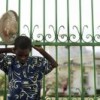
HAITI: U.S. Acts Quickly on Debt Relief Ahead of Preval Visit
With U.S. President Barack Obama preparing to host Haitian President Rene Preval at the White House Wednesday, Congress is moving quickly to show support for far-reaching debt relief and additional aid for the earthquake-stricken Caribbean nation.US-TURKEY: Armenian Genocide Vote Threatens Ties at Key Moment
Thursday's vote by a Congressional committee condemning the deaths of up to 1.5 million Armenians during World War I as "genocide" is almost certain to complicate U.S. ties with Turkey, a long-time strategic ally and increasingly influential player in the Middle East and central and southwest Asia.US-IRAN: Debate Over Military Action Against Iran Gains Steam
While the ongoing U.S. military "surge" in Afghanistan continues to capture the headlines, Iran's nuclear programme – and how best to deal with it – is rapidly emerging here as this year's biggest foreign policy challenge.NIGERIA: U.S. Concerned About Yar’Adua’s Return
U.S. officials expressed concern here Wednesday that the return of Nigerian President Umaru Yar'Adua, after a three-month stay in a Saudi hospital, could destabilise the oil-rich West African country.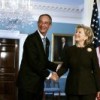
Q&A: “It’s Not Easy to Fight Impunity”
Guatemalan President Álvaro Colom said he intends to extend the mandate of the International Commission against Impunity in Guatemala (CICIG), in this interview with IPS during a three-day visit to the United States.SYRIA: U.S. Starts Normalisation Process in Earnest
After months of delay, the administration of President Barack Obama is taking major steps engage the government of Syrian President Bashar al-Assad as part of a broader regional strategy designed in major part to isolate Iran, escalate the fight against al Qaeda and other radical Sunni groups, and encourage peace talks with Israel.US-YEMEN: Clinton Hails Ceasefire, But Aid Concerns Remain
The ceasefire announced late last week between Yemen's government and Houthi rebels in the northern part of the country is being greeted here as an important initial step toward stabilising the Arab world's poorest country and reversing advances by al Qaeda's affiliate there.HAITI: U.S. Lawmakers, NGOs Call for Debt Cancellation
Three weeks after Haiti's devastating earthquake, nearly 100 U.S. lawmakers joined with key civil society groups here Thursday to urge the Group of Seven (G7) leading western nations to commit to cancelling all of the Caribbean country's multilateral debt.U.S.: Obama Calls for More Development, Counterinsurgency Aid
U.S. President Barack Obama Monday called on Congress to approve major increases over the coming months in global health, development, and counterinsurgency assistance as part of a record 3.8-trillion-dollar 2011 federal budget.HEALTH: 10-Billion-Dollar Vaccine Pledge by Gates Hailed
The pledge by the Bill & Melinda Gates Foundation to provide 10 billion dollars over 10 years on vaccines aimed at reducing child mortality in the world's poorest countries was hailed by global health organisations around the world Friday.« Previous Page — Next Page »


The Week with IPS

NEXT STOP - SDGs
Tracking global progress towards a sustainable world
Tracking global progress towards a sustainable world
