Languages
Friday, September 18, 2026



News and Views from the Global South
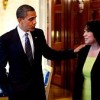
U.S.: Obama Picks Latina Judge as First Supreme Court Nominee
In a nomination that will almost certainly be approved by the U.S. Senate, President Barack Obama Tuesday announced the selection of Sonia Sotomayor, a federal appeals court judge whose parents were from Puerto Rico, to the nine-member Supreme Court.U.S.: Drive for Sanctions Likely in Wake of North Korean Test
Sunday's underground nuclear test by North Korea drew strong condemnation here Monday from U.S. President Barack Obama who suggested that Washington will seek strong international sanctions by the U.N. Security Council and possibly impose tough unilateral measures of its own.MIDEAST: : Obama Has Real Chance to Change Arab Opinion – Survey
President Barack Obama has a major opportunity to improve the mostly negative views about the United States in the Arab world, but is likely to have only a short period of time to do so, according to a major new survey of public opinion in Egypt, Jordan, Lebanon, Morocco, Saudi Arabia and the United Arab Emirates (UAE).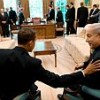
MIDEAST: Despite Smiles, Obama, Netanyahu Seem Far Apart
While reaffirming the "special relationship" between their two countries, U.S. President Barack Obama and Israeli Prime Minister Benjamin Netanyahu appeared unable to bridge major differences in their approaches to Iran and Israeli-Palestinian peace efforts following their White House meeting here Monday.U.S.: Mirror, Mirror on the Wall, Who’s the Greatest Threat of All?
A potentially major clash appears to be developing between powerful factions inside and outside the U.S. government, pitting those who see the Afghanistan/Pakistan ("AfPak") theatre as the greatest potential threat to U.S. national security against those who believe that the danger posed by a nuclear Iran must be given priority.U.S.: Obama Boosts Foreign, Development Aid Spending
True to his promises to bolster Washington's "soft power" abroad, President Barack Obama released details of his fiscal year (FY) 2010 budget that included significant increases in development assistance and other civilian-oriented tools of U.S. foreign policy.POLITICS: Maritime Treaty Would Boost U.S. Interests, Report Says
The U. S. should quickly accede to the U.N. Convention on the Law of the Sea, according to a new Council on Foreign Relations (CFR) report.U.S.: Obama's Global Health Plan Disappoints Activists
Global health activists expressed disappointment Tuesday over U.S. President Barack Obama's plans to spend 63 billion dollars over the next six years to fight diseases in poor countries overseas.U.S.: Major Foreign Tests Likely Over Next 100 Days
While Barack Obama has clearly improved Washington's image abroad during his first 100 days in office, the next 100 will almost certainly prove much more challenging for the new president's foreign policy.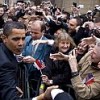
POLITICS-US: 100 Days of Latitude
One hundred days into his presidency, Barack Obama appears to have largely succeeded in putting U.S. ties with the rest of the world on a significantly more positive track, even as the foreign policy changes he has made thus far have been more rhetorical than substantive.ECONOMY: Crisis Pushing Key Poverty Goals Out of Reach
The global economic crisis has created a "development emergency" that will put at least some of the U.N.'s key poverty-reducing 2015 Millennium Development Goals (MDGs) out of reach for many countries, especially in sub-Saharan Africa and South Asia, according to a new report released Friday by the World Bank and the International Monetary Fund (IMF).US-CUBA: Despite Trinidad, Still in Limbo?
Despite a growing sense of anticipation coming out of the Trinidad Summit of the Americas last weekend regarding the possibility of a historic breakthrough in U.S.-Cuban relations, specialists here remain uncertain about how and even if that breakthrough will be achieved.U.S.: Greens Hail Obama’s OK to Regulate Greenhouse Emissions
U.S. green groups hailed Friday's formal finding by the Environmental Protection Agency (EPA) that carbon dioxide and several other greenhouse gases "endanger" public health and welfare as a landmark – if long overdue – step toward slowing global warming.US-LATAM: Summit Will Test Obama Magic
As Barack Obama packs his bags for his first trip as president to Latin America and the Caribbean, the big question is whether he will be bringing much with him - beyond his listening skills and charisma - that will excite the region and its leaders at the fifth "Summit of the Americas" in Trinidad and Tobago this weekend.HAITI: Donors Pledge 324 Million Dollars to Rebuild After Storms
International donors have pledged 324 million dollars over the next two years in additional aid to help Haiti recover from food riots and damage to roads and other key infrastructure caused by four hurricanes that ravaged Latin America's poorest nation last summer.US-CUBA: Obama Lifts Restrictions on Cuban-Americans
Fulfilling a key campaign promise, U.S. President Barack Obama Monday lifted all restrictions on Cuban-Americans to visit their homeland and send money to family members there.U.S.: Early Friction with New Israeli Govt
If the past week was any indication, the U.S.-Israeli relationship, which could scarcely have been smoother during the eight-year presidency of George W. Bush, appears headed for choppy waters.US: Obama Team Debates Stance on Israeli Attack Threat
A recent statement by the chief of the U.S. Central Command (CENTCOM), Gen. David Petraeus, that Israel may decide to attack Iranian nuclear sites has been followed by indications of a debate within the Barack Obama administration on whether Israel's repeated threats to carry out such a strike should be used to gain leverage in future negotiations with Tehran.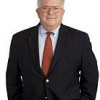
Q&A: "If I Were Chairman of the U.S. National Intelligence Council"
Appointed two months ago by the Director of National Intelligence Adm. Dennis Blair to chair the National Intelligence Council (NIC), the body charged with producing analyses on key issues on behalf of all 16 agencies of the U.S. intelligence community, ret. Amb. Charles "Chas" Freeman withdrew his name in mid-March after a sustained campaign against the appointment by right-wing leaders of the so-called "Israel Lobby" concerned about his past criticism of Israel’s relations with its Arab neighbours, and particularly its treatment of Palestinians in the Occupied Territories.ECONOMY: Zoellick Seeks New Trade Fund Amid Grim Outlook
For the first time since the Great Depression, global economic production will decline in 2009, according to the latest estimates by the World Bank, which also predicted a tough and uncertain 2010.U.S.: Washington Urged to Seek “Positive Engagement” With ICC
A bipartisan, blue-ribbon task force is urging the United States to formally announce a policy of "positive engagement" with the International Criminal Court (ICC) and send an observer to its 2010 Review Conference.« Previous Page — Next Page »


The Week with IPS

NEXT STOP - SDGs
Tracking global progress towards a sustainable world
Tracking global progress towards a sustainable world
