Languages
Tuesday, September 29, 2026



News and Views from the Global South
US-CHINA: Public, Elite Attitudes Reflect “Hope and Fear”
While the Chinese and U.S. publics and elites hold generally favourable views of each other, distrust between them also persists, according to a new "mirror" survey of both countries released here Monday.MIDEAST: Likudnik Hawks Work to Undermine Annapolis
Despite near-universal scepticism about the prospects for launching a serious, new Middle East peace process at next week's Israeli-Palestinian summit in Annapolis, a familiar clutch of neo-conservative hawks close to the Likud Party leader, former Israeli Prime Minister Binyamin Netanyahu, isn't taking any chances.IRAQ: Toward National Reconciliation or a Warlord State?
While the vast majority of analysts here agree that sectarian violence in Iraq has declined sharply from pre-"surge" levels one year ago, a major debate has broken out as to whether the achievement of the Surge's strategic objective - national reconciliation - is closer or more distant than ever.POLITICS-US: No Easy Answers to Pakistan Crisis
Amid growing polarisation between President Gen. Pervez Musharraf and Pakistan's civilian opposition forces, U.S. hopes of salvaging a power-sharing accord that would marry the military dictator to former Prime Minister Benazir Bhutto are fading fast.POLITICS-US: Dems Put War Costs at 3.5 Trillion Through 2017
U.S. wars in Iraq and Afghanistan could cost U.S. taxpayers as much as 3.5 trillion dollars through 2017 if both direct and indirect, or "hidden", costs are taken into account, according to a new report released here Tuesday by Democrats in Congress.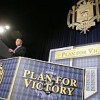
POLITICS-US: New Crises Sap Bush’s War on Terror
Just as the White House claims that it has finally turned the corner in what it defines as the "central front" in the war on terror - Iraq - it has found itself desperately trying to contain new crises in the war's "periphery" stretching east to Pakistan, west to Turkey, and south to the Horn of Africa.
RIGHTS-US: Torture Queries Fail to Stop Bush’s Justice Pick
Despite his refusal to declare water-boarding illegal, President George W. Bush's choice to be his next attorney-general overcame a significant hurdle here Tuesday as the Senate Judiciary Committee narrowly endorsed his nomination.ENVIRONMENT-US: Global Warming Is Biggest Security Threat
Global climate change, if left unaddressed, is likely to pose "as a great or a greater foreign policy and national security challenge than any problem" the United States currently faces, according to a major new report released here Monday by two influential Washington think tanks./CORRECTED REPEAT*/POLITICS-US: Senate Committee Ratifies Law of the Sea Treaty
In a major defeat for far-right Republicans, the Senate Foreign Relations Committee Tuesday voted 17-4 to ratify the 25-year-old Law of the Sea Treaty (LOST), the international accord that sets rules governing most areas of ocean policy, including navigation, over-flights, exploitation of the seabed, conservation and research.US-IRAN: Republican Maverick Calls for Unconditional Talks
Amid growing contention among Democratic presidential contenders about U.S. policy toward Iran, a senior Republican lawmaker has appealed to President George W. Bush to pursue "direct, unconditional, and comprehensive talks" with Tehran.POLITICS-US: Bush Rules Out Any Detente with Cuba
Insisting that the recent transition in Cuba represents "the dying gasps of a failed regime", U.S. President George W. Bush Wednesday vowed to maintain Washington's nearly 50-year-old trade embargo against Cuba until its government "has adopted in word and deed fundamental freedoms."
POLITICS-US: Bush Risks Falling Off Turkish-Kurd Tightrope
Spurred by the deployment of at least 100,000 troops along Turkey's border with Iraq, the administration of U.S. President George W. Bush is pressing its closest clients in Iraqi Kurdistan to crack down hard against the Kurdish Turkish Workers' Party (PKK), which Washington considers a terrorist organisation.POLITICS-US: Cheney Raises the Rhetoric Against Iran
In the harshest speech against Iran given by a top George W. Bush administration official to date, Vice President Dick Cheney Sunday warned the Islamic Republic of "serious consequences" if it did not freeze its nuclear programme and accused it of "direct involvement in the killings of Americans".POLITICS-US: Ties With Turkey Dodge One Bullet
Amid rising bilateral tensions with Turkey and strong White House pressure, the Democratic leadership of the U.S. House of Representatives is expected to set aside a controversial resolution recognising as a "genocide" the deaths of as many as 1.5 million Armenians in the Ottoman Empire during World War I.POLITICS-US: More Hegemony, Less Imperialism, Urges Clinton
In her most comprehensive - if characteristically cautious - foreign policy pronouncement to date, Sen. Hillary Rodham Clinton stressed a clear preference for diplomacy and "soft power" in pursuing U.S. interests abroad, but added she would not hesitate to use military force unilaterally if she deemed it necessary.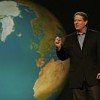
POLITICS-US: "Candidate Gore" a Long Shot, Despite Nobel
It was only two days ago that a group called www.draftgore.com took out a very expensive full-page ad in the New York Times in a direct appeal to former Vice President Al Gore to run for the Democratic Party's presidential nomination in the 2008 election.MIDEAST: November Talks Must Be Inclusive, Urge U.S. Graybeards
To succeed, next month's Israeli-Palestinian conference here should establish and endorse the contours of a permanent peace accord and secure the participation of Arab states that do not currently recognise Israel, including Syria, according to a letter sent Wednesday to President George W. Bush from a bipartisan group of eight former top U.S. policy-makers.
RIGHTS-US: High Court Won’t Hear Rendition, Torture Case
In a major rebuff to human rights and government accountability activists, the U.S. Supreme Court Tuesday declined to take up the case of a German citizen who was allegedly abducted, detained and tortured by the Central Intelligence Agency (CIA) as part of the CIA's "extraordinary rendition" programme.POLITICS: Global Public Favours More Immigration Controls
While most people around the world embrace free trade and related economic features of globalisation, they also favour more restrictions on immigration into their countries, according to a major 47-nation survey released here Thursday by the Pew Global Attitudes Project (PGAP).TRADE: U.S. Firms Up Spot as No. 1 Arms Supplier to South
Bolstered in part by major new arms agreements with Pakistan, the United States reclaimed its ranking as the developing world's biggest supplier of conventional arms in 2006, according to a new report by the Congressional Research Service (CRS).POLITICS-US: Anti-Iran Hawks Win Partial Victory in Congress
Amid growing speculation about prospects for U.S. military action against Iran, neo-conservatives and other hawks won a significant - if somewhat incomplete - victory in rallying the Democratic-led Congress to its side.« Previous Page — Next Page »


The Week with IPS

NEXT STOP - SDGs
Tracking global progress towards a sustainable world
Tracking global progress towards a sustainable world
