Languages
Tuesday, September 29, 2026



News and Views from the Global South
POLITICS-BURMA: Call for Urgent Int'l Talks at U.N.
Amid growing anti-government demonstrations in Burma, the International Crisis Group (ICG) called Tuesday for U.N. Secretary-General Ban Ki-moon to convene urgent talks with the foreign ministers of China, India, and Singapore, the current chair of the Association of Southeast Asian Nations (ASEAN), to promote a peaceful settlement to the political crisis there.CLIMATE CHANGE: Publics in North and South Want Action
Amid a series of international conferences on climate change this week, the BBC has released a 21-nation survey in which two out of three respondents said they believed "major steps starting very soon" need to be taken to combat global warming.RIGHTS-US: Republicans Block Habeas for Gitmo Detainees
Despite the support of a solid majority of the U.S. Senate, a measure designed to restore the right of foreign terrorist suspects to challenge their detention in federal court was blocked here Wednesday on a procedural manoeuvre.US-LATIN AMERICA: Next President Must Pursue “Fresh Approach”
With Washington's image in Latin America at its lowest ebb in memory, President George W. Bush's successor must pursue a "fresh approach" to the region - one aimed, in particular, at reducing poverty and the yawning gap between rich and poor , according to a new report by the Washington Office on Latin America (WOLA) released here Tuesday.POLITICS-US/IRAQ: Sheikh's Killing a Blow to Bush
In what was at least a symbolic blow to George W. Bush, a prominent Iraqi tribal sheikh and self-styled leader of the "Sunni Awakening" movement against al Qaeda in Iraq (AQI) was assassinated just hours before the U.S. president was to make his latest appeal for public support for his Iraq strategy.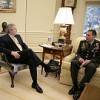
POLITICS-US/IRAQ: No Exit
After two days of Congressional testimony by Washington's top two officials in Iraq, prospects for a substantial withdrawal of U.S. military forces there before the end of President George W. Bush's tenure at the White House look as remote as ever.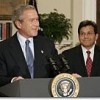
POLITICS-US: Bush Drops Another Crony
Civil liberties advocates and Democrats hailed Monday's resignation by U.S. Attorney General Alberto Gonzales as a major victory, while most Republicans, for whom Gonzales's performance had increasingly become a source of embarrassment, kept their comments to a minimum.POLITICS-US/IRAQ: Still No Light at Tunnel's End
While there have been some improvements in Iraq's security situation over the past seven months, the level of overall violence remains "high" with only modest improvements possible over the next six to 12 months, according to a new study by the U.S. intelligence community released here Thursday.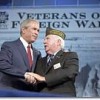
POLITICS-US: Bush Campaigns to Sustain Military "Surge"
Opening a new campaign to sustain his "surge" strategy in Iraq, President George W. Bush Wednesday compared Washington's ongoing struggle there to both World War II and the Vietnam War where, he said, Washington's withdrawal led to disaster for "millions of innocent citizens."
POLITICS-US: Obama Would Focus Terror Fight on Afghanistan
Sen. Barack Obama, a leading candidate in the race for the Democratic presidential nomination, said Tuesday he would make Afghanistan the focus of U.S. anti-terror efforts and unilaterally strike terrorist targets across the border in Pakistan if the government of President Pervez Musharraf failed to do so.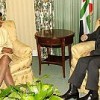
POLITICS: Arms for Arab Authoritarians, As U.S. Turns Back Clock
Just 25 months after Secretary of State Condoleezza Rice denounced 60 years of U.S. support for authoritarian governments in Arab world, she and Pentagon chief Robert Gates are on their way to the Middle East bearing arms and an uncannily familiar strategic vision to the same regimes.RIGHTS-US: Congress Moves to Protect Native Women from Assaults
Acting in major part on a recent report by Amnesty International and Native American activists, the U.S. Congress is moving to provide additional funding to protect Native American women who suffer disproportionate levels of rape and other sexual abuse.POLITICS: Poor Countries More Optimistic About Future
Public opinion in most poor countries and Central Europe is generally significantly more optimistic about future living conditions for their children than in wealthy, developed nations, according to newly released findings of the latest Pew Global Attitudes Project (GAP) survey released here Tuesday.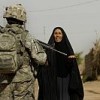
POLITICS-US: Partisan Lines Harden in Iraq Debate
After a week and a half of Senate debate, including an all-night session Tuesday, the possibility that legislation to de-escalate U.S. military intervention in Iraq soon could be adopted by a strong bipartisan majority appears to have receded, at least until mid-September, if not well into next year.POLITICS: Pakistani al Qaeda a Real Threat – US Intelligence
The United States intelligence community’s latest assessment of al Qaeda and the threat it poses to the homeland appears to have both renewed questions about the wisdom of invading Iraq and returned the spotlight to an increasingly strife-ridden Pakistan.ENVIRONMENT: Act Now on Global Warming – Top US Companies
The chief executives of 160 largest United States companies released a new policy statement on climate change here, Tuesday, warning that ‘’the consequences of global warming for society and ecosystems are potentially serious and far-reaching’’ and asserting that ‘’the time for action is now.’’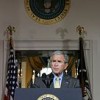
MIDEAST: New Bush Initiative Met with Scepticism
A major policy address Monday by U.S. President George W. Bush promoting a two-state solution for Israel and Palestine has been greeted with considerable scepticism by Middle East specialists here.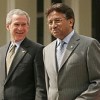
PAKISTAN-US: Bush-Musharraf Alliance Under Growing Attack
Despite the media's and official Washington's focus on Iraq and Iran as the most urgent challenges to U.S. foreign policy, a growing chorus of voices is calling for a major shift towards what they regard as the "central front in the war on terror" - Pakistan.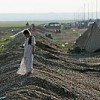
MIGRATION: Iraq Exodus Fuels Rise in Refugees, Displaced
For the second year in a row, violence and persecution in Iraq fuelled a sharp rise in the number of people worldwide who were forced to flee their homelands, according to the latest edition of "World Refugee" released here Wednesday by the U.S. Committee for Refugees and Immigrants (USCRI).
POLITICS-US: Neo-Cons Try to Rally, Bully Republicans
In the face of a critical Senate debate on future U.S. strategy in Iraq, neo-conservatives and other hawks are trying to rally increasingly sceptical - and worried - Republicans behind continued support for President George W. Bush's five-month-old "surge" strategy.ETHIOPIA: Ogaden Crackdown Carries High Cost
An intensified counter-insurgency campaign against Somali rebels and their suspected civilian supporters in Ethiopia's Ogaden region is drawing growing criticism by human rights groups and concern from the administration of U.S. President George W. Bush, a staunch ally of Addis Ababa.« Previous Page — Next Page »


The Week with IPS

NEXT STOP - SDGs
Tracking global progress towards a sustainable world
Tracking global progress towards a sustainable world
