Friday, September 25, 2026



News and Views from the Global South
POLITICS-BURMA: Call for Urgent Int'l Talks at U.N.
Jim Lobe
- Amid growing anti-government demonstrations in Burma, the International Crisis Group (ICG) called Tuesday for U.N. Secretary-General Ban Ki-moon to convene urgent talks with the foreign ministers of China, India, and Singapore, the current chair of the Association of Southeast Asian Nations (ASEAN), to promote a peaceful settlement to the political crisis there.
The Brussels-based group, which has long followed events in Burma, noted that pressure on the long-reigning military regime from its closest Asian neighbours and supporters was critical to preventing a bloody crackdown against the opposition which, led by Buddhist monks, has turned out in the tens of thousands in recent days.
"The regime has a long history of violent reactions to peaceful demonstrations," said Gareth Evans, ICG's president and a former Australian foreign minister. "If serious loss of life is to be averted, those U.N. members with influence over the government are going to have to come together fast."
The regime, which has remained uncharacteristically passive during more than a month of public protests that veteran observers have described as the biggest challenge to the military since the 1990 elections, warned Monday that it was prepared to take unspecified action against the opposition "according to the law".
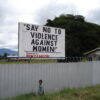
More than 100,000 people reportedly marched in Rangoon, the capital, Monday, while other demonstrations were reported to have taken place over the last several days in Mandalay, Sitwe, Bago and at least a dozen other towns and cities.
U.S. President George W. Bush joined the chorus in his annual address to the U.N. General Assembly Tuesday, during which he urged the U.N. and member states "to use their diplomatic and economic leverage to help the Burmese people reclaim their freedom."
"The ruling junta remains unyielding, yet the people's desire for freedom is unmistakeable," he said, adding that he had just issued a series of new regulations designed to tighten existing bilateral economic and diplomatic sanctions against the regime's leaders and their financial backers.
He said U.S. citizens were "outraged by the situation in Burma" and accused the military of imposing a "19-year reign of fear" against the population.
Among other measures, the United States banned new U.S. investment in Burma in 1997 during the administration of former President Bill Clinton and banned all imports from the Southeast Asian nation, which was re-named Myanmar by the military junta in 2003.
It has pressed other nations to take similar measures but has been frustrated by ASEAN, which until relatively recently tended to shield the Burma, an ASEAN member, from external pressure even as it encouraged dialogue between the regime and its long-confined opposition leader, Aung San Suu Kyi, and by the geo-political competition between India and China for influence with the military.
Indeed, ICG stressed in its statement Tuesday that only China, India, and, to a lesser extent, ASEAN have any influence on the government – China, because of its "very close economic and political links" and India, as a result of its growing trade relationship and strong military ties with the regime.
Indeed, New Delhi prompted protests from human rights groups around the world when it announced two months ago the sale to Burma of an undisclosed number of combat helicopters that could be used in its counter-insurgency campaigns against Burma's chronically rebellious ethnic minorities in defiance of a 19-year western arms embargo. The helicopters are made from components manufactured by EU members.
The current round of demonstrations appear to have been fueled by several developments over the summer, beginning in July with an initiative to amend the constitution in a way that would ensure military dominance of the government through the control of major ministries and large numbers of unelected seats in the parliament.
A sharp and unannounced increase in fuel prices the following month also provoked spontaneous protests in the capital and elsewhere, many of them led by current student activists as well as leaders of the so-called "88 Generation", veterans of the student movement 19 years ago who led popular demonstrations that culminated in the landslide victory of Suu Kyi's National League for Democracy (NLD) in the 1990 elections. The military rejected the elections results.
The regime unleashed pro-government militias against the demonstrators and arrested a number of the leaders in order to suppress the protests, but those tactics appeared to backfire as hundreds of Buddhist monks launched their own protests earlier this month. In recent days, the monks have been joined by ever-growing numbers of civilians.
While the military has so far permitted these demonstrations to take place peacefully, Monday's warning may signal that its patience is wearing thin. Fears that a crackdown could result in a massive loss of life – some 3,000 civilians were believed to have been killed as a result of the military's repression of the 1988 demonstrations – provoked the ICG's statement Tuesday.
"China, India and ASEAN should communicate to the military that a repeat of the 1988 violence would be unacceptable and would lead to serious consequences, including action by the U.N. Security Council," it said.
A number of observers believe that China, Burma's biggest source of investment and aid by far, may until now have played a key role in staying the military's hand. The New York Times noted Tuesday that Beijing arranged a highly unusual meeting in June between senior Burmese officials and U.S. diplomats at which the latter reportedly pressed for Suu Kyi's release.
While China has insisted that it would not interfere in Burma's affairs, it has also called for Burma to "push forward a democracy process that is appropriate for the country." On Tuesday, a foreign ministry spokesperson said Beijing "hopes to see stability and economic development."
 Print
|
Print
|