Languages
Friday, October 2, 2026



News and Views from the Global South
HEALTH-AFRICA: Global Financial Crisis Leads to HIV Budget Cuts
International donors and African governments are likely to cut health budgets due to the global financial crisis. Health experts fear that increasing unemployment and poverty will lead to less food security and quality of nutrition, which will in turn put more stress on already weak health systems.SOUTH AFRICA: Activists Ask Government to Integrate Men and Boys in Gender Policies
Gender activists are calling on the new South African government to improve the country’s gender legislation. Current gender policies focus on women, ignoring the rights, roles and responsibility of men and boys, they say.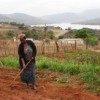
SOUTHERN AFRICA: Climate Change to Shrink Agricultural Production by Half
Environmental researchers predict Southern Africa will be hit heavily by climate change over the next 70 years. Agricultural production is projected to be halved - a development that will threaten the livelihoods of farmers in a region where 70 percent of the population are smallholder farmers.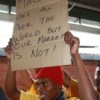
SOUTH AFRICA: Thousands of Traders Might Lose Jobs as Market Turns into Mall
Hundreds of traders at the Early Morning market in Durban fear the municipality’s plans to turn the area into an upscale shopping mall that will cost them their livelihoods. The redevelopment is one of many currently underway in South Africa’s urban centres to upgrade city infrastructure for the 2010 Soccer World Cup.
SOUTH AFRICA: Nurses Should Be Backbone of ARV Treatment
Effectively scaling up South Africans’ access to antiretroviral (ARV) treatment will require decentralisation of health services from hospitals to clinics and allowing nurses to manage and eventually to initiate ARV treatment and care.
HEALTH: Using ARVs to Prevent as well as to Treat HIV
Researchers are now investigating if antiretroviral (ARV) drugs can play a role in not just treating HIV, but in preventing infection. Mitchell Warren, executive director of the AIDS Vaccine Advocacy Coalition (AVAC), called it "a pivotal moment in HIV/AIDS research".SOUTH AFRICA: Implementation, Not Money the Obstacle to Scaling Up HIV Treatment
The money to scale up HIV treatment is there, but implementation of programmes to curb the pandemic is a problem, health experts said at the opening of the Fourth South African AIDS Conference in Durban.
HEALTH-LESOTHO: Migration Calls for Cross-Border Health Policies
The mountain kingdom of Lesotho faces a number of unique hurdles with regard to HIV and AIDS.
SOUTHERN AFRICA: Politicians Fail to Address HIV
Parliamentarians across the Southern African Development Community (SADC) have failed to put HIV on the political agenda.
ENVIRONMENT: 'Capital Shapes the Creation of Waste'
The South African government has been heavily criticised by environmental justice NGO groundWork for failing to produce accurate data on the production of waste in the country.
KENYA: Words that Reshape a Country’s Identity
The goal is ambitious: Kenya’s first literary journal, Kwani?, wants to bring new thinking to the country - and ultimately the continent - and reshape African identities. The journal aims to provoke, create, entertain and develop a literary community that isn’t afraid to question the status quo.
CLIMATE CHANGE: New Thinking to Tackle Old Problems
Organic and eco-friendly farming can feed the world, contrary to the common belief that biotechnology and chemical-intensive farming are indispensable, modern strategies to increase production, agricultural experts say.
WORLD: No Quick Fix for Malnutrition and Hunger
Almost five million children under the age of five die of malnutrition every year in the developing world. Food aid – which mainly contains nutrient-poor carbohydrates - does little to address the absence of a diverse diet that would prevent the condition.
Q&A: ‘Development Must Adapt to Water Resources We Have’
Environmental experts warn that one of the first effects of climate change will be scarcity of water, especially throughout the African continent. Already depleted water resources will become even more scarce.
GENDER-SOUTH AFRICA: 'A Real Man Does Provide Care'
Sonwabo Qathula puts on his apron and starts peeling a pile of butternuts, while a pot of rice boils on the stove next to him. The 50-year-old is preparing lunch for poor and orphaned children who attend a rural school in the Eastern Cape.
Q&A: Failure to Translate Women’s Legal Rights into Action
Each year, for 16 days in December, the world’s focus shifts towards taking action against gender-based violence. Governments and civil society organisations raise awareness around women’s rights and lobby for gender equality. But activists lament that little action is taken throughout the rest of the year and women’s legal rights often fail to be implemented and put to action.
Q&A: South Africa Suffers Sanitation Backlog
Sanitation is a key element of health, and hygiene a basic need for survival. Yet, millions of South Africans, especially those living in rural areas, do not have access to basic services, such as clean, running water and sanitary toilet systems.HEALTH-AFRICA: Research and Policies Lack Civil Society Input
Health experts and activists have heavily criticised African governments for failing to collaborate with civil society organisations (CSOs) on health research and health policy development.HEALTH-AFRICA: Who Is To Blame for the Crisis?
Health systems on the continent are riddled with inadequate policies, strategies, lack of institutional capacity, poor scientific review mechanisms and weak funding for research in the public and private sector, said Luis Sambo, regional director of the World Health Organisation (WHO) in Africa.
SOUTH AFRICA: Through The Eyes of Children
"I didn’t know that girls can play soccer. I thought it was a sport only for boys," says Thulile Khanyile. But after a photography and writing project changed her perception of gender roles, the 14-year-old helped start a girl’s soccer team at her high school in Nkandla, a rural area in the heart of Zululand.
Q&A: Trade Liberalisation No Silver Bullet Against Poverty
Countries around the world aim to eradicate poverty and hunger by 2015 as one of the Millennium Development Goals (MDGs).« Previous Page — Next Page »


The Week with IPS

NEXT STOP - SDGs
Tracking global progress towards a sustainable world
Tracking global progress towards a sustainable world
