Languages
Monday, September 28, 2026



News and Views from the Global South
Privatize Wetlands to Protect Them?
The Argentine government has not been able to ensure the preservation of a wetland that was designated a protected area 25 years ago. A United States citizen is buying up the land in order to achieve the original aim.ARGENTINA: TV Serial Raises Awareness on Trafficking in Women
The soap opera has proved itself an effective medium for portraying social problems in Latin America, and now a popular one in Argentina is addressing an issue on which the news broadcasts have remained silent: the disappearance of women for commercial sexual exploitation.ARGENTINA: Unemployment Declining at Two Different Speeds
Argentine companies are competing for professionals and technically skilled employees, and are even hiring students who have not yet graduated, as demand for qualified workers exceeds supply. But the reverse is true among less-skilled workers.HEALTH-ARGENTINA: Juicy Hamburgers Threaten Young Kidneys
Famed as one of the world’s leading beef producers, Argentina holds the unfortunate record for the highest incidence of Hemolytic Uremic Syndrome (HUS), an infectious disease caused by bacteria present in incompletely cooked foods, such as hamburgers.HEALTH-ARGENTINA: Danger in the Fields
The agriculture industry in Argentina is enjoying the boom in demand for soybeans and other commodities and the subsequent high prices, which are also fattening the state coffers. But the question of the unsafe handling of pesticides and fertilisers has basically been ignored amidst the collective euphoria.ARGENTINA: Boost for Coal Mine Revives Stagnant Town
With winter temperatures that plunge to 20 degrees below zero, the small Argentine town of Río Turbio, 3,000 kilometres southwest of Buenos Aires, would not exist but for the coal beneath its soil.ARGENTINA: Public Employees Go for IT
In keeping with its aim to shore up the strong role played by the state, which was badly weakened during the years when free-market economic policies were predominant, the Argentine government is implementing a successful programme of electronic learning for its employees that is already being requested by a dozen Latin American countries interested in replicating the experience.ENVIRONMENT-ARGENTINA: Tourism Growth Threatens Glacier Lake
The ice front of the Perito Moreno glacier in Argentina is five kilometres wide and up to 70 metres high, as it moves majestically across the Lago Argentino, oblivious to the environmental threat posed by the rapid growth of the nearby tourist centre which hosts thousands of visitors.MEDIA-ARGENTINA: Transvestites Find a Voice
With the support of one of Argentina’s leading public universities, a group of transvestites have launched a magazine aimed at reaffirming their identity and giving them a voice, as they tend to be ignored or given stereotypical coverage by the mainstream press.HEALTH-ARGENTINA: Fighting Mental Illness with Companionship
An innovative mental health plan developed in a town in the Argentine province of La Pampa has reduced to a minimum relapses among patients discharged from hospital, while at the same time providing new and valued employment for jobless people living on state subsidies.ARGENTINA: Mystery of the Dead Whales
It will be difficult to determine exactly why the number of whale deaths has shot up along the Atlantic coast of southern Argentina’s Patagonia region, but experts studying the phenomenon are pointing to poisoning from the "red tide".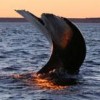
Mystery of the Dead Whales
Poisoning from the red tide may have been the cause of the high rates of death among southern right whales along Argentina’s Atlantic coast.CHALLENGES 2007-2008: Human Rights in Argentina – Progress and Pending Tasks
Identified with a generation hit hard by Argentina’s 1976-1983 military dictatorship, former president Néstor Kirchner won the respect of human rights organisations through his support of trials of military human rights abusers. Now his successor, his wife Cristina Fernández, faces new challenges on that front.ARGENTINA: Human Rights Trials Dangerous for Witnesses and Accused Alike
The poisoning death of an Argentine coast guard officer who was expected to be convicted of crimes against humanity Friday once again highlighted the lack of guarantees for moving ahead with human rights trials in Argentina.ARGENTINA: ‘It Will Be Harder for Me Because I’m a Woman,’ Says New President
In an unusual ceremony that anticipates continuity but with nuances, Senator Cristina Fernández took office Monday as the first elected female president of Argentina, succeeding her husband, outgoing President Néstor Kirchner.AGRICULTURE-ARGENTINA: Using Internet and Bicycles to Search Out Markets
Just 45 kilometres outside of Buenos Aires, a group of 20 families have set up a farming operation where they work in harmony with nature and without bosses, selling their products through a small network of consumers who appreciate the benefits of organic food and cooperative labour.FILM-ARGENTINA: Local Characters Get All the Parts
"I’d like to be offered the role of a madwoman some day, or of a vicious person, just out of curiosity, because I’m really not like that at all," says Carmen Drive, a 56-year-old Argentine homemaker who has already acted in 18 movies without ever having set foot outside her home town, population 30,000.ENVIRONMENT-ARGENTINA: Ban on Logging Approved
Pressure exerted by civil society and the creation of a compensation fund were crucial in securing the passage of a national law suspending all logging in native forests in Argentina, until such time as each province has a land use plan defining forest areas to remain untouched, and those that may be developed.SOUTH AMERICA: Consumers Pay the Price for Agricultural Boom
Why are the prices of bread, potatoes, tomatoes and beef on the rise in the Southern Cone region of South America? In this predominantly agricultural area, many blame the price rises on circumstantial local factors. But analysts point to a wider phenomenon: the rising global demand for food and biofuels commodities, which is here to stay.ENVIRONMENT-ANTARCTICA: Accidents Will Happen – So Be Prepared
The second accident this year involving a cruiseliner in the Antarctic is alarming the countries that protect and conserve the frozen continent, which are persisting in their demands for penalties in cases of disasters that cause pollution.RIGHTS: Argentina’s Jewish ‘Desaparecidos’
The leaders of Argentina’s Jewish community - the largest in Latin America - published in book form a report on Jewish victims of forced disappearance in the 1976-1983 dictatorship, who faced especial brutality because of their ethnic origin.« Previous Page — Next Page »


The Week with IPS

NEXT STOP - SDGs
Tracking global progress towards a sustainable world
Tracking global progress towards a sustainable world
