Languages
Thursday, October 1, 2026



News and Views from the Global South
ARGENTINA: A Pause for Thought
Academics from every continent will be meeting next week in Argentina for the Second Extraordinary World Congress of Philosophy, where they will ponder the shape of the future in a context of free-market economics and globalisation.
Science Ignores AIDS in Women, Says Nobel Nominee
In Latin America, women are always one step farther behind, and HIV/AIDS demonstrates this disparity in a cruel way, says HIV-positive activist Patricia Pérez in this Tierramérica interview.MERCOSUR: Asymmetry Sets the Agenda
While they wait for the right time to resume negotiations with the European Union, the member countries of Mercosur are focusing on mechanisms to counterbalance the comparative disadvantages experienced by its smaller economies with respect to its two largest ones.ARGENTINA: Poverty Bites Deeper in the Northeast
"It just crushes you: children here, aged eight or nine, are sniffing glue to dull their hunger," says a rural medical doctor in Corrientes, 1,000 kilometres north of the capital and the province with the highest childhood poverty indicators in Argentina.ARGENTINA: Incentive for Eliminating Slave Labour
A public institute in Argentina is offering "certificates of quality" to firms that do not use slave labour in the textile industry, where 80 percent of workers operate in the informal sector of the economy.ARGENTINA: Psychiatric Patients’ Radio Station Up in the Air
La Colifata was the first radio station in the world to broadcast live from a psychiatric hospital, and has played a key role in the reinsertion of patients in the community. But now the Argentine station, which has inspired the creation of around 40 similar stations in Latin America and Europe, has run out of financing.DISARMAMENT-ARGENTINA: Gun Swap Takes Aim at Violence
With strong support from peace and disarmament groups and the families of shooting victims, the Argentine government launched a programme Friday that encourages people to voluntarily swap their legal or illegal firearms for cash.LABOUR-ARGENTINA: Informal Economy Just Won’t Shrink
The Argentine economy has been growing steadily for over four years, and unemployment has fallen 14 percent in that period. However, experts say that nearly half of all jobs are precarious and/or of poor quality.EDUCATION-ARGENTINA: A Library Per Household
A novel programme aimed at fomenting a reading habit among low-income sectors was launched in Argentina: the "Books and Houses" campaign will deliver a bookshelf complete with 18 volumes to each affordable housing unit assigned to families this year through government assistance plans.HEALTH-ARGENTINA: Abortion – No Longer a Taboo Subject
Capitalising on a more favourable public opinion, an alliance of civil society organisations in Argentina presented to Congress a draft law Monday for the legalisation of abortion in a country where illegal abortions are the main cause of maternal mortality.HEALTH-ARGENTINA: Abortion – No Longer a Taboo Subject
Capitalising on a more favourable public opinion, an alliance of civil society organisations in Argentina presented to Congress a draft law Monday for the legalisation of abortion in a country where illegal abortions are the main cause of maternal mortality.LATIN AMERICA: Measuring Civil Society By Its Own Yardstick
Legal reforms, manuals of good practice, codes of ethics and schools for activists are some of the tools that organised civil society in Latin America wants in order to improve its transparency and legitimacy.ARGENTINA: An (Air) Accident Waiting to Happen?
Although the Argentine government is adamant that air transport safety is guaranteed, for the past 80 days the main airports in the country have been facing an unprecedented crisis. Air traffic controllers are operating without radars, flights are delayed or cancelled, and the risks are mounting.ARGENTINA: The Long (Children’s) March Against Hunger
"There are lots of hungry, barefoot children in Argentina, but they don't talk about that in school, so I learn a lot when I come on these marches," said Aluminé Giuliani, a teenager participating in a nationwide children's march, which arrived in the Argentine capital Friday.ARGENTINA: Privatised Railways – a Timebomb
A riot by commuters enraged over delays, who destroyed part of the busiest train station in Buenos Aires, has drawn attention to the profound crisis afflicting Argentina's privatised railways, which have severe shortcomings despite the huge subsidies they receive from the state.ARGENTINA: Civil Society Wants Transparency – For Itself as Well
Non-governmental organisations have won prestige and credibility revealing injustice and corruption in business and government. But who oversees the watchdogs? Who holds them accountable for how they use their funds, how they operate, and the results achieved through their work?ENVIRONMENT-ARGENTINA: Jaguars on the Run
Two centuries ago, the jaguar (Panthera onca) reigned across more than half of Argentine territory. Today these predators survive in limited spaces where they are becoming easy prey for hunters.ARGENTINA: ‘Memories Come Flooding Back’ – the Sinking of the Belgrano
Néstor Vidaurre was born in the northwestern Argentine province of Jujuy, along the border with Bolivia. At the age of 18, he had never seen the sea and did not know how to swim when he was embarked on the warship General Belgrano, sunk by a British submarine 25 years ago during the short Malvinas/Falkland Islands war.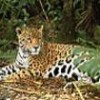
Jaguars on the Run
The majestic jaguar that once reigned in Argentina has seen its numbers reduced to just 300 animals, which are living in increasing isolation.ARGENTINA: Civil Society Keeps Eye on First Lady’s Tours
A non-governmental organisation in Argentina is monitoring the trips made by Senator Cristina Fernández, President Néstor Kirchner's wife, who travels with a large entourage and an appointments schedule worthy of a head of state.HEALTH-LATIN AMERICA: Girls Living with HIV Break the Silence
"I feel happy when I'm with my friends; at those times, I don't even remember that I have the infection," Keren, an 11-year-old Honduran girl living with HIV, told IPS.« Previous Page — Next Page »


The Week with IPS

NEXT STOP - SDGs
Tracking global progress towards a sustainable world
Tracking global progress towards a sustainable world
