Languages
Monday, October 5, 2026



News and Views from the Global South
LATIN AMERICA: A Few Women in Power, Millions Still Powerless
Appointing a woman as economy minister does not guarantee a gender approach to policies in this key area, traditionally handled by men. That at least is the conclusion from observing the work of women ministers in Argentina and El Salvador.ENVIRONMENT: Understanding Climate Change in Drake Passage
Infamous for its storms and shipwrecks, Drake Passage, which separates South America from Antarctica, will now be the focus of a multidisciplinary study by scientific researchers from nine countries, with the aim of assessing the impact of climate change on the ecosystem.ARGENTINA: Rolling Back Privatisation of Pensions
The Argentine Congress approved reforms of the pension system that will strengthen the role of the state, after the partial privatisation of the system that was carried out in the 1990s. Chile is also planning similar reforms.ARGENTINA: Mapuches Return to Benetton-Held Land
Mapuche Indians in the southern Argentine region of Patagonia, who in 2002 took part in a land dispute against the Italian textile group Benetton, have returned to occupy land belonging to the firm, reclaiming their ancestral rights.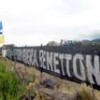
Mapuches Return to Benetton-Held Land
Six indigenous families are returning to live on a plot of land that the Italian clothing company Benetton owns in the Patagonia region. Benetton has not yet decided what, if any, legal action it will take.RIGHTS-ARGENTINA: Hunting Down the Triple A Death Squad
The renewed investigation into political crimes committed by the Triple A "para-police" group in Argentina in the 1970s is finding fresh evidence and information daily, and is shaping up into a major case of crimes against humanity.ENVIRONMENT-ARGENTINA: When One Ocean Is Not Enough
Thanks to satellite tracking, a team of Argentine scientists found that southern elephant seals need much more ocean space to survive than previously thought. They can dive to a depth of 1,200 meters in search of food in the southwest Atlantic, and cross the Strait of Magellan to the Pacific.CULTURE-ARGENTINA: Recuperating Indigenous Languages
With the aim of strengthening linguistic diversity in Argentina, the University of Buenos Aires language school has launched a successful programme providing instruction in the country’s most widely-spoken indigenous languages.
When One Ocean Is Not Enough
Argentine scientists have proved that elephant seals require vast areas of ocean environment in order to survive. The finding could lead to improved conservation plans for these sea mammals.RIGHTS-ARGENTINA: Lesbians Want Real Marriage
The Argentine Civil Registry Office's refusal to register a lesbian couple for a civil marriage prompted a legal claim for homosexuals to enjoy the same rights as heterosexuals.ARGENTINA: Local Opponents of Mine Sued by Meridian Gold
Residents of Esquel, a city in the southern Argentine province of Chubut, who have been opposing a proposed open pit gold mine for five years, have been sued by the company promoting the project for leaking its strategy to change the community's mind about the mine.ANTARCTICA: Argentina to Study Effects of Spill
The fuel spilled from a Norwegian cruise ship in Antarctica won't leave dramatic images of penguins covered in petroleum. But the spill is indeed a threat to the region's fragile biodiversity, warn experts.HUMAN RIGHTS-ARGENTINA: Justice in Slow Motion
The slow progress that human rights cases are making as they wind their way through the courts in Argentina has awakened fears among activists of a repeat of what happened in neighbouring Chile, where former dictator Augusto Pinochet died recently without ever having been sentenced.ARGENTINA: Patagonia to the Highest (Foreign?) Bidder
A new book based on a journalistic investigation into major land purchases in Argentina's southern Patagonia region by foreign multimillionaires has been selling like hot potatoes, to both tourists and locals.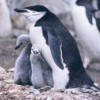
Argentina to Study Effects of Spill in Antarctica
Although it is a light fuel, diesel spilled by the Nordkapp cruise ship could hurt Antarctica's biodiversity, including its emblematic penguins. The Argentine National Directorate of the Antarctic is preparing a study.HUMAN RIGHTS-ARGENTINA: Reviving the Concept of Due Obedience’
A former head of naval operations during Argentina's 1976-1983 military dictatorship admitted in court that he had signed written instructions for "the physical elimination" of subversives, who would be thrown from planes in mid-flight "alive but drugged."ENVIRONMENT-ARGENTINA: Alarm Sounded for Patagonian Seas
Some believe it was exaggerated; others that it will help prevent future environmental tragedy. These are the two extremes in reactions in Argentina to a report on the impact of anchovy fishing in the seas off the Patagonia region.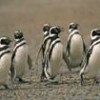
Alarm Sounded for Patagonian Seas
A new report warns that excessive fishing threatens penguins and whales in the South Atlantic. But local experts disagree about the degree of danger for the marine ecosystem and its fauna.CHALLENGES 2006-2007: Argentina’s (Economic) Growing Pains
Just five years ago, Argentina collapsed. But it was able to curb the slide into the abyss and soon became one of the leaders of economic growth in Latin America, with major improvements in employment and income distribution and a decline in poverty levels.RIGHTS-ARGENTINA: Justice for Victims of ‘Triple A’ Death Squad?
Three decades after the crimes committed by the ultra rightwing Triple A paramilitary group in Argentina, which served as a rehearsal for the state terrorism waged during the 1976-1983 military dictatorship, one of the group’s heads, former police chief Juan Ramón Morales, was arrested Monday.RIGHTS-ARGENTINA: Gov’t Alarmed by Disappearance of Witnesses
The news that another witness in a human rights case has gone missing in Argentina - the second in three months - shook the country Thursday.« Previous Page — Next Page »


The Week with IPS

NEXT STOP - SDGs
Tracking global progress towards a sustainable world
Tracking global progress towards a sustainable world
