Languages
Saturday, October 10, 2026



News and Views from the Global South
HONDURAS: Brazil Ups the Ante
Brazil's claim to a permanent seat on the United Nations Security Council could be strengthened if its decision to provide protection for ousted Honduran President Manuel Zelaya in its embassy turns out well, or it could see complications arise as the result of a new reputation for carrying out Hugo Chávez-style "bold actions."
BRAZIL: Electric Car Revolution in the Making
The electric vehicle - pure or hybrid - will trigger an energy and industrial revolution worldwide in the coming decades, dealing a blow to liquid fuels. But plant-based ethanol will survive and grow, say Brazilian experts consulted for this report.
Car Revolution in the Making
Brazil could take advantage of the electric car boom to build up the industry at home, given the threats of climate change and petroleum crisis - and the death foretold of the combustion engine.
BRAZIL: Art is the Best Education
A broad range of projects in Brazil are using ballet and folk dances, classical and popular music, theatre, circus arts, capoeira - an Afro-Brazilian combination of dance and martial arts - fashion, visual arts and the audiovisual media to reach disadvantaged and at-risk children.
EDUCATION-BRAZIL: Public Schools Fend Off Invasion of New Ideas
Two non-governmental initiatives managed to penetrate the walls around public education in Brazil, temporarily assuming responsibility for the administration of schools where they left their seeds planted. But ultimately they discovered how resistant the school system is to innovation.BRAZIL: Branching Out in Alliances as Emerging Global Actor
Brazil and France have "similar interests in the area of global geopolitics" and Brazil shares "affinities in terms of circumstances and values" with India and South Africa, Brazilian Foreign Minister Celso Amorim said Friday, explaining his country's growing "extra-regional" alliances.
BRAZIL: Artistic Energy as Antidote to Exclusion
Putting the power of art to the test in extreme situations has become an unintended but necessary task for the Axé Project, a Brazilian non-governmental organisation (NGO) aimed at creating the conditions for street kids and other at-risk children to overcome educational, family and community exclusion.
BRAZIL: From Learning Circle to Flights of Artistic Imagination
Slender, small and long-haired, 11-year-old Higor Fonseca sounds much older when he talks. He has a great deal to tell, in spite of living in this small, sleepy town in the interior of Brazil, where most workers are employed as seasonal migrant labourers in other parts of the country.
BRAZIL: Changing Lives Through the Power of Dance
"My family’s lives changed," said Maria Erilma da Silva, a mother of three girls and a teenage boy, listing a whole series of transformations, from changes in eating and personal hygiene habits to "the security of knowing where my daughters are" and even an end to her husband’s frequent drinking binges.
MUSIC-BRAZIL: A School Without Teachers
The participation of renowned professional musicians as instructors and special guests at workshops, instead of academic professors, is what sets Brazil’s Bituca University of Popular Music apart, and is earning it a reputation as a model of experimentation and excellence in music education.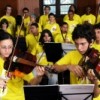
BRAZIL: Music Education Opens Doors to Social Inclusion
"It takes us an hour and 20 minutes to get there. We have to walk, because we can't afford the 30-minute bus ride. But the girls never miss their music classes, not even when they have to go without lunch because they don't have time to eat after school," says their mother, Maria da Cruz.
BRAZIL: Bringing Community Mental Health to the Poor
Zilá Ferreira and Juraci Lisboa were in the grip of depression since 1996 – the former over the death of her mother, and the latter because she was "abandoned with seven children under 14."
Q&A: Brazil’s Lesson to the World: Invest in Family Farming
Kanayo F. Nwanze chose Brazil for his first official visit as the recently elected president of the International Fund for Agricultural Development (IFAD), and was pleased to personally attest to President Luiz Inácio Lula da Silva’s commitment to family farming.SOUTH AMERICA: Brazil Outshines Regional Bloc
The enthusiasm for Brazil today on the economic front and the lead role played by its government in the international arena are in stark contrast with the inertia dogging the Southern Common Market (Mercosur), the regional integration project and trade bloc that has been one of its priorities since the 1980s.
BRAZIL: Agricultural School Cultivates Pride in Family Farming
"Here you get an education for the country and not for the city, which is not where I live, and that’s why I can relate to this school," says Israel Santos, 16, currently enrolled in the second year of secondary school studies at an agricultural school in the municipality of Independencia, in northeastern Brazil.
BRAZIL: When the Arid Northeast Turns Green
The rain - usually much desired because it is so scarce - has come in excess this year, destroying many crops. But in this farming district in far north-eastern Brazil, the impact of the heavy rainfall was less marked than in the past, thanks to the diversification of crops and productive activities.
When Brazil's Arid Northeast Turns Green
The green landscape of Irapuá doesn't look like the usual postcard of Brazil's Northeast of dry, twisted bushes and parched grasses.
BRAZIL: Seasonal Widows
Maria Vieira dos Santos has raised her six children practically on her own. For more than a decade, her husband would be away from home nearly eight months out of the year, travelling 1,500 kilometres down south to cut sugarcane in the state of São Paulo.Q&A: Indigenous People in Colombia “Have Become a Strong Force”
There is a heavy turnover of social movement leaders in Colombia, given the frequency with which they are killed, displaced or forced into exile. And because of the dangers, those who step up to the plate can be considered veritable heroes – one of whom is indigenous leader Aída Quilcué.BRAZIL: “Employment Crisis Is Over” – Labour Minister
The effects of the economic recession on employment in Brazil have already been overcome, Labour and Employment Minister Carlos Lupi said, citing statistics that show more hirings than firings since February.DEVELOPMENT: More Urgent Measures Needed from IDB
The financial, environmental and social crises shaking the world today face the Inter-American Development Bank (IDB) with demands and expectations it cannot meet, because of the limitations seen at its 50th annual meeting, which ended Tuesday in this Colombian city.« Previous Page — Next Page »





The Week with IPS

NEXT STOP - SDGs
Tracking global progress towards a sustainable world
Tracking global progress towards a sustainable world
