Languages
Friday, October 23, 2026



News and Views from the Global South
LATIN AMERICA: Transparency Key to Competitiveness, Says World Economic Forum
Improving transparency by overcoming problems like corruption, the wounded credibility of governments, and fiscal weaknesses could be a decisive factor in bolstering Latin America's competitiveness on the global market.BIODIVERSITY: Indigenous Groups Denounce Exclusion from Talks
Indigenous leaders are speaking out about their exclusion from talks about a binding regime for regulating access to genetic resources, during the international biodiversity conference that ended on the weekend in this southern Brazilian city.BIODIVERSITY: Progress at a ‘Multilateral Pace’
"That is the multilateral pace," remarked a Brazilian diplomat in response to complaints that the decisions reached at the global biodiversity conference basically postponed concrete actions that environmentalists see as urgently needed in order to save life on earth.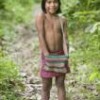
Indigenous Groups Denounce Exclusion from Biodiversity Talks
Indigenous groups had no voice in the negotiations in Curitiba, Brazil, about a binding global policy for the use of genetic resources. But they are already preparing to make sure they are heard in 2008.BIODIVERSITY: Environmentalists, Indigenous People Disappointed by COP8
Environmental and indigenous activists are leaving the 8th Conference of Parties to the Convention on Biological Diversity (COP8) with a sense of disappointment, because of the absence both of practical decisions and of their participation in key negotiations.BIODIVERSITY: Environmentalists, Indigenous People Disappointed by COP8
Environmental and indigenous activists are leaving the eighth Conference of the Parties to the Convention on Biological Diversity (COP8), which ended Friday in this southern Brazilian city, with a sense of disappointment, because of the absence both of practical decisions and of their participation in key negotiations.BIODIVERSITY: Synergy Between the Rio Conventions
The concept of promoting synergy between the three "Rio Conventions" on the environment gained strength at the 8th Conference of the Parties to the Convention on Biological Diversity (COP8), which ends Friday in this city in southern Brazil.BIODIVERSITY: Activists Disagree on Economic Aspects of Benefit-Sharing
Access to genetic resources and the equitable distribution of the benefits derived from their use are the most controversial issues being discussed in Brazil by the 3,600 delegates from 173 countries attending the largest conference ever on biological diversity.BIODIVERSITY: Creating a Network Against Biopiracy
Two patents granted in the United States between 2000 and 2002 and another for which an application has been filed have put "maca", a high altitude Andean plant that is used by indigenous people in Peru, at the centre of a new battle against biopiracy, which involves the construction of an international network against the misappropriation of traditional knowledge.BIODIVERSITY: Terminator Seeds Suffer Defeat at Global Conference
Small farmers and activists celebrated a triumph against Terminator seeds in Brazil Friday, but said they would not let down their guard, and would continue to fight the seeds.BIODIVERSITY: A New Ethics Needed to Save Life on Earth
Affect, care, cooperation and responsibility are the four central principles of a new ethics that humanity urgently needs to adopt, in order to avoid becoming extinct as "a victim of itself," Leonardo Boff, one of the founders of liberation theology, said Thursday.BIODIVERSITY: Local Action for Global Change
"Community Taba" consists of four Brazilian-style indigenous huts, built of wood and thatch, with earth floors. Inside the biggest and airiest one, small farmers, forest workers, fisherfolk and indigenous people exchange experiences and discuss how best to defend the planet's biodiversity.ENVIRONMENT: Who Has Access to Biodiversity?
Biologically mega-diverse countries, including Brazil, Mexico and Colombia, are calling for a binding global policy to regulate who has access to biodiversity. The proposal is up for discussion at an international environmental meeting this week in the southern Brazilian city of Curitiba, but the goal remains far out of reach.BIODIVERSITY: Peasants Say No to ‘Selling’ Traditional Knowledge
The international small farmers' and peasant movement Via Campesina is opposed to any payment for traditional knowledge, one of the formats proposed for sharing the benefits derived from biodiversity.BIODIVERSITY: Curitiba, an Indigenous Conference
Indigenous people from around the world "baptised" the eighth Conference of the Parties to the Convention on Biological Diversity (COP8), which opened Monday in this southern Brazilian city, to help inspire the participants to reach good decisions.BIODIVERSITY: Curitiba, an Indigenous Conference
Indigenous people from around the world "baptised" the eighth Conference of the Parties to the Convention on Biological Diversity (COP8), which opened Monday in this southern Brazilian city, to help inspire the participants to reach good decisions.ENVIRONMENT-BRAZIL: Private Sector Role in Amazon Triggers Doubts
Brazil's decision to authorise local companies to exploit 13 million hectares in the Amazon over the next decade keeps controversy simmering. Some experts are saying that instead of putting the brakes on deforestation, the concessions could make it worse.ENVIRONMENT: Biosafety Protocol Alive, but Restricted
The Cartagena Protocol on Biosafety "is alive," celebrated the delegates to the Third Meeting of the Parties to the Protocol (MOP3), although there were complaints about and criticism of modifications to the final agreement reached Friday night.
Who Has Access to Biodiversity?
Brazil, Mexico and Colombia are leading the push for an obligatory global regime governing the Earth's biological riches. A draft proposal is up for discussion this week at a meeting in the southern Brazilian city of Curitiba, but progress is expected to be limited.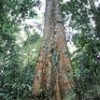
Private Role in the Amazon Triggers Doubts
Thirteen million hectares of tropical forest in Brazil will be concessioned to private firms, according to a new law. Analysts fear it could accelerate the destruction of the Amazon forest.DEVELOPMENT: Agroecology Gaining Ground
The convergence of views between promoters of small-scale farming and defenders of the environment was remarkable at the second International Conference on Agrarian Reform and Rural Development (ICARRD), which ended this Friday in the southern Brazilian city of Porto Alegre.« Previous Page — Next Page »





The Week with IPS

NEXT STOP - SDGs
Tracking global progress towards a sustainable world
Tracking global progress towards a sustainable world
