Languages
Monday, October 26, 2026



News and Views from the Global South

Q&A: ‘Cambodia’s Penal Code Aims to Silence Gov’t Critics’
To be an outspoken critic of the government brings a heavy price in Cambodia, the South-east Asian country struggling to put behind decades of war and brutality, including the Khmer Rouge genocide.SOUTH-EAST ASIA: No Welcome Mat for Civil Society at ASEAN Summit
A summit of regional leaders due to begin in Thailand on Oct. 23 has brought into relief a rift within the 10-member bloc about the space that should be given to civil society voices at such a gathering.DEVELOPMENT: UNESCAP Steps in to Help Burma’s Debt-ridden Farmers
A regional United Nations body dubbed by its critics as a "talk shop" and with limited concrete achievements to its name appears set to change that image by striking a deal with one of Asia’s recalcitrant regimes – the Burmese military government.CLIMATE CHANGE: Kyoto Protocol Is a Lifeline for Island Nations
"It was a little bit scary," says Dessima Williams, describing how the two weeks of United Nations climate change negotiations ended here on Oct. 9. "Our concerns need to be heard more."CLIMATE CHANGE: New Financial Scheme Turns Heat on Rich Nations
A new financial mechanism to help the developing world deal with the challenges posed by climate change looms as a major hurdle on the road leading up to a United Nations summit in Copenhagen in mid-December.ENVIRONMENT: Developing Nations Refuse to Ditch Kyoto Protocol
As the countdown continues towards a United Nations climate change summit in Copenhagen in December, a seemingly intractable tussle between negotiators from the developing and developed world has begun to take shape over international commitments to slash greenhouse gas (GhG) emissions.ENVIRONMENT: Novel Tribunal Gives Voice to Climate Change Victims
Shorbanu Khatun flew into the Thai capital to share her pain about being a victim of a natural disaster. In May, Cyclone Aila tore through her community along the coast of Bangladesh, adding another layer of misery to the 36-year- old’s already impoverished life.THAILAND: Licence to Arm Civilians against Muslim Insurgency
With an insurgency threatening to worsen, Thailand’s military is turning to civilians like Nipa Waya to return fire in the three southern provinces close to the Malaysian border.ASIA: Region Lags Behind in Reducing Maternal Mortality Rates
In landlocked Laos, pregnancy brings with it the spectre of death. South-east Asia’s poorest country has recorded over 700 women dying every year due to complications during childbirth.THAILAND: Three Years after Coup, Political Divisions Remain
A year after Thailand’s last coup d’état, in September 2006, a village that straddles the northern boarder of this provincial city took on a new name. It began to call itself Baan Samaki Phattana, which translates to Unity Development Village.ASIA: One of World’s Rarest Animals in Danger of Extinction
Conservationists are raising the alarm about the fate of an animal in South-east Asia’s growing list of endangered wildlife, even though the animal in need of saving was only discovered in a remote mountainous corner of Laos in 1992.HEALTH: Asian Countries Race to Produce Vaccine for H1N1 Virus
The race to mass-produce vaccines for the lethal H1N1 virus has attracted contenders from Asia’s developing countries, confirming a noticeable expansion of a field that has been dominated by flu vaccine production centres in Europe and North America.POLITICS: With Pipelines, China’s Footprint in Burma Expands
If military-ruled Burma needed a stark symbol of China’s growing dominance in the country, then it would be poised to get one soon. The Asian giant is about to start building two pipelines – for gas and oil – that will span the breadth of the South-east Asian nation.ASIA: Financial Crisis Stalls Region’s Poverty Reduction Targets
For the past decade, it was demand for Asian exports from the developed world that helped this region march ahead towards meeting internationally set development targets – such as slashing the numbers living in poverty.BURMA: ILO Turns Spotlight on Officials to End Forced Labour
The International Labour Organisation (ILO) is turning its attention to a western corner of military-ruled Burma to end the scourge of forced labour, which remains rampant in most parts of the South-east Asian nation.BURMA: Junta Targets Ethnic Rebels to Forge Unity Ahead of Polls
Burma’s military regime is turning to a familiar strategy – sending in troops – to impose its will on the north-eastern corner of the country that shares a border with China’s Yunnan province in the east. The move shatters a 20-year peace deal with an armed ethnic rebel group that controls part of that mountainous terrain.THAILAND: Lese Majeste Law Tests Mettle of Human Rights Groups
Thailand’s draconian lese majeste law is steadily emerging as a testing ground for the principles that renowned international human rights lobbies stand for.LABOUR-THAILAND: Economic Crisis Hits Burmese Migrant Women
The global financial crisis is threatening to shred the dreams of thousands of women from Burma, who have fled their military-ruled country over the past decade for better jobs in more prosperous Thailand, say activists.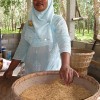
THAILAND: Muslim Women Carve Leading Roles as Insurgency Rages
Till last year, the rice fields near this village that sits in the midst of a rubber plantation had remained abandoned. It was neglect that is easily explained: a steady rise in the price of rubber had been more enticing to the villagers.HEALTH: Asia Tobacco Trade Fair Tests Thai Anti-Smoking Policies
Thailand’s reputation as a South-east Asian country with strong anti-smoking laws is facing a direct challenge from the tobacco multinational companies, who are due to gather here in November for a major industry congress and exhibition.POLITICS-THAILAND: Border Town Enjoys Peace Amid Insurgency
They are not leaving anything to chance in this far-flung southern Thai town that has earned a reputation as an oasis of peace and harmony in a region gripped by a bloody insurgency, now in its sixth year.« Previous Page — Next Page »





The Week with IPS

NEXT STOP - SDGs
Tracking global progress towards a sustainable world
Tracking global progress towards a sustainable world
