Languages
Saturday, September 26, 2026



News and Views from the Global South
RELIGION-EAST ASIA: Faith Challenged in the Time of SARS
The Catholic Church across East Asia is placing greater faith in pragmatism rather than religious rituals this Holy Week, in order to stall the spread of the deadly Severe Acute Respiratory Syndrome (SARS).RELIGION-EAST ASIA: Faith Challenged in the Time of SARS
The Catholic Church across East Asia is placing greater faith in pragmatism rather than religious rituals this Holy Week, in order to stall the spread of the deadly Severe Acute Respiratory Syndrome (SARS).SRI LANKA: U.S. Shows Tigers It’s the Godfather of Global Affairs
The leader of the Tiger rebels, Vellupillai Prabhakaran, sees himself as the godfather of Tamil politics in Sri Lanka, but he is being forced to learn that the U.S. government revels in having that title when it comes to global politics.IRAQ: Muslim Paradoxes Exposed as Regime is Collapsing
For how long will Muslims across Asia, like their co-religionists in the Arab world, live in denial? That is the question looms ahead in the wake of the jubilation spilling onto Iraq's streets as Saddam Hussein's regime collapses.IRAQ: With War, Age of Fence-sitting Over in South-east Asia
As Washington asserts its military supremacy on the battlefields of Iraq, the space for South-east Asian governments to take tough, anti-U.S. stances may be nearing the end.EAST ASIA: Fear of SARS Results in ‘Suspects’ Treated as Outcasts
With fear gripping East Asia over the rapidly spreading atypical pneumonia that has killed 100 people by this week, a steady cough or few sneezes in public can be a ticket to ostracism.EAST ASIA: Fear of SARS Results in ‘Suspects’ Treated as Outcasts
With fear gripping East Asia over the rapidly spreading atypical pneumonia that has killed 100 people by this week, a steady cough or few sneezes in public can be a ticket to ostracism.HEALTH-EAST ASIA: SARS Outbreak Draws Contrasting Responses
In the wake of a rapidly spreading killer disease, two East Asian countries of contrasting size are revealing how fast they are holding on to features that nations here are known for - saving face, and wearing a calm exterior to hide turmoil within.IRAQ: After Saddam’s Call, All Eyes on Asia’s Angry Young Muslims
Just like U.S. President George W Bush did before him, Iraqi President Saddam Hussein has, in a manner of speaking, used the 'are you with us or against us' approach to international politics to rally Muslim support behind his cause.IRAQ: After Saddam’s Call, All Eyes on Asia’s Angry Young Muslims
Just like U.S. President George W Bush did before him, Iraqi President Saddam Hussein has, in a manner of speaking, used the 'are you with us or against us' approach to international politics to rally Muslim support behind his cause.IRAQ: Saddam Hussein is No Icon for Asian Muslims
The rage boiling over on the streets of Asia's Muslim countries has helped clarify how Iraqi President Saddam Hussien is regarded in this corner of the Islamic world. He is no poster boy around which the faithful will flock.IRAQ: ‘Shock and Awe’ Invasion Rekindles Interest in Sun Tzu
While the U.S.-led invasion in Iraq may have succeeded in killing hundreds of Iraqi soldiers and scores of civilians, it may have also succeeded in breathing new life into the writings of an ancient Asian mind - the Chinese military philosopher Sun Tzu.IRAQ: Image of the ‘Ugly American’ Grows across Asia
Nearly a week into the U.S.-led invasion of Iraq, the political landscape across Asia is opening up to a fresh round of anti-U.S. sentiment that spans the predictable - to the unpredictable - terrain.ENVIRONMENT: Women to Gain Most from Water Security
By the end of an international conference on water here over the weekend, the world's poorest women emerged as a barometer to judge the success rate of future global programmes for achieving water security.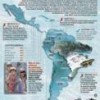
Porto Alegre and Island in Clean Water
Except for this southern Brazilian city, most Latin American cities fail to meet the needs of their millions of residents for clean water and sanitation services, despite possessing water resources. The problem lies in distribution and quality.ENVIRONMENT: Declaration on Water Lacks Clear Programme of Action
A ministerial meeting tackling the world's water problems fell short of producing a clearly defined programme of action in its final declaration, which was released here in this central Japanese city on Sunday.Also missing in the final text seeking to achieve water security was language recognising the right to water as a human right.
ENVIRONMENT: Declaration on Water Lacks Clear Programme of Action
A ministerial meeting tackling the world's water problems fell short of producing a clearly defined programme of action in its final declaration, which was released here in this central Japanese city on Sunday.ENVIRONMENT: Water Policy up for Debate, Flows Past the Poor
Ministers from over 100 countries will mark World Water Day Saturday by meeting here to endorse over the weekend a contentious report that lays down the road map for poor countries in solving a range of the planet's water-related problems.ENVIRONMENT: Critics Accuse Water Forum of Sidestepping U.N.
Just as the U.S.-led war on Iraq has undermined the significance of the United Nations, an international conference on water here may soon be fighting the same charge.ENVIRONMENT: Dispute Arises over Water Laws
Patricia Wouters wants champagne to flow if the international water conference here can call for water laws to be implemented. She is up against environmentalists determined to block such laws.ENVIRONMENT: Privatisation Dispute Surfaces in Kyoto
A new World Bank report calls for a doubled investment in water "from public or private sector sources."« Previous Page — Next Page »


The Week with IPS

NEXT STOP - SDGs
Tracking global progress towards a sustainable world
Tracking global progress towards a sustainable world
