Languages
Tuesday, October 27, 2026



News and Views from the Global South
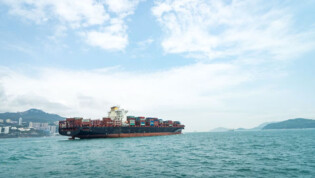
Rising Trade Values Mask the True Cost of Global Supply Chain Disruptions
Global goods trade reached approximately USD 13.7 trillion in the first half of 2026, up 12.5 percent from the same period in 2025, while services grew 10.5 percent, together adding USD 2 trillion to global trade. While these figures point to continued expansion, much of the increase reflects rising prices rather than stronger trade volumes.
Saudi Arabia, Türkiye and Pakistan Forge Mutual Defence Pact, as Iran Pursues New Shipping Framework
In Makkah, the Kingdom of Saudi Arabia, the Republic Türkiye, and the Islamic Republic of Pakistan agreed to the framework for a joint defence agreement where an attack on any of the three states shall be regarded as an attack against them all.
Saudi Arabia Forms Multinational Red Sea Defence Alliance as U.S.-Iran War Threatens Global Shipping
As the United States and Iran continue to escalate with military strikes across both fronts, the conflict took a new turn with Saudi Arabia becoming militarily involved on July 29, following coordinated airstrikes with U.S. Central Command according to the Saudi Ministry of Defence.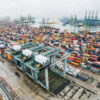
East Asia and Pacific Faces a USD 900 Billion Maritime Investment Challenge
East Asia and the Pacific's (EAP) maritime system has powered the region's rise as the world's largest trading and manufacturing center, but the infrastructure supporting that system has become increasingly vulnerable.
U.S.-Saudi Nuclear Agreement Opens Door to Civilian Nuclear Cooperation, with One Major Caveat
On Wednesday, July 22, the U.S. Secretary of Energy, Chris Wright, and Saudi Arabia’s Minister of Energy, HRH Prince Abdulaziz bin Salman bin Abdulaziz signed a civilian nuclear cooperation agreement, best known as a 123 agreement, as well as an accompanying bilateral safeguards agreement, according to the U.S. Department of Energy and the Saudi Ministry of Energy.
The Houthis Don’t Need to Close the Bab el-Mandeb Strait to Strangle the Suez Canal
With regional friction between Iran and the Gulf monarchies escalating, Houthi leadership in Yemen has proclaimed a total maritime blockade against all vessels linked to Saudi shipping. While this declaration does not constitute a verified military obstruction of the Bab el-Mandeb Strait, it significantly heightens the risk of volatility at the Red Sea’s southern gateway, potentially severing the primary arterial link to the Suez Canal.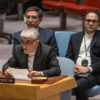
Food and Transport Costs through Strait of Hormuz Remain High, Burdening Vulnerable Economies
Prior to the latest round of hostilities between the United States and Iran, freight traffic had been increasing in the Strait of Hormuz, and negotiations were underway for a new agreement to fully restore trade through this channel.
Global Value Chain Trade Reaches Historic Highs, Despite Push for Reshoring
Despite rising geopolitical tensions, trade restrictions and calls to bring production back to domestic shores, the global economy remains more interconnected than it may appear. Trade through global value chains (GVCs) reached historic levels in 2024, according to a new report from the Organisation for Economic Co-operation and Development (OECD).
Renewed Hostilities in the Strait of Hormuz Threaten to Compound Global Supply Chain Costs
A continuation of hostilities within the Strait of Hormuz is once again threatening one of the world's most critical supply chain arteries, posing another wave of disruption which could choke the global energy, shipping and commodity markets. With roughly a quarter of global seaborne oil trade transiting through the Strait, alongside significant flows of liquefied natural gas and fertilizers, further constraints on commercial traffic could send new cost pressures cascading through supply chains that have yet to absorb the full effects of the earlier conflict.
Full Effects of Strait of Hormuz Disruption May Not Be Felt Until Second Half of 2026
The full economic impact of the disruptions in the Strait of Hormuz may not become clear until the second half of 2026, warns the United Nations Conference on Trade and Development (UNCTAD).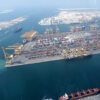
Arab Regions Remain the Most Underrepresented in the Global Trade System
Despite the importance of international trade as an engine for economic growth and development, only fourteen of the twenty-two Arab states are members of the World Trade Organization (WTO). The remaining Arab states risk missing out on opportunities for greater integration into the global economy and the multilateral trading system facilitated by the WTO.
Renewed Attacks on Strait of Hormuz Deepen Global Supply Chain Concerns
Renewed attacks on commercial vessels in the Strait of Hormuz have intensified concerns over global energy markets along with supply chain disruptions, as the United Nations calls for an end to escalating hostilities within the Persian Gulf.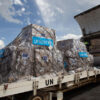
Ebola Outbreak Could Cost Africa $3.6 Billion and Threaten Nearly One Million Livelihoods
A new assessment from the United Nations Development Programme (UNDP) warns that the Ebola outbreak could cost Africa USD 3.6 billion, push 985,000 people into poverty, and put 300,000 jobs at risk.
UNCTAD: Governments Turn to Trade Policy to Secure Critical Mineral Supplies
Demand for critical energy transition minerals (CETMs) is expected to surge over the coming decades as countries expand clean technology capacity, develop electric vehicles, create battery storage, implement renewable energy systems, and introduce digital infrastructure according to UNCTADs latest report, The Shifting Dynamics of Critical Minerals Trade.
Building Peace Infrastructures: African Leaders Reflect on Peacebuilding
As the United Nations held its first-ever Peacebuilding Week (June 22-26), UN officials and developmental partners gathered at Egypt's Permanent Mission on June 23 to hold a dialogue on the main question that emerged from the 2025 Peacebuilding Architecture Review (PBAR): “How can global commitments to peacebuilding translate into tangible results on the ground?”
UNCTAD: A Shift of Risk, Geopolitical Tension Weighs on Global Markets Heavier than Trade Policy
Amidst increased geopolitical tensions, the risk of volatile energy markets, trade corridors, and regional stability in the Middle East has garnered more attention than trade policy in terms of its power to alter the global economy, according to new findings from the United Nations Conference on Trade and Development (UNCTAD).
Armed Conflict, Funding Cuts and Supply Chain Pressures Deepen Global Hunger Risks
Armed conflict, economic shocks, and climate pressures are driving worsening food insecurity across many of the world's most vulnerable regions, according to the latest Hunger Hotspots report outlook for June-November 2026, jointly released by the World Food Programme (WFP) and the Food and Agriculture Organization (FAO).
Ocean Economy Reaches $2.5 Trillion as Services Become the Largest Share of Ocean Trade
The global ocean economy continues its expansion, with ocean-related trade reaching USD 2.5 trillion as of 2025. Ocean services now make up the majority of the ocean trade, accounting for 58.9 percent of the composition, up from 47.8 percent in 2020.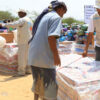
UN Urgently Calls for Increased Aid in Yemen Following IPC Warnings of Food Insecurity
In Yemen, increasing funding constraints on humanitarian operations have put millions of civilians in dire need of life-saving assistance amid overlapping crises. Acute food insecurity is a persistent issue, as recent reports from the Integrated Food Security Phase Classification (IPC) give a stark warning of conditions without urgent intervention.
Increased Rates of Deaths, Displacement and Diesel Amid New Ceasefire Escalations in Lebanon
Last week on May 28, the Israeli Defence Forces (IDF) issued an evacuation order to Lebanese civilians ordering them to move north of the Zahrani River, approximately 25 miles from the Israeli border, and roughly 20 percent of the Lebanese territory. These new escalations bring the displaced population to more than 1.3 million people, including more than 300,000 of those people being children. 1.3 million people represents approximately 1/4th of the nation's population of 5.3 million.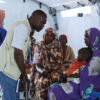
UNICEF to Deliver 1.4 million Cholera Vaccines to Sudan Amid Supply Chain Breakdowns
In Tawila, North Darfur State in Sudan, more than 1,180 cholera cases, including 300 cases in children, and at least 20 deaths have been reported since the first case was detected on June 21. Tawila has absorbed 500,000 internally displaced people who are escaping violence, many of them fleeing about seventy kilometers from the state capital of Al Fasher, making this rapid surge in cases a major health concern amidst worsening hygiene, medical, and food supply chain deteriorations.Next Page »





The Week with IPS

NEXT STOP - SDGs
Tracking global progress towards a sustainable world
Tracking global progress towards a sustainable world
