Languages
Wednesday, November 11, 2026



News and Views from the Global South
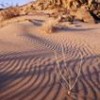
Yes, Deserts Can Be Productive
Production of solar energy in Chile's Atacama desert and ecotourism in Salta, Argentina, are successful cases of sustainable use of arid lands in Latin America.In Search of the Toromona
A new expedition will attempt to confirm the existence of an indigenous group isolated deep in the Bolivian jungle. No scientist has ever seen the Toromona.
Ecobreves – HONDURAS: New Threats Against Father Tamayo
Catholic priest Andrés Tamayo did not heed the threats of expulsion from residents and logging businesses who demanded that he leave the northeastern Honduran department of Olancho by May 31.Ecobreves – BRAZIL: Zoos Preserve Threatened Species
Experts called for strengthening the role of zoos in the preservation of biodiversity, during the 30th Congress of the Brazilian Society of Zoos, which concluded in Brasilia on May 2.AN ASIAN CANDIDATE FOR UN SECRETARY-GENERAL
India\'s choice for UN Secretary-General of senior most Indian in the UN secretariat and renowned thinker and writer Shashi Tharoor, passing over many senior politicians, is testimony to its traditional approach to the organisation, writes T.P. Sreenivasan, former ambassador of India to the United Nations (Vienna) and former governor for India at the International Atomic Energy Agency. In this article, the author writes that India has not sought to use the UN as an instrument of its policy nor sought sinecures in it for its politicians. The next Secretary-General has to be a good manager and a strong reformer. For the US, this will be the real issue. Of all the candidates, only Tharoor has worked at various levels in the UN and knows the organisation inside out. He has proven managerial skills and has a vision for reform, which he has already written on. Indeed, he would do well to present a blueprint for change even before his election. None of the other candidates would be able to do so convincingly.CENTRAL AMERICA BENEFITS FROM SHAKE-UPS TO THE SOUTH
A few months ago no one was betting on the progress of Central American integration, much less the region\'s hopes for a free-trade agreement with the EU, writes Joaquin Roy, Jean Monnet Professor and Director of the Centre for the European Union at the University of Miami. However, Roy writes in this article, the one-two punch administered by Venezuela\'s surprising decision to enter MERCOSUR and pull out of the Andean Community, and by the bout of nationalisation in Bolivia, set off alarms in Europe. The Andean Community, with which Brussels hoped to work out a moderate agreement, is now definitively out of commission, while the viability of MERCOSUR is in doubt. Consequently, Brussels is now setting its sights on Central America, willing, it would seem, to temporarily overlook its shortcomings. In this new opportunity for integration opened by the possibility of a Central American Free-Trade Agreement (CAFTA), or mini-FTAAs with the US, those problems presented by crucial elements that still lack a common free-trade zone must be resolved. While 94 percent of products are already covered, 53 percent of that remaining six percent are agricultural products. Despite the fact that there are agreements for the exchange of services and transport, there are also major asymmetries and not all countries apply them.RESOURCE WARS: THE HEAVY ECOLOGICAL AND POLITICAL FOOTPRINT OF ECONOMIC GLOBALISATION
Oil wars, water wars, land wars, atmospheric wars : this is the real face of economic globalisation, whose appetite for resources is exceeding the limits of sustainability and justice, writes Vandana Shiva, an author and international campaigner for women and the environment. Like oil, water is becoming a source of wars as it is commodified and privatised, dammed and transferred long distances. Every river in India has become a site of major, irresolvable conflicts over water ownership and distribution. The waters of the Tigris and Euphrates, which have sustained agriculture for thousands of years in Turkey, Syria, and Iraq, have been the cause of several major clashes among the three countries. Trade liberalisation is allowing corporations to encroach on the ecological space of local communities, thus unleashing conflicts. The problem is not a shortage of natural resources but free trade and globalisation, corporate greed and partnerships between corporations and states to usurp people\'s resources and violate their fundamental rights. If globalisation is pushed relentlessly, these resource wars will grow and globalisation will be slowed to a halt by ecological catastrophes and conflicts over resources -- or, the movements for ecological sustainability and social justice will succeed in resisting globalisation\'s ecological overreaching by laying the foundations for an Earth Democracy in which we live lightly on the earth, and share her vital resources equitably.NO NEW IDEAS FROM DAVOS, NO ACTION FROM PORTO ALEGRE
Despite its current openness to new issues, no one today expects ideas and proposals from the World Economic Forum or anything more than the great opportunity for socialising it offers its participants, writes Roberto Savio, president emeritus of IPS news agency and a member of the International Council of the World Social Forum. In this article, the author writes that only corporations with income of over one billion dollars are invited to the WEF, which means that businesses from the developing world are sharply under-represented. And despite its name, the WEF is dominated by Europeans, Americans, and Japanese: in 2002, 75 percent of attendees were from Europe and the US. Just 7.7 percent of the forum were from Asia, home to 60 percent of the global population. While participation in the World Social Forum has reached unprecedented levels, topping 100,000 participants, it has entered a crisis of growth and identity and perhaps a transition to new forms. Davos and Porto Alegre are both separate actors and at the same time symptoms of their respective worlds. The WEF has the power but faces a crisis of legitimacy. The WSF represents the eruption of a new phase of idealism and commitment in the world.HELSINKI PROCESS TARGETS CORRUPTION
At the Helsinki Conference last September, the need to promote global cooperation in the fight against corruption emerged as a central issue, write Leena Luhtanen, Finland\'s Minister of Justice, and Erkki Tuomioja, Minister for Foreign Affairs. In this article the authors write that in recent years, the globalisation of corruption has spurred the international community to acknowledge the problem and demand action that is not restricted to mere recommendations but aims at creating binding international legislation. Perhaps the best example of this is the UN Convention against Corruption, which has been signed by 140 states and ratified by 52, and which went into force in December 2005. Indeed, implementation and effective oversight are the Achilles\' heel of the UN Convention against Corruption as well. Recognising that corruption must be met with cross-border cooperation, Finland has developed a Road Map for action which is being realised together with Friends of the Helsinki Process governments -- Algeria, Brazil, Canada, Egypt, Hungary, Malaysia, Mexico, South Africa, Spain, Thailand, and the United Kingdom -- and in cooperation with other active governments as well as representatives of the private sector and civil society.THE WORLD NEEDS A MORE DEMOCRATIC UNITED NATIONS
In its present form the United Nations is ill-equipped to advance humanity\'s best interests, writes Kumi Naidoo, Secretary-General of Civicus: World Alliance For Citizen Participation. In this article the author writes that the democratisation of the UN cannot be limited to the current efforts at reform. Calls by the Secretary General for full, systemic, and meaningful civil society participation must be urgently implemented in order to make the UN system more transparent, accountable, and democratic. What is most urgently needed is a changed consciousness at the international level. This is an essential prerequisite for the UN to achieve a profound democratic transformation that will allow humanity to deal effectively with the new challenges of the 21st century. Civil society traditionally has helped bring about great societal changes. It shall continue to do so in the years ahead.WORLD SOCIAL FORUM: THE CRADLE OF GLOBAL CIVIL SOCIETY
What can we expect from the future of the World Social Forum? asks Roberto Savio, president emeritus of IPS and member of the International Council of the World Social Forum. In this analysis, Savio writes that the refusal of the participants to allow themselves to be absorbed by political parties and to establish relations with political institutions has reduced the WSF to a circuit of self-referentiality. Is it possible to increase the WSF\'s capacity for action? Savio thinks not: it has not been possible to move past the idea of an \'\'open space\'\', which allows for the exchange of ideas and the creation of alliances but prevents the formulation of proposals for concrete action by the forum. It is thought that such options should be carried out by the organisations participating in the WSF during their normal operations. There is a minority that holds that the WSF should not limit itself to being a kind of spiritual exercise from which participants emerge stronger and better. They believe that the forum should decide on a series of actions that provide an alternative to neoliberal globalisation and should pressure institutions to adopt them. But for now this debate is going nowhere. In all likelihood the WSF will not make significant progress into the political realm and will remain a major exceptional occasion for civil society to meet.WORLD SOCIAL FORUM: THE CRADLE OF GLOBAL CIVIL SOCIETY
What can we expect from the future of the World Social Forum? asks Roberto Savio, president emeritus of IPS and member of the International Council of the World Social Forum. In this analysis, Savio writes that the refusal of the participants to allow themselves to be absorbed by political parties and to establish relations with political institutions has reduced the WSF to a circuit of self-referentiality. Is it possible to increase the WSF\'s capacity for action? Savio thinks not: it has not been possible to move past the idea of an \'\'open space\'\', which allows for the exchange of ideas and the creation of alliances but prevents the formulation of proposals for concrete action by the forum. It is thought that such options should be carried out by the organisations participating in the WSF during their normal operations. There is a minority that holds that the WSF should not limit itself to being a kind of spiritual exercise from which participants emerge stronger and better. They believe that the forum should decide on a series of actions that provide an alternative to neoliberal globalisation and should pressure institutions to adopt them. But for now this debate is going nowhere. In all likelihood the WSF will not make significant progress into the political realm and will remain a major exceptional occasion for civil society to meet.Ecobreves – BRAZIL: New Formula for Cleaner Diesel
Brazil's national oil giant Petrobras has developed the formula H-Bio, which adds hydrogenated vegetable oil to diesel, improving the quality of the fuel and reducing pollution.Ecobreves – GUATEMALA: Fisherfolk Clean Contaminated Lake
- Dozens of artisanal fisherfolk have been working since early May on a project to clean up the northern Guatemalan lake of Petén Itzá, overrun with waterlilies (Nymphaea) and contaminated with other solid waste.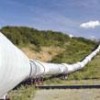
Criticism Rains Down on Gas Mega-Pipeline
Opposition is growing against the continent-wide project that would transport some 150 million cubic meters of fuel daily through the Amazon.
The Awkward Return of the Brown Bear
France, Spain and Andorra are working to reintroduce the brown bear in the Pyrenees Mountains. Fearful residents oppose the effort.No Consensus for Moratorium on Bottom Trawling
Environmentalists hoped an international ban on bottom trawling in the fishing industry would gain ground at a UN meeting. But they will have to wait.
Ecobreves – CHILE: Drought-Resistant Eucalyptus Cloned
Eucalyptus trees resistant to drought have been cloned -- reproduced through genetic manipulation -- for reforestation plans and forestry development in Chile's arid zones.Ecobreves – CUBA: Alert for 2006 Hurricane Season
- A good portion of Cuba's 11.2 million people participated May 20-21 in the extreme weather drill organized by the government to test the disaster prevention system ahead of the hurricane season's official start date: June 1.Ecobreves – VENEZUELA: Biodiversity Contest
The environmental organization Vitalis convened on May 22 a contest of ideas to learn about and preserve Venezuelan biodiversity, targeting university students from all fields and a awarding a trip to Germany for the 10 project winnersEcobreves – GUATEMALA: 10 Years in Prison for Water Contamination
A new regulation on discharge of wastewater took effect May 11 in Guatemala, and includes penalties of up to 10 years in prison for contamination of major water sources.« Previous Page — Next Page »





The Week with IPS

NEXT STOP - SDGs
Tracking global progress towards a sustainable world
Tracking global progress towards a sustainable world
