Languages
Wednesday, November 11, 2026



News and Views from the Global South
Ecobreves – CUBA: Plans to Halt Coastal Erosion
A project backed by UNESCO (United Nations Educational, Scientific and Cultural Organization) aims to halt erosion along the southern strip of coastline of Havana province in Cuba.Ecobreves – GUATEMALA: Certified Lumber for Sale Soon
Seven processed wood companies from various countries agreed to purchase certified lumber from the northern Guatemalan department of Petén to foment sustainable forest management.Ecobreves – CHILE: Tracking Glacier Melt
For the first time in Chile's history there will be a systematic process for monitoring an important glacier in the country's southern region, as a means to measure melting that could be associated with global warming.Ecobreves – VENEZUELA: Emergency at Valencia Lake
Lake Valencia, covering 375 square km and the second largest in Venezuela, is in a state of emergency because of the contamination resulting from the sewage water reaching the lake via rivers, and the imminent increase in incoming water as rainy season expands those rivers.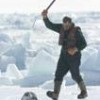
Seal Hunt Extends to Ice Floes
Canada will continue the annual killing of thousands of seals beginning April 12 on ice floes off the Labrador Peninsula. Animal rights activists are calling for a boycott of Canadian seafood.Celebration for Cuba's Caibarién Coast
Children are working to clean up a bay in northern Cuba, and convincing residents to change their polluting habits. In May they will celebrate all that the ocean gives their community.Customs Operations Go Green
The United Nations is training police, attorneys and judges to halt global smuggling of dangerous substances and endangered species.Ecobreves – BRAZIL: More Lightning Due to Global Warming
The frequency of lightning will increase 30 percent over the next 25 years in the Brazilian state of Sao Paulo, quadrupling the losses to electrical utility infrastructure because of more blackouts, according to the national space research institute, ELAT.Ecobreves – CUBA: Forest Fires and Drought
The intense drought that has been thrashing Cuba increased the risk of forest fire, which last year burned 11,447 hectares of forest, with losses totaling 16 million dollars.Ecobreves – VENEZUELA: Rescuing a Spectacled Bear in the Andes
A four-month-old spectacled bear (Tremarctos ornatos) in the Sierra Nevada National Park, in the southwest Venezuelan Andes, was rescued earlier this month when a local resident found it and alerted the authorities.Ecobreves – HONDURAS: Funds Approved for Eco-Projects
The Small Grants Program, a component of the Global Environment Facility, promoted by the United Nations, has approved for Honduras a total of 500,000 dollars to carry out 21 environmental and social development projects in poor communities.The Foundations of Life Itself Are in Danger
Around 30 percent of all mammal, bird and amphibian species could disappear from the planet, reducing the quality of the important ''services'' provided by the world's ecosystems, says the Millennium Ecosystem Assessment.Indians Negotiate Reparations for Damages Caused by Dam
Embera-Katío Indians have been in Bogotá since December protesting the impacts of the Urrá dam. Colombian officials hope to resolve the tensions this week.Ecobreves – BRAZIL: Tara Expedition Returns from Antarctica
''I was so surprised to see so many boats, an average of one ever two days, and so many tourists'' in Antarctica, Celine Ferrier, captain of the Tara, told Tierramérica. The research sailboat arrived in Rio de Janeiro this weekend, three months after leaving from Chilean Port Williams.Ecobreves – COLOMBIA: New Nature Park
Environmental groups applauded the declaration of a new national nature park in the southwestern Colombian jungle of Florencia, considered the ''last stand of biodiversity'' in that area.Ecobreves – MEXICO: Eco-Preserve in Danger
The Cuatrociénegas ecological preserve, in the northern Mexican state of Coahuila, runs the risk of disappearing, Valeria Souza, researcher with the Autonomous National University of Mexico's Ecology Institute, told Tierramérica.Ecobreves – PERU: Mining Companies in the Dock
Peruvian government prosecutor Martha Salinas announced on Mar. 28 the conclusion of an investigation into environmental infractions and crimes in the mining industry, and that presumed criminal liability had been found for 128 companies, including the two largest operating in the country: Mexico's Southern Peru, and the U.S.-based Doe Run.Ecobreves – GUATEMALA: Serious Losses of Maize
Ongoing drought has caused damage to some 24,500 hectares of maize crops in the northern Guatemalan department of Petén.JOHN PAUL II: THE GREAT RESTORER
The fundamental characteristic of the long and complex pontificate of John Paul II was a restoration of traditional conservative values and a return to internal Church discipline, writes Leonardo Boff, a liberation theologian who was punished by the Vatican doctrinal authorities in 1985 with \'\'obsequious silence\'\'. In this analysis, Boff writes that the pontificate of John Paul II was not a reformation but a counter-reformation, an attempt to halt a process of modernisation that erupted in the church in the 1960s . A major contradiction lay between his actions and teachings. To the outside, he presented himself as a champion of dialogue, of liberty, tolerance, peace, and ecumenism, but within the Church he shuttered the right of expression, banned dialogue, and created a theology with powerful fundamentalist overtones. In John Paul II it was the religious mission of the church and not its social mission that was dominant. He had a limited and simplistic understanding of the liberation theology prevalent in Latin America when he became Pope. He saw it as a Trojan horse for marxism, which he was obliged to denounce because of his experience of communism in his native Poland. He convinced himself that the danger in Latin America was marxism, when the real danger has always been savage and colonialist capitalism and its anti-populist and retrograde elites.WILL THE NEW POPE MAKE A REAL DIFFERENCE FOR AFRICA?
Will the election of Joseph Ratzinger as Pope make a difference for Africa? asks Neville Gabriel, coordinator of the Justice and Peace Department of the Southern African Catholic Bishops\' Conference, based in Pretoria, South Africa. In this article, Gabriel writes that the most urgent challenge facing the world today has more of a North-South than an East-West axis. The danger for Africa today is that intra-Northern competition for global economic and political dominance may mean another century dominated by East-West rivalry and conciliation, while the poorest of the world in Africa remain forgotten. While colonial political relations may have ended for Africa, colonial patterns still characterise Africa\'s economic relations with the world. The church under a new pontiff must actively work to at once transform Africa and its situation in the global community. The unmatchable popular pulling power of a pope with a pervasive social justice concern for Africa could make all the difference. However, Cardinal Joseph Ratzinger in his time as prefect of the Congregation for Doctrine of the Faith has not demonstrated such a concern. His immediate concern has been the orthodoxy of internal church teaching. If Pope Benedict XVI continues in this vein, his papacy will change nothing in Africa\'s future.THE DILEMMA OF THE CONCLAVE: REFORM OR COUNTER REFORM ?
As the Vatican Conclave meets to select a new Pope, the overriding question is whether the cardinals will elect a man who will return to the path of Vatican II, or one who will prolong the Catholic Counterreformation. In other words, who will prevail: John XXIII, or John Paul II? asks Leonardo Boff, a Brazilian theologian and writer. Pope John XXIII convened all of the bishops in the Vatican II Council (1962-1965) in order to undertake the Catholic Reform, which with great hope and new life swept the world. Like all processes of change, this also aroused resistance and opposition, which predominated in churches that suffered persecution --like the Polish church-- and in important sectors of the notoriously conservative Vatican Curia. It is from this area of resistance that John Paul II emerged, setting in motion a Counterreformation of the Catholic Church. For this reason, the challenge today is whether the cardinals will chose a Pope who returns to the path of Vatican II with the contributions of the Third World churches that will restore the centrality of justice and the poor, or whether they will chose a Pope who prolongs the Counterreformation using media dramatisation, the strengthening of the figure of the Pope and the Curia, and a merely moralising discourse on the poor and justice.« Previous Page — Next Page »





The Week with IPS

NEXT STOP - SDGs
Tracking global progress towards a sustainable world
Tracking global progress towards a sustainable world
