Languages
Thursday, November 12, 2026



News and Views from the Global South

Investment in Development Is a 'Moral Duty'
The World Bank's environmental and social requirements for approval of infrastructure projects are among the strictest in the world, says Ian Johnson, the institution's vice-president for sustainable development.Impossible to Cut Hunger in Half by 2015
The U.N. Food and Agriculture Organization realizes that it will not be able to meet the 2015 goal of relieving half of the 54.8 million people in Latin America and the Caribbean from the hunger they suffer. Between 1990 and 2000, public sector resources for development assistance have fallen off 50 percent, FAO director-general Jacques Diouf told Tierramérica.IS THERE STILL HOPE?
Generalised terrorism, whether that of Al Qaeda, of Sharon in Israel, or of US President Bush, arouses very real fears of calamity in the near future, writes Leonardo Boff, a writer and theologian. At times it seems we haven\'t yet seen the worst that could befall us. This situation raises a philosophical question: can we still place any hope in human beings? Are we capable of improving our social behaviour, our sense of humanity and morality, or are we condemned to live this tragedy to the very end until we destroy ourselves? It is always possible to improve, Boff writes, but humanity will improve only if the majority of its members do so. If this does not happen, we are finished. We will increase our destructive capabilities until tragedy is inevitable. But for this not to happen, one must assume the existence of a second factor: a philosophy of hope.CURE ILLS OF GLOBALISATION BY DEMOCRATISING IT
The current process of globalisation is generating widespread distress, destroying traditional connections of solidarity, and marginalising entire countries and even entire regions while raising the risk of war, exclusion, hatred, and ethnic and religious conflict, writes Boutros-Boutros Ghali, UN Secretary General from 1992-1996. In this article, the author argues that the globalisation of the economy must be accompanied by the development of a global movement for democracy. Global democracy cannot be limited to a transformation of the structures of national democracy. Its objective must be a new architecture structured in such a way that it is controlled directly not by citizens but by states, multi-national corporations, non-governmental organisations, municipalities, and political parties. This will require the creation of new political institutions as well as the reform of the existing international institutions. While these ideas may seem futuristic or utopian, the author writes that peace among nations grounded in a democratisation of globalisation is a desirable, and reachable, goal.INTERVIEW WITH AHMED QUREI: ‘I WILL NOT MEET WITH SHARON FOR
There is no time to lose: the European Union and Russia must reactivate the Quartet, together with the UN and United States, in order to realise the Road Map to peace in the Middle East, Palestinian Prime Minister Ahmed Qurei told IPS.Ecobreves – BRAZIL: UNEP Inaugurates Office
The United Nations Environment Program, UNEP, inaugurated its first office in the Brazilian capital in mid-April. The aim is to take advantage of Brazil's environmental experience to benefit the rest of Latin America and the Portuguese-speaking countries of Africa.Ecobreves – MEXICO: A Strong, Inexpensive Heart
A multifaceted artificial heart -- low in cost and high in efficiency -- has been developed by scientists at the Autonomous Metropolitan University of Mexico (UAM) and will be put to the test in pigs and sheep. It is hoped it will prove suitable for humans.Ecobreves – ARGENTINA-URUGUAY: Taking Care of the Rio de la Plata
Local governments in Uruguay and Argentina have agreed to coordinate efforts to regulate water quality in the Río de la Plata, which they share. The objective is to identify sources of contamination and prevent further damage.Ecobreves – COSTA RICA: Effort Against Unsustainable Lobster Fishing
International experts are meeting Apr. 26 to 28 in Panama to discuss strategies to halt the unregulated catches of spiny lobster (Panulirus argus) in Central America.Ecobreves – ARGENTINA: Claims Against Shell Continue
Claims against the Shell oil company continue despite the fact that the company last week paid 600,000 dollars to 40 Argentine families to withdraw the lawsuits related to the oil spill along the coast of Magdalena, in Buenos Aires province.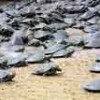
Endangered Young Turtles Take to the Water
Venezuela has broken a wildlife conservation record: in 15 years it has produced and protected 168,000 South American river turtle hatchlings. Under the supervision of experts, year-old members of this endangered freshwater species each April make their way to their permanent home, the Orinoco River.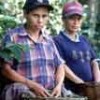
Desertion of Coffee Plantations Hurts Ecosystems
In El Salvador and Honduras, some 20,000 hectares of coffee plantations have disappeared. Their carbon-fixing function is crucial in mitigating climate change. In Nicaragua, the desertion of coffee agriculture has cost 122,000 jobs and created a food crisis in the department of Matagalpa.Ecobreves – PERU: Creating a 'Green' Ministry
The Peruvian Congress will establish an Environment Ministry and an Environmental Prosecutor's Office in August, announced lawmaker Fabiola Morales on Apr. 16.Ecobreves – ARGENTINA: Demands to Maintain Logging Ban
The Paraná Ecologist Forum this month filed a claim to prevent the annulment of an emergency environmental decree that bans logging of native forests and riverside jungles in the northeast Argentine province of Entre Ríos, home to 21 percent of the country's plant species.Ecobreves – COLOMBIA: Support for Certification of Eco-Agriculture
Colombia's Ministry of Environment, Housing and Territorial Development, through the National Plan for Green Markets, on Apr. 19 began the second round for co-financing for "green certification" -- an effort to consolidate ecologically sound farming.Ecobreves – GUATEMALA: Off to Fight Fires!
Twenty-five brigades of specialized firefighters were established in April by the National Forests Institute (INAB) to confront the wave of fires that affect Guatemala's forests each summer.
Galápagos on the Brink
The famed archipelago is suffering the effects of political clientelism, unregulated economic activity and the institutional weakness of Ecuador, says analyst Javier Ponce in this exclusive column for Tierramérica.Ecobreves – CUBA: Snail Farming
A project to artificially raise Zachrysia guanensis, a land snail, is under way in Cuba's Viñales National Park, 150 km from the capital.Ecobreves – VENEZUELA: Tuna Industry Looks Out for Dolphins
The tuna boats of Venezuela and Mexico, regional leaders in the sector, are looking out for the dolphins that swim alongside the schools of tuna, according to the Venezuelan Foundation for the Sustainable and Responsible Tuna Fishing (Fundatún).Ecobreves – CHILE: Promises to Cut Air Pollution Risks in Santiago
The Chilean government has promised through Santiago metropolitan region leader Marcelo Trivelli that next year there will be no more "environmental pre-emergencies" declared in this city of five million inhabitants.Ecobreves – CENTRAL AMERICA: Wetlands in Danger
The wetlands of the Gulf of Fonseca, shared by Honduras, Nicaragua and El Salvador, are threatened by the shrimp farming operations that use toxic chemicals to get rid of pests.« Previous Page — Next Page »





The Week with IPS

NEXT STOP - SDGs
Tracking global progress towards a sustainable world
Tracking global progress towards a sustainable world
