Languages
Thursday, November 12, 2026



News and Views from the Global South
GREEN BUILDING: RECONSTRUCTING COMMUNITY, REUNITING PEOPLE AND NATURE
In advanced industrial nations we spend 90 percent of our lives in the Great Indoors with little connection to the Great Outdoors. Modern construction techniques have successfully shielded us from Mother Nature, and one another, and too often at the expense of our well-being, writes Mark Sommer, a journalist and host of the award-winning syndicated radio programme \'\'A World of Possibilities\'\'. In this article, Sommer writes that in response to the growing divergence between our architecture and our well-being, a new generation of architects and designers is emerging with a different vision and strategy, setting new standards for construction based on principles that reunite humans with one another and nature. What has gone wrong with the buildings we inhabit is a reflection of the deficiencies of modernity itself -- its isolation from nature, brutal disregard for community, and uncritical embrace of a narrow economic calculus. The post-modern sustainable building movement places the conservation of resources and reconnection between people and nature ahead of privileged isolation and private profit. But to be widely adopted, it must also satisfy the bottom line, albeit one that gives greater weight to social and environmental benefits.ULTIMATE EU GOAL: PEACE AND SECURITY FOR THE CONTINENT
Although the forthcoming enlargement of the European Union is the largest in EU history, it is important to realise that it still does not encompass the whole of Europe, writes Martti Ahtisaari, president of Finland in 1994-2000. In this article, the author writes that after the accession of Romania and Bulgaria in 2007 preparations should begin for the next enlargement round. The Union must make sure that it provides the South-East European countries a meaningful and concrete vision for their membership. The EU also needs to establish its relationships with a number of countries not expected to become members in the near future, such as Russia, Ukraine, and Moldova. The EU must be able to offer something between mere collaboration and full membership. The final objective for enlargement of the Union to the east is to consolidate peace and security on our continent. The former foreign minister of Poland, Bronislaw Geremek, has said \'\'the enlargement will bring history and geography in harmony with each other\'\'. This goal, which the member states and the applicant states have pursued for over a decade, is finally materialising.THE BIRTH, PASSION, DEATH, AND RESURRECTION OF THE EU CONSTITUTION
Last December, Spain and Poland sent the EU constitution project into collapse by rejecting a revised vote-weighing calculation for the EU Council and insisting on retaining the more advantageous system from the 2002 Nice Treaty, writes Joaquin Roy, Jean Monnet professor and the director of the Centre for the European Union of the University of Miami. Thus began what was feared would be an excruciating passion for the text of the constitution, the author writes in this analysis. Thrice the Italian presidency refused to cooperate. Some, like Judas, seemed to be bargaining for money. The Spanish and Polish governments transformed themselves, as if under Mel Gibson\'s direction, into Roman soldiers on the road to Golgotha. Blair like Pilate washed his hands. All stood by silently and no one intervened to prevent the death of the project, as one of the largest crises in the history of the EU settled on a horizon heavy with thunder and darkness. Then, suddenly, as a result of the legislative elections in Spain, the main obstacle disappeared. Spain returned to the bosom of \'\'old Europe\'\', and in a display of the art of late repentance the Polish government expressed its doubts about its alliance with the US in Iraq. After a death foretold came the resurrection, as a final prelude to the ecclesiastic cycle. Brussels now sighs with relief.A WATERSHED IN NORTH-SOUTH RELATIONS
There are a host of disturbing signs that North-South relations require immediate attention, writes Omary Mjenga, secretary of the Tanzanian Secretariat of the Helsinki Process on Globalisation and Democracy, an initiative launched by Finnish and Tanzanian governments. In this article, the author writes that increasing numbers of people in the South view the current process of globalisation as no less than a modern imperialism, which uses every mechanism possible to shape the global order to suit the preferences and needs of the major advanced industrial nations. Moreover, this new imperialism is largely unhindered, indeed is even aided and abetted, by the multilateral mechanisms developed over the past five decades. If ever there was a time for the collective voice of the South to make itself heard, it is now, when the multilateral institutions to the United Nations still retain some legitimacy. If developing countries are to exert some influence over international or global relations and to affect the shape of global and national governance of economic policy, they need to summon the political will to improve rapidly their intellectual and technical capacity to take up the challenge.THEO VAN BOVEN: ‘CERTAIN COUNTRIES ARE RESORTING TO TORTURE”
Theo Van Boven, UN Special Rapporteur (SR) Against Torture since 2001 -- laughed when we began our interview. He just realised that as he had been speaking with a delegation from the Chinese government, lying on the table was an announcement for a conference on the \'\'Repression of Religious Liberty in China\'\'. It was an embarrassing moment in this international centre for loquacious diplomacy.THE ANC WILL NOT DISAPPOINT THE PEOPLE
The people of South Africa recently voted overwhelmingly for national unity and reconciliation by renewing the mandate of the African National Congress, writes Thabo Mbeki, President of South Africa. In this article, Mbeki writes that South Africans rejected the ANC\'s opponents\' assertion that the country\'s challenges could only be met if the people separated into antagonistic camps, defined by race, colour, and ethnicity. They also rejected the claim that the same movement that has led and leads them in the struggle to eradicate poverty and underdevelopment is the cause of the poverty and underdevelopment they continue to experience. Today we must work together in a people\'s contract to take our country further forward towards the eradication of the legacy of colonialism and apartheid. This will include the creation of more jobs and the reduction of poverty, the building of a non-racial and non-sexist South Africa with sustained reduction of the racial and gender disparities that continue to disfigure our country, and the reinforcement of national unity and reconciliation.SOUTH AFRICANS FACE CHOICE BETWEEN MOVING FORWARDS OR BACKWARDS
On the eve of South Africa\'s third general election and the celebration of our second decade of liberation, one of the major contestants at the polls is a right-wing coalition that would have opposed much of the progress our country has made since 1994, including ending apartheid, writes Thabo Mbeki, president of South Africa. The Coalition for Change is a right-wing group comprised of the Inkatha Freedom Party (IFP) of Dr. Mangosuthu Buthelezi, and the Democratic Alliance (DA), a merger of three right-wing parties. It is opposed to many of the initiatives we have taken since 1994, especially to address the interests of the poor at home and abroad, Mbeki writes in this article. The ANC will continue to put forward its own policies, focused, among other things, on the vigorous intervention of the democratic state to ensure a better life for all our people, both black and white. We will continue to encourage the formation of a people\'s contract among all those, including the overwhelming majority of our population, who are committed to the building of a non-racial and non-sexist people-centred society.Ecobreves – NORTH AMERICA: Protection for Three Marine Species
Canada, Mexico and the United States will seek a common strategy to protect the humpbacked whale (Megaptera novaeangliae), the pink-footed shearwater (Puffinus creatopus) and the leatherback turtle (Dermochelys coriacea) as part of an ambitious plan to ensure the survival of migratory species.Ecobreves – COSTA RICA: National Parks in Crisis
Costa Rica's national parks are in an distressing state of abandon due to lack of money to hire the 300 park rangers necessary to protect areas' biodiversity from hunters, charged Carlos Manuel Rodríguez, the national environment minister.Ecobreves – PERU:: New Anti-Desertification Center Announced
Peru's National Human Resources Institute (INRENA) is working with Brazil to set up a Regional Anti-Desertification Center, which will include the other countries that share the tropical forests of the Amazon.Ecobreves – GUATEMALA: Anti-Rabies Campaign Under Way
The Guatemalan Ministry of Health launched a campaign on Mar. 20 to vaccinate 1.6 million dogs and 30,000 cats in rural areas to prevent rabies in the wake of a prolonged drought.
A Step Backwards for the Ozone Layer
Washington won an exemption allowing its farmers to use more methyl bromide, a pesticide banned by an international treaty because it depletes the atmospheric ozone layer. But the exemption lasts only one year.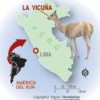
Peruvian Indians Save the Once-Endangered Vicuña
In the 1960s, there were just 25,000 of these camelids left. Now the vicuña population in Peru is growing eight percent a year and the species is no longer in danger of extinction, thanks to their protection in the hands of local indigenous communities.Law on Assisted Reproduction Divides Italy
A new Italian law, which bans experiments involving human embryos, is a violation of the rights of infertile couples and of scientific freedom, say critics. The fate of the 24,000 frozen embryos that exist in Italy is uncertain.Ecobreves – ARGENTINA: Latin American Environmental Observatory
Argentina's National Ecological Action Network (RENACE), an umbrella for more than 70 non-governmental organizations, in May will launch the Latin American Environmental Observatory to unite groups that are dealing with similar challenges.
LIBROS
The public monopolies for potable water and sanitation systems developed a basic infrastructure in Latin America that was unprecedented, writes Abel Mejía Betancourt in his article for the new magazine "Milenio Ambiental"Ecobreves – VENEZUELA: ChevronTexaco Supports School in Indigenous Area
An agricultural technical school attended by 400 children and adolescents in the Orinoco Delta, in eastern Venezuela, received 75,000 dollars from the U.S.-based oil giant ChevronTexaco for building repairs and equipmentEcobreves – CUBA: Drought Alert
More than 300,000 people suffer water shortages daily in Holguín, one of the six provinces in eastern Cuba hard hit by drought since the 1990s.Ecobreves – BRAZIL:: Engineers Seek Better Waves for Surfing
Increasing the height of ocean waves by 80 percent and improving their dynamic to benefit surfers is the goal of a project of the post-graduate engineering program at the Federal University of Rio de JaneiroEcobreves – CHILE: Advances in Cleaning Up Santiago
The Chilean government is creating a Transantiago Financial Administration System to reorganize public transportation and to build bikeways, among other measures intended to reduce pollution in the capital, home to five million people.Ecobreves – HONDURAS: Fighting Desertification and Drought
An initiative to mitigate the effects of drought and to prevent desertification in 10 of the 18 departments of Honduras began two weeks ago with public hearings and the identification of productive projects.« Previous Page — Next Page »





The Week with IPS

NEXT STOP - SDGs
Tracking global progress towards a sustainable world
Tracking global progress towards a sustainable world
