Languages
Wednesday, October 14, 2026



News and Views from the Global South

The Approaching Rainy Season Signals Trouble for Gaza
As the humanitarian crisis in Gaza continues to grow more dire as a result of the Israel-Hamas war, concerns of diminishing public health are growing due to prolonged flooding. Repeated airstrikes and forced evacuations in recent weeks have pushed many displaced citizens to flooding hotspots. An influx of torrential rain has greatly exacerbated the failing sanitation system, increasing the risk of contracting waterborne diseases. Health experts fear that conditions will continue to worsen in the coming winter months.
TikTok and WHO Join Efforts to Combat Misinformation
Today’s digital age is centered around TikTok, the short-form social media platform that hosts around 1 billion global users. Sensationalized or reductive videos often get the most engagement with young audiences, leading to the spread of misinformation on a global level.
Uptick in Mpox Cases Raises Concern Among Health Officials
Yesterday, India’s Federal Health Ministry reported the nation’s first documented case of mpox. The infected individual was reported to have contracted the clade Ib strain of the virus, which is a far deadlier variant than the more common clade II. This development has raised considerable concern among health officials around the world as the mpox epidemic had been contained in the Democratic Republic of Congo until recently.
Flooding and Armed Conflict Aggravates Sudan’s Cholera Epidemic
Sudan has been plunged into a deadly cholera outbreak in the midst of the Sudanese Civil War. Sudan is currently home to an approximate 15 million people, many of which have had to bear the brunt of hostilities between warring parties, widespread food insecurity, mass displacement, and extreme weather anomalies. Flooding, in particular, has been very damaging, leading to the collapse of critical infrastructures that ensure sanitation. This has caused the cholera outbreak to become a national concern.
UN Moves De-Escalate Israel and Lebanon Conflict
Yesterday, Israel launched a series of bombardments across Southern Lebanon, killing over 500 people and injuring over 1,800, according to Lebanon’s Ministry of Public Health. This has been described as the deadliest day for the country since the 2006 Israel-Hezbollah War. Furthermore, this is only the latest of a series of conflicts between Israel and Lebanon since the eruption of the Israel-Hamas War in October of last year.
Violence, Displacement, and Hunger Plagues Somalia
Somalia is currently in the midst of a dire humanitarian crisis that threatens to destabilize the nation’s security. This crisis is a result of the Somali Civil War, which began in 1991. Altercations between clan-based operations have caused a host of issues over the years, including over 596 civilian casualties, according to the United Nations Assistance Mission in Somalia (UNSOM). Tensions have greatly intensified in 2024, with levels of internal displacement and food insecurity increasing rapidly.
Gang Violence and Mass Displacement Ravage Haiti
Amid the ongoing civil unrest in Haiti due to gang violence, levels of internal displacement have soared. Mass internal displacements in Haiti have led to a host of adverse consequences. This includes a disruption of schooling, increased levels of violence and exploitation, and limited access to essential services such as healthcare.
Forest Fires in the Amazon Threaten Earth’s Stability
This year has been the worst for the Amazon rainforest in almost two decades. Although there has been a measured decline in deforestation when compared to 2023, forest fires have ravaged acres of critical ecosystems. For the first eight months of this year, the Amazon has seen routine forest fires, totalling to over 53,000 recorded instances.
Typhoon Yagi Devastates Southeast Asia
In early September, Typhoon Yagi, a deadly tropical cyclone, hit Southeast Asia and Southern China, causing widespread destruction. According to the United Nations (UN), wind speeds, reaching 213 kilometers per hour, as well as heavy flooding and severe landslides, have devastated affected areas. Yagi is the strongest natural disaster to hit the South China Sea in three decades, leaving over 500 people killed, 38 missing, and 1,900 injured.
Humanitarian Crisis in Gaza Worsens While Polio Vaccine Campaign Succeeds
Today, the chief of the United Nations Relief and Works Agency for Palestine Refugees in the Near East (UNRWA), Philippe Lazzarini, confirmed that the first round of Gaza’s polio vaccination campaign had ended successfully, reaching 90 percent coverage. The second round of this campaign is set to begin by the end of September, delivering Gaza’s children with a critical second dose of the polio vaccine.
Severe Floods in Nigeria Magnify The Dire Humanitarian Crisis
On Monday, the Alau dam in Maiduguri, Borno State, collapsed, causing flash floods to ravage neighbouring regions in Nigeria. This comes after weeks of torrential rain, which caused severe structural damage to the dam. The floods have changed the lives of thousands and caused high levels of damage to infrastructures. The impacts of the recent floods compound with Nigeria’s pre-existing humanitarian crisis, which includes armed conflict, widespread malnutrition, and a failing economy.
‘Safe Zone’ Al-Mawasi Bombed, Leaving Dozens Killed
On Tuesday, an airstrike was carried out in Al-Mawasi, on a displacement camp situated on the Gaza Strip. According to the Gaza Civil Defense Agency, 40 people were killed and over 60 were injured. Despite being designated as a “safe zone” by the Israel Defense Forces (IDF), this region has seen continual airstrikes and armed hostility since December 2023.
Rising Temperatures Threaten Our Oceans
Human practices, such as unsustainable fishing, pollution, coastal development, and fossil fuel use have pushed the Earth’s oceans to their limits. This has resulted in warmer, more acidic waters. As global temperatures rise yearly due to climate change, oceans continue to see significant losses in biodiversity, rising sea levels, and environmental damage.
Children in Gaza Threatened by Polio and School Closures
It has been nearly one year since the commencement of Israeli occupation in the Gaza Strip and living conditions for millions of children continue to grow more dire. The rampant spread of disease among children as well as the stagnant state of Gaza’s schooling system have been greatly aggravated by continued hostilities.
Armed Conflict and Climate Crisis Threatens the Lives of Millions in Yemen
Yemen is currently in the midst of a severe humanitarian crisis that has been exacerbated by a litany of environmental issues. Years of armed conflict, constant windstorms, flooding, mass displacement, cholera outbreaks, and acute food insecurity have all compounded into a severe issue for millions of Yemeni people. Currently, it is estimated by the International Committee of the Red Cross (ICRC) that approximately 70 percent of Yemen’s population depends on humanitarian aid to survive.
Bangladesh Flash Floods ‘Tragic Reminder’ of Impact of Climate Disasters
Since late August, severe flash floods and monsoons plaguing Bangladesh have affected nearly 6 million people. Bangladeshi officials have declared the floods to be the country’s worst climate disaster in recent memory. These recent floods follow the wake of Cyclone Remal, which devastated Bangladesh and West Bengal earlier this year.
Lack of Accountability for War Crimes in Libya Raises Instability
The situation in Libya continues to grow more dire every year since the emergence of the al-Kaniyat militant group. From 2013 to 2022, al-Kaniyat had been responsible for a multitude of human rights violations, including mass killings, kidnappings, forced displacements, torture, and sexual violence. The lack of accountability for these injustices has spurred renewed conflict, which threatens to destabilize Libya years later.
Humanitarian Crisis As Floods, Prolonged Heavy Rains Impact Chad
Since June of this year, Chad has been facing an extended period of heavy rainfall. Major flooding has triggered the onset of a significant humanitarian crisis, as all aspects of Chadian life, including health, food production, and community, have been negatively impacted. Additionally, response plans are severely compromised due to high levels of hostility taking place in neighboring nations.
Infection Rates Among Children Show Worrying Increase in Gaza
As the humanitarian crisis in Gaza continues, so does the spread of illness among Palestinian children. Already facing widespread malnutrition, starvation, dehydration, and unhygienic living conditions, hundreds of thousands of children in Gaza face the risk of contracting a multitude of diseases.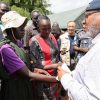
In the Midst of Hostilities Hunger Escalates in Sudan
The ongoing humanitarian crisis taking place in Sudan, which is a result of the civil war that began last year, continues to escalate as hunger and displacement plague the population, according to spokesperson for the Secretary-General of the United Nations, Stéphane Dujarric, during a press briefing on August 21, 2024.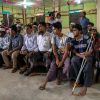
Conditions Grow Dire in Myanmar
On August 21st, Spokesperson for the Secretary-General Stéphane Dujarric spoke at a press briefing at the United Nations Headquarters about the ongoing Rohingya genocide taking place in Myanmar. Dujarric detailed high levels of hostility and displacement in the Shan, Mandalay, and Rakhine regions, which have significantly intensified since late June of this year.« Previous Page — Next Page »





The Week with IPS

NEXT STOP - SDGs
Tracking global progress towards a sustainable world
Tracking global progress towards a sustainable world
