Languages
Tuesday, October 27, 2026



News and Views from the Global South
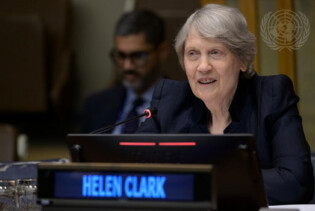
The Global Leaders Network Pushes to Protect Women’s and Children’s Health
In the wake of the largest decline in global health financing on record, the Global Leaders Network (GLN) for Women’s, Children’s and Adolescent Health convened a high-level meeting on September 22 to sustain political momentum for women and children's health financing. The event, Financing for Women’s, Children’s and Adolescent’s Health in a Time of Austerity, was co-hosted by the Governments of South Africa, Spain, and Tanzania, in addition to the Partnership for Maternal, Newborn, and Child Health (PMMCH).
The Connection Between Urbanization and Poverty: How Cities Can Reduce Poverty – Or Deepen It
Urbanization can help concentrate jobs, services, and investments; however, it can also concentrate unaffordable housing, insecure employment, and unequal exposure to contamination and environmental threats. A recent report from the UN Special Rapporteur on extreme poverty and human rights, argues that the difference is not urbanization itself, but how cities are planned, governed, and financed.
Consequences of Inaction: UN Security Council Pressed to Act Before Hunger Becomes Famine
Across the board, UN officials and humanitarian organizations urged the Security Council to act before the consequences of food insecurity and famines hit, during a high-level open debate on Tuesday, August 25. More than 80 representatives took part in Tuesday’s conversation on conflict-related food insecurity under the theme “Food under fire: the Security Council’s role in mitigating global and local food crises”.
UNAIDS Framework Pushes for the Protection and Integration of HIV Care
As the global HIV response shifts toward sustainable, nationally led, and rights-based care, a new UNAIDS framework published this week argues that integration must start with a country's readiness.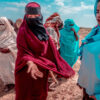
How Global Aid Cuts are Undermining Women-Led Humanitarian Response in Sudan
Women-led and women’s rights organizations (WLOs) in humanitarian settings are collapsing amidst a complicated predicament in which needs are surging and international support is dwindling.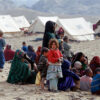
Resilience Is Not Enough: OCHA Sounds Alarm on Underfunded Humanitarian Crisis in Afghanistan
“Mainly, people tell me they're exhausted. They're exhausted from being poor, from being hungry, from repeated climate shocks, mounting debt, and the daily struggle to provide for their families,” Olga Cherevko, Spokesperson for the UN Office for the Coordination of Humanitarian Affairs (OCHA) in Afghanistan, told UN reporters on August 4.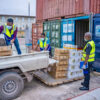
Dual Crises in Eastern DRC as Ebola Surges and Hunger Deepens
The Democratic Republic of Congo (DRC) is battling the fastest-growing Ebola outbreak on record, with United Nations officials warning that hunger is actively undermining efforts to contain the spread.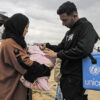
Ongoing Need for Humanitarian Assistance in the Occupied Palestinian Territory
On Monday July 20, a team from the United Nations Office for the Coordination of Humanitarian Affairs (OCHA) visited two displacement sites in Gaza where they found two family tents decimated by domestic fires. This incident is indicative of the increasing frequency of domestic fires in Gaza.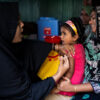
Children in Conflict Zones and Remote Areas Bear the Brunt of Global Immunization Gaps
Despite growing up and working in vastly different geographic regions and environments — one shaped by decades of armed conflict and political instability, and the other by remote, hard-to-reach areas — both Sagal and Johao encounter children daily who have never been vaccinated. Sagal and Johao are members of UNICEF’s Global Youth Health Advisory Group, where they advance children’s health by shaping UNICEF’s strategies, policies, and campaigns, while working directly in their own countries to connect community realities to global conversations about children's health.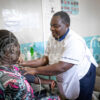
WHO: Urgent Action Needed for the Future of Cancer Care
One in five people will be diagnosed with cancer in their lifetime, and when the emotional and physical toll on close family members is factored in, an estimated 92 percent of people globally will be affected by cancer at least once in their lifetime. This staggering statistic is the centerpiece of the World Health Organization (WHO)’s latest global report on cancer.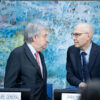
UN Senior Members Urge Universal Abolition of Death Penalty
While the movement for the universal abolition of the death penalty advances, this progress “cannot be taken for granted,” said UN Secretary-General António Guterres as he greeted the 9th World Congress Against the Death Penalty.





The Week with IPS

NEXT STOP - SDGs
Tracking global progress towards a sustainable world
Tracking global progress towards a sustainable world
