Languages
Thursday, October 22, 2026



News and Views from the Global South
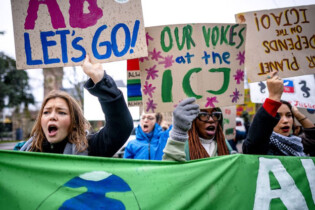
The UN Vote that Could Reshape Climate Justice
Normally, resolutions voted at the United Nations General Assembly do not make the headlines. As nonbinding and mostly symbolic, rich in principles yet empty and lacking the power to carry consequences, these statements are shrugged off and ignored.
Migration a Toxic and Divisive Issue in Many Parts of the West
Migration is a strange thing, hard to pin down. It is a complex phenomenon that transforms communities while shaping people’s identities and it is so multifaceted that individuals perceive it and live it in different ways.
To Fix the Rupture, Trade is not Enough
Will trade be enough to navigate the current waves of chaos and disorder that are underpinning the ongoing rifts among competing powerful and hegemon nations and the rest?
International Volunteer Year 2026: An Opportunity to Reimagine Volunteerism?
This coming International Volunteer Day (IVD), celebrated every year on 5 December, is special because the United Nations will launch the International Volunteer Year 2026 or IVY 2026.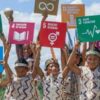
The Role of Youths in Shaping UN’s Post 2030 Development Agenda
Less than five years from 2030 it is time for the international community to confront the future of the Agenda 2030 and its Sustainable Development Goals.
Will the FfD4 Sevilla Commitment Ever be Followed up?
The extensive plan of action adopted at the 4th International Conference on Financing for Development (FfD4), held recently in Sevilla, Spain (30 June - 3 July), triggers the question: Where will the money come from?
A Revolution in the Working Culture at the UN
How would the UN80 Initiative, designed to mark the 80th Anniversary of the United Nations, turned out to be, if Kamala Harris had won the American presidential election in November last year?
New Forms of Power-Sharing are Needed to Uphold Rights of Indigenous Peoples
A UN groundbreaking report published in 1982 laid the legal ground for defining the inalienable rights of Indigenous Peoples. The document, written by José Martínez Cobo, a United Nations Special Rapporteur, analyzed the complex discrimination patterns faced by Indigenous Peoples.
Still Hopes for a Future Plastic Treaty– But it Won’t be Easy
The last few weeks of 2024 were a disappointment for those who strongly believed that planet Earth is in need of bold actions. First, there were the frustration stemming from what could be defined at minimum as unconvincing outcomes of both COP 16 on Biodiversity and COP 29 on Climate.
Courage, not Compromise? A Rallying Cry that Failed a Deadlocked COP Meeting
Courage and not compromise. That was the motto desperately launched by members of the civil society in the twilight of the negotiations of the Plastic Pollution Treaty in Busan, South Korea last week.
UN’s Summit of the Future
Preparations are ongoing for the upcoming Summit of the Future, probably the most consequential initiative of UN Secretary General Antonio Guterres so far.
A new Treaty for a Sustainable and Just Future?
A High-Level Political Forum – described as one of the most important events of the year for discussing the implementation of Sustainable Development Goals (SDGs)—will take place at the United Nations through July 18.
The Dilemma for Small Island Developing States: Recovery or Development?
“We are facing unenviable decisions, between the recovery of today or the development of tomorrow”. These were the words of Fiamē Naomi Mataʻafa, of Samoa at the opening of the 4th International Conference on Small Islands Developing States (SIDS4).
The Impact of Climate Change on a Biodiversity Hot Spot
If there is a place where the interlinkages and dependencies between the effects of climate warming and biodiversity loss are clearly at display, it’s Nepal. There is clear evidence on the impact of climate change on the country’s ecosystem considering the fact that Nepal is an important biodiversity hotspot.
UN Volunteers – and Their Over Reaching Mission
If there is an agency or program within the UN that I really admire and wish the best for, this is the United Nation Volunteers or UNV. Its overarching mission, mandate and key objectives are paramount for humanity.
A Bigger and More Relevant Role for Youth Within the UN System – Part II
The UN Secretary General’s Policy Brief on Meaningful Youth Engagement in Policy and Decision-making Processes offers several ideas on how to ensure youths have a bigger and more relevant role within the UN System.
A New Youth Envoy: Symbolic Change or Real Hope?– Part I
The recent appointment of Dr. Felipe Paullier of Uruguay as the first Assistant Secretary-General for Youth Affairs is a good news for the United Nations. Yet we need to ask ourselves the following question: Can such development also become a real hope, rather than just a symbolic change, for millions of youths from around the world?
Wanted: A New Local Oversight Structure to Achieve SDGS, Climate Action & Biodiversity Preservation
The links between Agenda 2030 and SDGs, including climate action and biodiversity preservation are clear and straightforward. Yet, leveraging them, and bringing them to together in a unified framework, remains extremely challenging.
Reality is Governments Not Truly Held Accountable to Implement SDGs
What does transformative and sweeping really mean in the overarching efforts to achieve the Agenda 2030? With the conclusion of the second edition of the SDG Summit, it is time for stocktaking on what was agreed at the United Nations HQ in New York this week. At the core of the Summit were not the several Leaders’ Dialogues that, as important as it can be to have heads of state and government reflecting on the Agenda, are just talking shops without any practical implications.
Urgency for a Global Fund for Media & Journalism
There have been an array of proposals to sustain journalism around the world-- from tax incentives and subsidies to the idea of allocating 1% of governments’ GDP to a drastically increased ODA for independent journalism in the global South.
Localizing SDGs Means Truly Empowering Citizens
The Future We Want was the groundbreaking outcome of the Rio+20 Summit, the summit, held in 2012, where the idea of Sustainable Development Goals (SDGs) was first conceptualized.Next Page »





The Week with IPS

NEXT STOP - SDGs
Tracking global progress towards a sustainable world
Tracking global progress towards a sustainable world
