Languages
Thursday, October 8, 2026



News and Views from the Global South
HEALTH: New Diagnostic Tool Could Slash Malaria Deaths
Malaria kills a child every 30 seconds, but a new diagnostic breakthrough may cut that devastating death toll, Canadian scientists announced Sunday.DR CONGO: Activists Slam World’s “Grotesque Indifference”
International lust for the enormous mineral and resource riches of the Democratic Republic of the Congo (DRC) abetted by international indifference has turned much of country into a colossal "rape mine" where more than 300,000 women and girls have been brutalised, say activists.ENVIRONMENT-US: Bush Quietly Passes Dozens of New Rules
As the world community meets in Poland this week to find solutions to the climate crisis, the George W. Bush White House is chaining the United States' tiller to prevent a change of course by President-elect Barack Obama by passing new anti-environmental rules and regulations at a furious pace.CLIMATE CHANGE: Oceans Passing Critical CO2 Threshold
An apparent rapid upswing in ocean acidity in recent years is wiping out coastal species like mussels, a new study has found.
CLIMATE CHANGE: Hot Days and Nights in Mexico 2090
Climate change will dramatically increase the number of hot, dry days in Mexico in the coming decades, while coastal regions like the Yucatán, in the southeast, will be swamped by sea levels that are half a metre higher than today, a new study has found.
Hot Days and Nights in Mexico 2090
In 2090, there will be just three or four cool days per year in Mexico, predicts a study by Oxford University, financed by the UNDP.
ENVIRONMENT: Where That “Recycled” E-Waste Really Goes
Is your old TV poisoning a child in China? Or your old computer contaminating a river in Nigeria?
ENVIRONMENT: Haiti Can’t Face More Defeats
The worst natural disaster that Haiti has suffered requires far-reaching solutions in order to reduce this Caribbean country's environmental fragility, say officials and humanitarian workers.
BIODIVERSITY: Ten-Year Probe Reveals Oceans in Peril
A thousand points of light are being shone into the dark ocean depths as scientists from 82 countries work to complete the decade-long global research effort called the Census of Marine Life.BIODIVERSITY: The Real Price of Farmed Salmon
Salmon aquaculture is devastating the world's oceans and an international coalition of scientists, Canadian First Nations and tourism operators have called for a global moratorium.
Haiti Can't Face More Environmental Defeats
Haiti's environmental crisis could be the most desperate on the planet, says a high-ranking United Nations official in this Caribbean country.BIODIVERSITY: Unraveling the Mysteries of Salmon Migration
Tiny juvenile salmon have been electronically tracked for the first time from their natal rivers in the Rocky Mountains 2,500 kilometres north to Alaska.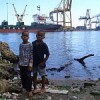
ENVIRONMENT: Worst Forms of Pollution Killing Millions
Gold mining and recycling car batteries are two of the world's Top 10 most dangerous pollution problems, and the least known, according a new report.CLIMATE CHANGE: Window of Opportunity Closing Rapidly
The global financial crisis has pushed climate change off the front pages despite new evidence that it is happening faster and with stronger impacts than previous projections, a new report warns.DEVELOPMENT: Cell Phone Service, But No Toilets
It is a fact of the 21st century that some of the poorest regions of the world have good mobile phone coverage but no toilets or safe drinking water.
ENVIRONMENT: A Green Lining in Market Meltdown?
Clean and green technologies may end up a big winner in the current global financial crisis, say investment professionals.
Q&A: "Future Prosperity Is in Green Technologies"
Achim Steiner, the eloquent executive director of the United Nations Environment Programme (UNEP), believes that Mexico could take a leadership role in the new "green" economy.
U.S.: Great Place for the Oil Business
Why do U.S. oil companies - some of the most profitable corporations on the planet - receive 20 to 40 billion dollars a year in subsidies from the U.S. government?“Future Prosperity Is in Green Technologies”
In times of economic crisis, the shift to a low-carbon economy is the smartest investment any country can make, says United Nations Environment Program chief Achim Steiner in this Tierramérica interview.CLIMATE CHANGE: Chemical Lobby Weakening Ozone Treaty
In hard economic times, protecting the environment is often seen as a luxury - or ignored completely. But had that attitude prevailed 20 years ago when it came to taking action to protect the ozone layer, skin cancer rates would have soared and climate change would be even more dramatic than it is today.CLIMATE CHANGE: Arctic Oil and Gas Rush Alarms Scientists
As greenhouse gas pollution destroys Arctic ecosystems, countries like Canada are spending millions not to halt the destruction but to exploit it.« Previous Page — Next Page »





The Week with IPS

NEXT STOP - SDGs
Tracking global progress towards a sustainable world
Tracking global progress towards a sustainable world
