Languages
Sunday, October 4, 2026



News and Views from the Global South
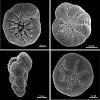
CLIMATE CHANGE: Acid Oceans Altering Marine Life
Some of the first species impacted by increasingly acidic oceans have been identified just as scientists meet in Copenhagen this week to present new data showing that climate change is far more urgent and serious than current economic problems.CLIMATE CHANGE: The Heat Is On Washington
A boiling point over government inaction on climate change may have been reached in the United States.
BIODIVERSITY: So Long, Salamanders
Mesoamerica's salamanders appear to be joining the global decline in amphibian species, like frogs, adding to the evidence of ecological change around the planet.BIODIVERSITY: Frigid Polar Regions Teeming With Life
Earth's two ice-covered polar oceans may be the most inhospitable places on the planet, but more than 12,000 species of animals have been found there, according to new research released at the annual meeting of the American Association for the Advancement of Science here.HEALTH: Warmer Climate Gives Malaria New Hunting Grounds
Climate change is bringing malaria to regions of Africa where the disease was previously unknown, researchers report from the conference of the American Association for the Advancement of Science in Chicago this week.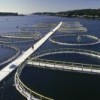
DEVELOPMENT: Aquaculture Awaits Its Heyday
With wild fish catches in sharp decline, aquaculture, which now accounts for nearly half of all seafood consumed, is expected to double production over the next two decades.
So Long, Salamanders
These days it's hard to find any salamanders in some parts of Mexico and Guatemala, where just a few decades ago they were abundant, says a new study.ENVIRONMENT: Fishers Learn to Share Shrinking Catch
With the oceans in crisis, where will our fish - an important source of protein for billions of people - come from?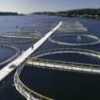
Aquaculture Awaits Its Heyday
Fish farming could fill the void left by commercial fishing as a source for human food -- and it can transform itself into a sustainable industry, say its promoters.ENVIRONMENT: Plenty of Blame for Collapsing Fish Stocks
Climate change, pollution and overfishing have left the oceans in crisis, experts agree. Now a new study reveals that every national government with a fishing fleet has dramatically failed to manage fisheries in a responsible manner.
CLIMATE CHANGE: Tropical Forests Fight for Survival
Current rates of deforestation suggest there will hardly be any tropical forests left in 20 years. Sixty percent of the rainforests, which survived for 50 million consecutive years, are already gone.CLIMATE CHANGE: North American Trees Dying Twice as Fast
Our trees are dying. Throughout the western United States, cherished and protected forests are dying twice as fast as they did 20 years ago because of climate change, researchers reported Thursday in the journal Science.
Tropical Forests Fight for Survival
The reforestation of vast tropical areas poses the challenge of determining whether second-growth forests will be able to serve as habitat for the millions of unique species that were there before.CLIMATE CHANGE: As Politicians Stall, Grassroots Fills Void
Global emissions of carbon dioxide must reach a peak in less than 10 years and then begin a rapid decline to nearly zero by 2050 to avoid catastrophic disruption to the world's climate, according to a new report.
CLIMATE CHANGE: Arctic Peoples Claim Their Right to Cold Temperatures
"Terrifying" is the word that best describes the situation of a hunter who is lost on shifting ice, or of the homeowner whose house splits in two when its foundation sinks, says Canadian indigenous leader Mary Simon when asked about the effects of global warming on the Inuit people.
Arctic Peoples Claim Their Right to Cold Temperatures
The indigenous residents of the Arctic want to continue living in the glacial cold in which their culture was forged, and which is now threatened by climate change, says Canadian Inuit leader Mary Simon in this exclusive Tierramérica interview.
CLIMATE CHANGE: Carbon Markets – What’s In It for the Poor?
Climate experts meeting in Poznan, Poland, promised to create a new pot of carbon-credit gold for the rural poor as guardians of rural lands and forests.CLIMATE CHANGE: Chasm Widens Between Science and Policy
The roof of our house is on fire while the leaders of our family sit comfortably in the living room below preoccupied with "political realities" - that was essentially the message from 1,000 scientists from around the world along with northern indigenous leaders gathered in Quebec City for the International Arctic Change conference that concluded last weekend.
Carbon Markets – What's In It for the Poor?
Paying the poor to conserve forests through a market scheme is the new star among initiatives in climate talks.CLIMATE CHANGE: “Things Happen Much Faster in the Arctic”
In just a few summers from now, the Arctic Ocean will lose its protective cover of ice for the first time in a million years, according to some experts attending the International Arctic Change conference here.CLIMATE CHANGE: Arctic Is the Canary in the Coalmine
Nearly 1,000 scientists and representatives of indigenous peoples from 16 countries have braved a major winter storm to share their findings and concerns about the rapidly warming Arctic region at the International Arctic Change conference in Quebec City.« Previous Page — Next Page »


The Week with IPS

NEXT STOP - SDGs
Tracking global progress towards a sustainable world
Tracking global progress towards a sustainable world
