Languages
Monday, October 19, 2026



News and Views from the Global South

Money Laundering: the Darker Side of the World’s Offshore Financial System
A sign outside a laundry in New York city had a frivolously flippant slogan: “We launder dirty clothes, not dirty money.” And a 2019 movie titled “Laundromat,” based on a book ‘Secrecy World’ by Pulitzer Prize winning author Jake Bernstein, exposed the byzantine world of money laundering.
Where do UN Diplomats Hide During Politically-Sensitive Voting?
The United Nations, created in 1945 following the devastation caused by World War II, was mandated with one central mission: the maintenance of international peace and security.
The West vs the Global South: You Have the Numbers. We Have the Money
When the 134-member Group of 77, the largest single coalition of developing countries, was trying to strike a hard bargain in its negotiations with Western nations years ago, one of its envoys famously declared: “You have the numbers. We have the money.”
China & Russia Throw Protective Arms Around Myanmar
When million-dollar arms sales knock on the door, human rights violations and war crimes fly out of the window. As the United Nations grapples for a reaction to the military coup in Myanmar, both China and Russia, two veto-wielding permanent members of the UN Security Council (UNSC), refused to support a statement condemning the army takeover—a collective statement that warrants consensus from all 15 members.
With a War-Mongering President Gone, is the World Safe from Nuclear Brinkmanship?
A war-mongering president, with his finger on the nuclear trigger--- and who threatened to attack North Korea and Iran-- was unceremoniously drummed out of office on January 20.
Will a Second Term for Guterres Undermine Campaign for First Female UN Chief in 76 Years?
The United Nations has been one of the most vociferous advocates of gender empowerment and a persistent critic of gender discrimination worldwide.
Storming of Capitol Hill Reminiscent of a Banana Republic
The storming of Capitol Hill in Washington DC by an unruly mob is reminiscent of an insurrection in a “banana republic” --as hilariously portrayed in the 1971 Woody Allen comedy “Bananas” spoofing a revolt in a fictional Latin American country.
Is the COVID-19 Vaccine a Potential Biological Weapon in Reverse?
If the coronavirus is not deemed a biological weapon, is the heavily-publicized Covid-19 vaccine in danger of being weaponized when over 159,000 Palestinians who have tested positive in Occupied Palestinian Territories (OPT) are being denied treatment during a deadly pandemic?
The Night Arafat, Facing Death Threats, Slept in the UN Chief’s Office
The United Nations, which is commemorating its 75th anniversary, continues to remain bogged down in one of the world’s most politically and militarily volatile regions: the Middle East.
A Vaccine That Was Hijacked by the Rich
There is a longstanding belief that virtually everything in this world is stacked up against the poor and the downtrodden. The Covid-19 vaccine is no exception because some of world’s richest nations, including the US, Canada and UK, seem to have cornered most of the supplies -- whilst marginalizing the world’s poorer nations.
A UN Power Monopoly That Cries Out for a Break
Will four strong contenders for permanent seats in the UN Security Council (UNSC)-- Germany, India, Japan and Brazil—help break the monopoly now being held by the big five, namely the US, UK, France, China and Russia?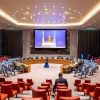
When Big Powers Clash, the UN’s Most Powerful Body Disappears
At the height of the Cold War back in the 1960s, a Peruvian diplomat, Dr. Victor Andres Belaunde, characterized the United Nations as a politically wobbly institution that survives only at the will-- and pleasure-- of the five big powers.
UN Warns of an Impending Famine With Millions in Danger of Starvation
The numbers are staggering— as reflected in the ongoing coronavirus pandemic which has triggered a new round of food shortages, famine and starvation.
A Potential Weapon Kills Over 1.5 Million Worldwide –Without a Single Shot Being Fired
The world’s major military powers exercise their dominance largely because of their massive weapons arsenals, including sophisticated fighter planes, drones, ballistic missiles, warships, battle tanks, heavy artillery—and nuclear weapons of mass destruction (WMDs).
Trump’s “America First” Foreign Policy Faces an Unceremonious Burial
The ouster of Donald Trump from the US presidency last week may well be the dawn of a new era for multilateralism – and perhaps for a besieged United Nations— after nearly four years of misguided political rhetoric emerging from the White House.
UN’s $5.1 Billion Shortfall Threatens Operations Worldwide
When the United Nations was struggling to cope with a cash crisis back in April 1996, one of the many drastic measures it undertook was to cut down on its staff.
Nuclear Arms Control in Crisis While US Exerts Pressure on Treaty Signatories
Responding to a question, Albert Einstein, the German-born physicist who won the 1921 Nobel Prize for Physics, predicted rather ominously: “I do not know with what weapons World War III will be fought, but World War IV will be fought with sticks and stones.”
UN Survives a World Turned Upside Down
As the United Nations plans to commemorate its annual UN Day, come October 24, Secretary-General Antonio Guterres is presiding over a world body which has remained locked down since last March because of the spreading coronavirus pandemic.
Global Poverty Soars– As Incomes of World’s Billionaires Hit New Highs
The phenomenal rise in extreme poverty -– for the first time in 20 years -- has been accompanied by an upsurge in the incomes of the world’s billionaires and the super-rich.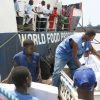
Nobel Peace Prize to World Food Programme Delivering Life-Saving Sustenance to Millions Worldwide
With the 2020 Nobel Peace Prize bestowed on the Rome-based World Food Programme (WFP), the United Nations and its affiliated agencies continue to hold a monopoly of one of the world’s most prestigious annual awards.
A 10-Year-Old Commitment to Biodiversity Misses Virtually All of its Targets
The coronavirus pandemic, which has claimed the lives of over one million people worldwide and destabilized the global economy, also upended the UN’s ambitious socio-economic goals, including the eradication of extreme poverty and hunger by 2030.« Previous Page — Next Page »





The Week with IPS

NEXT STOP - SDGs
Tracking global progress towards a sustainable world
Tracking global progress towards a sustainable world
