Languages
Thursday, October 22, 2026



News and Views from the Global South
Q&A: “Bluewashing Has Become a Very Risky Business”
The Global Compact (GC), which celebrates its 10th anniversary with a summit meeting later this month, has been described as a key initiative of the United Nations to prod private companies and blue-chip corporations to pro-actively address environmental, social and governance (ESG) issues relating to the workplace.Israel Averts International Probe on Gaza Atrocities
Less than 48 hours after the Israeli attack on a flotilla of six ships carrying humanitarian aid to Gaza, the most powerful political body at the United Nations acted most ineffectively: it opted for a shaky "presidential statement" instead of a demanding resolution.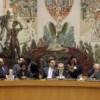
Security Council, Short of Resolution, Condemns Israel
After a 12-hour emergency session that lasted until early Tuesday, the 15-member U.N. Security Council was unanimous in its condemnation of Israel for the killing of at least 10 civilians who were part of a flotilla of six ships carrying humanitarian aid to Gaza.U.N. Nuke Meet Ends with Good Intentions and Empty Promises
The road to a nuclear weapons-free world is apparently paved with good intentions - but littered with plenty of platitudes and empty promises.Back Off Sri Lanka Inquiry, U.N. Chief Told
Sri Lanka's newly-appointed Foreign Minister Gamini Lakshman Peiris arrived in New York last week carrying a tough message for Secretary-General Ban Ki-moon: keep your hands off Sri Lanka.
Nukes-Free Future May Depend on Citizen Campaigns
Ambassador Anwarul Karim Chowdhury, a former U.N. under-secretary-general, offered a piece of advice to anti-nuclear activists campaigning for the abolition of nuclear weapons: "Don't depend on governments - and don't depend on the United Nations."Brazil-Turkey Deal with Iran Undermines Big Power Politics
When Brazil and Turkey clinched a deal with Iran over its disputed nuclear programme last weekend, the two non-permanent members of the Security Council not only challenged the unbridled political power exercised by the five big powers but also jeopardised U.S. plans for a unanimous resolution imposing sanctions against Tehran.Iranian Nuclear Threat Spurs Mideast Arms Sales
The United States, and most of the Western world, have transformed Iranian President Mahmoud Ahmadinejad into a virtual bogeyman, thereby spreading fear throughout the neighbouring countries of the Gulf Cooperation Council (GCC): Bahrain, Kuwait, Qatar, Oman, Saudi Arabia and the United Arab Emirates (UAE).Shielded by U.S. Umbrella, Israel Joins Rich Man’s Club
With tongue firmly entrenched in his cheek, an Arab diplomat recounts an Israeli cabinet meeting interrupted by an aide rushing in with the latest statistics on the state of the economy.Treaty Aimed at Banning Nukes Remains Grounded
The world's anti-war activists, including parliamentarians, civil society groups and diplomats, have succeeded in creating international treaties to ban a wide array of deadly weapons: anti-personnel landmines, blinding laser weapons, cluster munitions, dum-dum bullets and chemical and biological weapons.Success of “The Pill” Overshadowed by Family Planning Gaps
The birth control pill, currently used by an estimated 100 million women worldwide, commemorated its 50th anniversary last week - but remains controversial in some quarters.Human Rights Council Candidates Run Unopposed
When the U.N. General Assembly meets later this week to elect 14 new members for the Geneva-based Human Rights Council (HRC), the election results will be highly predictable for one reason: all candidates are running unopposed as nominees of their respective geographical regions.Will Mideast Tug-Of-War Wreck Anti-Nuke Meet?
When the last review conference on the Nuclear Non-Proliferation Treaty (NPT) ended inconclusively - after four long weeks of protracted negotiations - the meeting was described as having accomplished "very little" with no substantive agreement.
Israel, Iran Targeted at Nuke Non-Proliferation Meet
A month-long Review Conference on the Nuclear Non-Proliferation Treaty (NPT) began Monday with a predictable target: Israel.
Q&A: Nuclear Non-Proliferation Regime Has Triple Standards
The abolition of nuclear weapons - and a halt to the spread of the deadly armaments - will be a major talking point at the month-long Review Conference on the Nuclear Non-Proliferation Treaty (NPT), scheduled to take place at the United Nations beginning next week.UN Security Council Under Fire for Back-Room Dealing
The most powerful political body at the United Nations took a heavy beating last week as member states accused the Security Council of being arrogant, secretive, undemocratic - and in danger of becoming "irrelevant" and "illegitimate" in the eyes of the world.Rising Threats to Minorities in Sudan, Russia, Philippines
The growing threats against minorities and ethnic groups - who are vulnerable to mass killings and genocides - have significantly increased in three countries: Sudan, Russia and the Philippines.U.N. Press Corps Revolts Against Security Council Sanctions
The U.N. Correspondents' Association (UNCA), which represents the interests of over 200 full-time journalists covering the world body, has lashed out at the Security Council for proposing new restrictions on the press corps - presumably for "safety reasons".A North-South Pact to Resolve Water, Sanitation Crisis
An international coalition of over 120 non-governmental organisations (NGOs) is demanding a North-South partnership to resolve the spreading global crisis in water and sanitation.New Web Portal Tracks Airlines Delivering Aid and Arms
A new information portal launched Monday has been described as the world's first internet clearing house aimed at tracking unethical air cargo carriers transporting humanitarian aid and relief supplies to war zones while simultaneously smuggling arms and narcotics - at times, to the same conflict areas.U.N. Blasted for Sequestering NGOs and Media
A major structural renovation of the U.N. Secretariat is being used as a pretext to curb media access to delegates and Security Council members, and is also a veritable smokescreen to tighten restrictions on non-governmental organisations (NGOs) accredited to the world body, critics say.« Previous Page — Next Page »





The Week with IPS

NEXT STOP - SDGs
Tracking global progress towards a sustainable world
Tracking global progress towards a sustainable world
