Languages
Sunday, October 25, 2026



News and Views from the Global South
U.N. Blasted for Sequestering NGOs and Media
A major structural renovation of the U.N. Secretariat is being used as a pretext to curb media access to delegates and Security Council members, and is also a veritable smokescreen to tighten restrictions on non-governmental organisations (NGOs) accredited to the world body, critics say.
Is the U.S. Going Soft on Israeli, Indian & Pakistani Nukes?
When a much-ballyhooed two-day nuclear security summit ended in Washington early this week, there were several lingering questions that remained unanswered - even by the host of the high-powered 47-nation gathering, U.S President Barack Obama.DISARMAMENT: U.N. Chief Doubts Mideast Nuke-Free Zone
Against the backdrop of a major summit meeting of world leaders on nuclear non-proliferation hosted by the United States, Secretary-General Ban Ki-moon expressed strong doubts about the longstanding proposal to create a nuclear-free zone in the militarily-volatile Middle East.DISARMAMENT: Developing World Lags in Arms Manufacture
The world's developing nations are still far behind Western industrial countries in the latest Top 20 rankings in one of the most lethal industries: arms manufacture.
Q&A: IBSA Summit Aims to Strengthen South-South Cooperation
When the political leaders of three of the world's major democracies in the global South - India, Brazil and South Africa (IBSA) - gather at a high-powered summit meeting in Brasilia next week, one of the key items on the agenda would be how best to strength economic cooperation among developing nations.POLITICS: U.N. Panel Rejects Request to Reopen Bhutto Probe
A three-member U.N. commission, which has been investigating the 2007 assassination of former Pakistani Prime Minister Benazir Bhutto, has flatly rejected a request to reopen the inquiry.
Q&A: South Korea a Key Convention Centre in Asia
The Republic of Korea (ROK), one of the fastest growing industrial nations and the world's 13th largest economy, has not only survived the global financial crisis but is also gearing up to play a key role in the international arena.POLITICS: G20 Big Powers Under Scrutiny by Smaller Nations
When the G20, representing some of world's politically and economically powerful developing and industrial nations, suddenly gained a higher profile with the onset of the global financial crisis two years ago, there was apprehension the group would sooner or later try to upstage the United Nations and its key decision-making role.DEVELOPMENT: Sanitation Goals Falter Amid Official Apathy
At the United Nations, "water and sanitation" have remained inseparable twins on the world body's social and economic agenda.
Q&A: Sri Lanka Remains Defiant of U.N. Chief
The Sri Lankan government continues to challenge U.N. Secretary-General Ban Ki-moon's right to appoint a panel of experts to advise him on the human rights situation - euphemistically called "accountability issues" – following the end of a protracted conflict against a secessionist group widely considered a terrorist organisation.DEVELOPMENT: Bad Water More Deadly Than War
Bad water kills more people than wars or earthquakes, declares Anders Berntell, executive director of the Stockholm International Water Institute (SIWI).DISARMAMENT: Despite Recession, Global Arms Race Spirals
The global financial crisis has not deterred some of the world's developed and developing nations from bolstering their military arsenals with expensive new weapons systems, including sophisticated fighter planes, combat helicopters, submarines, armoured vehicles and air defence systems.
RIGHTS: Gender Confab Marked by Political Uncertainties
When a two-week meeting on gender empowerment concluded at U.N. headquarters Friday, there were several lingering questions crying out for answers.POLITICS: Sri Lanka Garners Support Against U.N. Probe
Sri Lanka, which won a grueling decades-long battle against one of the world's most ferocious terrorist organisations last May, has scored a diplomatic victory in its ongoing war of words with the United Nations.
RIGHTS: Africa’s Success Stories in Gender Empowerment
Whenever gender empowerment is a vibrant topic of discussion internationally, some of the countries in Europe, Asia and Latin America are invariably singled out for their success stories in politics, education, health care or civil liberties even as Africa is mostly left out of political reckoning - and wrongly so.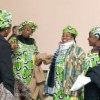
RIGHTS: “Famine Marriages” Just One Byproduct of Climate Change
The negative fallout from climate change is having a devastatingly lopsided impact on women compared to men, from higher death rates during natural disasters to heavier household and care burdens.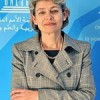
Q&A: Qualified Women Have Better Chance in Top Jobs
Irina Bokova, who was elected director-general of the U.N. Educational, Scientific and Cultural Organisation (UNESCO) last September, heads the Paris-based agency at a time when the world body has placed a high priority on gender empowerment.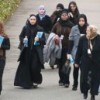
RIGHTS: Arab Women Caught Between Extremes
The status of women in a predominantly male-chauvinistic Arab world continues to fluctuate from one extreme to another.RIGHTS: U.N. Women’s Agency Remains Politically Paralysed
A longstanding proposal for the creation of a special U.N. agency for women - officially called a "gender entity" - is apparently moving at the sluggish pace of a paralytic snail.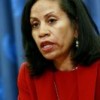
RIGHTS: Saudi Arabia Faulted for Feudal Justice
Against the backdrop of a two-week U.N. meeting on gender empowerment, the London-based Human Rights Watch (HRW) has blasted the government of Saudi Arabia for its feudal system of justice where women continue to be victimised because of their gender.
RIGHTS: Rise and Fall of Gender Empowerment
The 45-member Commission on the Status of Women (CSW), presiding over one of the largest gatherings of women at the United Nations, listened Monday to dozens of speakers spelling out the successes and failures of gender empowerment worldwide.« Previous Page — Next Page »





The Week with IPS

NEXT STOP - SDGs
Tracking global progress towards a sustainable world
Tracking global progress towards a sustainable world
