Languages
Thursday, November 19, 2026



News and Views from the Global South

80 Percent of Rural Households Without Direct Water Access – World Water Report
A new United Nations report has warned that global water inequality remains one of the most pressing development challenges of the decade, with billions still lacking safe drinking water and sanitation – while women and girls continue to bear the heaviest burden of water insecurity.

One in Four Migratory Species Under Threat, But Conservation Efforts Can Reap Rewards
Global wildlife is facing a deepening crisis as the latest United Nations assessment warns that nearly half of the world’s migratory species are in decline due to human activity, habitat destruction, and climate change.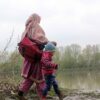
‘When Rains Come, Our Hearts Beat Faster’
When the rain begins in Kashmir's capital Srinagar, Ghulam Nabi Bhat does not watch the clouds with relief anymore. He watches them with calculation. How much can the gutters take? How fast will the river rise? Which corner of the house will leak first? Where should the children sleep if the floor turns damp?
Big Nature-Based Finance Turnaround Needed to Restore, Protect Ecosystems
The world is pouring trillions of dollars each year into activities that destroy nature while investing only a fraction of that amount in protecting and restoring the ecosystems on which economies depend, according to a new United Nations report released on January 22.
World Living Beyond Its Means: Warns UN’s Global Water Bankruptcy Report
The world has entered what United Nations researchers now describe as an era of Global Water Bankruptcy, a condition where humanity has irreversibly overspent the planet’s water resources, leaving ecosystems, economies, and communities unable to recover to previous levels.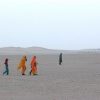
Refugees Forced to Fill Gaps as Funding, Power and Legal Recognition Move Out of Reach
The global refugee system is entering a period of deep strain. The delivery of protection and assistance is undergoing a transformation due to funding cuts, institutional reforms, and shifting donor priorities.
Fresh Lens For Nuanced Multifaceted Climate Solutions Needed
“I see more philanthropic support aligning with systems thinking, linking climate stability, biodiversity protection, Indigenous leadership, and community resilience,” says Michael Northrop, Program Director at the Rockefeller Brothers Fund.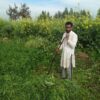
Evaluation Finds Food Systems Programs Deliver Results but Warns of Missed Transformation Chances
A new independent evaluation of the Global Environment Facility’s food systems programs says they are delivering strong environmental and livelihood gains in many countries but warns that a narrow focus on farm production, weak political analysis, and shrinking coordination budgets are holding back deeper transformation.
Kashmir’s Small Farmers Endless Wait for Climate Justice
In the fertile fields of Jammu's R.S. Pura, rice farmer Mohd Yaseen Khan stares at a cracked irrigation canal, battered by erratic rainfall. “One day heavy rain, next week a dry spell,” he says, dusting his palms. “Our crop suffers. Our costs rise.”
Turning Indigenous Territories From ‘Sacrifice’ Zones to Thriving Forest Ecosystems
A report by the Global Alliance of Territorial Communities (GATC) and Earth Insight paints a stark picture of how extractive industries, deforestation, and climate change are converging to endanger the world’s last intact tropical forests and the Indigenous Peoples who protect them.
Global Emissions Falling Too Slowly, Expert Urges Renewables Push, Fair Finance
A decade has passed since the adoption of the Paris Agreement, and a United Nations synthesis report released ahead of COP30 in Belém shows that "Parties are bending their combined emission curve further downwards, but still not quickly enough."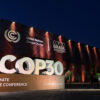
Deliver Emission Cuts, or Risk Locking the World Into ‘Catastrophic Warming’
The world is falling dangerously short of meeting the Paris Agreement goals, with global greenhouse gas emissions rising to record levels and current national pledges still far off the mark, the United Nations Environment Programme (UNEP) said in its Emissions Gap Report 2025: Off Target.
Global Forest Loss: Far Off Track From Global Commitments
The Forest Declaration Assessment 2025 warns that global forest loss remains alarmingly high, with little sign of improvement.
146 Land and Environmental Defenders Killed or Disappeared in 2024
At least 146 land and environmental defenders were murdered or forcibly disappeared in 2024 for standing up against powerful state and corporate interests, according to a new report released by Global Witness.
‘Tell Us When the Next Storm Will Come’—Human Stories From Kashmir’s Deadliest August
The relentless rain that battered the mountains and valleys of Jammu and Kashmir this August shattered lives and records.
Intensified Legal, Political, and Grassroots Battles Over Amazon Oil Expansion
A report has warned about the risks of expanding oil and gas exploration in the Colombian Amazon, which may undermine environmental goals, Indigenous rights, and long-term economic stability, unless the government pivots toward sustainable development pathways.
Forests, Fossil Fuels, and the Fight for the Future: DRC’s Oil Expansion Sparks Global Alarm
The Democratic Republic of Congo (DRC) stands on the precipice of a profound environmental and social crisis, as the government prepares to auction 55 new oil blocks that cover more than half the country’s landmass.
Bonn Climate Talks: Why World Needs to go Further, Faster, and Fairer
This 62nd meeting of the Subsidiary Bodies (SB62) from June 16 to 26, 2025 revealed the persistent complexities and political tensions that continue to challenge multilateral climate governance.
How Many Developing Countries Are Forging Paths to Climate Accountability at SB62
A packed conference room buzzing with the energy of over 300 national experts, negotiators, and implementers discussed their submissions of the First Biennial Transparency Reports (BTRs) during the 62nd session of the Subsidiary Body for Implementation (SB62) negotiations taking place in Bonn, Germany.
Oceans at Risk: Report Warns Global Fossil Fuel Expansion Threatens Marine Biodiversity
A newly released report by Earth Insight in collaboration with 16 environmental organizations has sounded a global alarm on the unchecked expansion of offshore oil and gas projects into some of the most biologically rich and ecologically sensitive marine environments on the planet.
Truce on the Line: After the War Stops, the Suffering Continues
In the war-worn borderlands of Jammu and Kashmir, the silence that followed the May 10 ceasefire between India and Pakistan is not the comforting kind—It is uneasy.« Previous Page — Next Page »


The Week with IPS

NEXT STOP - SDGs
Tracking global progress towards a sustainable world
Tracking global progress towards a sustainable world
