Languages
Saturday, November 28, 2026



News and Views from the Global South
Africa
G8 SUMMIT: Africa Wants Aid, Rich Nations Demand Reforms
Fresh money for the world's weakest economies will be a touchy topic when the world's economically most powerful nations meet next week in Scotland. While Africa hopes for increased development funds, some G8 nations, like Germany, first want to see more progress on reforms.RIGHTS-IVORY COAST: Abuses Across the Board
Talks to end years of rebellion in the Ivory Coast resumed this week in the South African capital. But although government and rebel representatives in Pretoria may be speaking of peace, the areas they control are marked by persistent human rights abuses.RIGHTS: Africans Back U.N. Intervention for Serious Abuses
Africans strongly support military intervention authorised by the United Nations Security Council to stop serious abuses of human rights in their region, according to a just-released survey which also found that they prefer U.N. forces to those of the African Union (AU).G8 SUMMIT: As Bloggers Will See It
For news on the summit of the Group of Eight leading industrialised nations, Red Pepper, the British magazine "of the green and radical left," is inviting people around the world to forget the usual media channels and turn to coverage by its "grassroots writers" instead.POLITICS-AFRICA: Bush Exaggerates Increase in U.S. Aid
U.S. President George W. Bush has been significantly exaggerating the amount of money his administration has provided in aid to sub-Saharan Africa, according to a new study released here Monday.ENVIRONMENT: Poaching Declining In Swaziland
In the little kingdom of Swaziland, a tough animal preservation law has cut poaching by 90 percent since its enactment ten years ago, while the bloody extinction of rhino has come entirely to a halt.RIGHTS-ZIMBABWE: “I’m Ready to Stand in Front of the Gun and be Shot”
A coalition of more than 200 African and international civic groups has called on the United Nations and African Union to press for an end to evictions and demolitions that have left people across Zimbabwe homeless.POLITICS: Burundi’s Peace Process Comes to the Crunch
With a local election under its belt, and legislative and presidential polls scheduled for the next two months, Burundi is entering the final stretch of a lengthy and difficult peace process.DEVELOPMENT: Poor Countries Bitter About Sugar Reform
Sugar-producing countries from the developing world have slammed European Union proposals to reform its controversial sugar regime as too fast, too much, too soon.HEALTH-SOUTHERN AFRICA: AIDS Orphans – a Silent Tsunami
Twelve million and counting: that is the number of children who have lost one or both parents to AIDS in sub-Saharan Africa, according to the International Federation of Red Cross and Red Crescent Societies. This figure is expected to double by 2010.CULTURE-RWANDA: A Poolside View of Genocide
High on a misty, terraced hillside, where a road winds through verdant woods and reddish-brown rock, a makeshift roadblock has been constructed.DEVELOPMENT: EU Set for Showdown on Sugar
The European Union will face a showdown Wednesday over its controversial sugar regime when the European Commission presents its vision for the future of sugar production inside and outside the bloc.REFUGEES-KENYA: Contraceptives – Both Needed and Scorned
As the international community marks World Refugee Day, a Somali woman's tale of how she helped fellow refugees terminate pregnancies has highlighted the shortcomings of reproductive health care in refugee camps.RIGHTS: Nigerian Challenge Over Emissions
Ethnic communities from Nigeria's Niger Delta are challenging the Nigerian government and some of the world's biggest oil companies over the level of greenhouse gases emitted during oil production.G8 SUMMIT: Think Africa on Climate Change
Africa and climate change will be the two priorities at the Group of Eight (G8) summit next month, host Britain says. But think of the two also as one, say scientists after a meeting on the impacts of climate change on the African continent.REFUGEES: After the Struggle to Arrive in South Africa, a Struggle for Education
The effort to combine work and studies is taking its toll on Desiré Rwamagana, a Rwandan refugee who lives in South Africa’s commercial hub – Johannesburg.REFUGEES: Italy Reluctantly Lets In a Trickle
Aki, a young Kurd, is among the lucky few to have got political asylum in Italy. But after months of pain and anxiety he is bitter even after his success.HEALTH: A Wind of Hope in Kenya’s Desert
Madonna's 1980s hit song 'Like a Virgin' blasts incongruously from a giant silver speaker in the corner of a bar deep inside Isiolo - a dusty town on the edge of Kenya's northern Kaisut desert, filled with tough nomads and their herds of emaciated animals.POLITICS-ETHIOPIA: Concern Over Election Violence Begins to Bite
International condemnation of the violence that followed the May 15 parliamentary election in Ethiopia took on new force this week, with news that Britain had suspended 36 million dollars in aid to the East African country.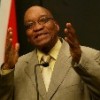
POLITICS-SOUTH AFRICA: A Case of "Not Over Until It’s Over" for Zuma?
The long-running scandal over corruption in South Africa’s five-billion-dollar arms deal passed a milestone Tuesday with the sacking of Deputy President Jacob Zuma. However, it remains uncertain whether this dismissal has sounded the death knell for the official’s future in politics.G8 SUMMIT: Leaders Asked to Get Scientific on Africa
Leading scientists from around the world are asking leaders of the G8 countries to get more scientific in their approach to the development of Africa.« Previous Page — Next Page » *#*

The Week with IPS

NEXT STOP - SDGs
Tracking global progress towards a sustainable world
